Friday, 30 September 2011

I'm still here...sorta.

I sincerely apologize for the inconsistent lack of posts this month although my absence is largely in part due to settling back into college life again and working extra hours at my dead-end job. Talk about hectic! The first couple of weeks have gone by exceedingly fast and now that my schedule is more-or-less settled, I can hopefully devote more time to updating this blog. On a somewhat related note, in one of my classes we are going to be reading both Mrs. Dalloway and To the Lighthouse. Score! 

I had trouble sleeping last night and actually did manage to whip up a review on Joyce's A Portrait of the Artist as a Young Man (posted below) and curious as to what others have to say about this polarizing novel. Or if you have not read it and just want to leave a comment, that's cool too.

Here are a few novels that I intend on reviewing soon:


Have a great weekend, everyone!

A Portrait of the Artist as a Young Man by James Joyce


"Once upon a time and a very good time it was there was a moocow coming down along the road and this moocow that was coming down along the road met a nicens little boy named baby tuckoo..."

This novel has left me utterly conflicted. On the one hand, it stands as one of the most challenging pieces of literature that I have ever read (there were certain sections where I felt the urge to pull my hair out by the roots) and yet, there are so many aspects to admire in this richly ambitious, complex work: the re-writing of Irish history, religious discourse, powerful imagery, the intricate structure and style of language that reflects Stephen Dedalus's state of mind as he matures in age, the clever use of irony, along with Joyce's striking ability to write some of the most beautiful epiphanies. It is no surprise that plenty of my favorite novels tend to revolve around the "coming-of-age" story or to get technical, the bildungsroman: narratives that depict the emotional and psychological development of a young protagonist entering adulthood--Catcher in the Rye, A Clockwork Orange, Harry Potter, Franny and Zooey to name a few-- and now I can add James Joyce's A Portrait of the Artist as a Young Man to that list. Unfortunately, I feel inadequate in my abilities to thoroughly analyze this complex novel and my review will only gloss a tiny portion of the surface. Hopefully I am successful in formulating some coherent thoughts that serve to confirm the greatness of one the most important novel's of the 20th century. 

Before I proceed, let me just state outright that it will be detrimental to one's enjoyment or appreciation of the novel without having a general understanding of the historical context because otherwise, one is bound to be extremely confused. The Penguin edition does a great job of providing helpful footnotes. Considering much of the novel focuses heavily on Irish nationalism and Catholicism, having quick access to this information will be one less problem to overcome in order to better access this perplexing work. Not to mention, Joyce is fond of using Latin and making plenty of obscure references to classical works that may not be familiar.

Joyce begins his epic narrative by using the Icarus and Daedalus myth from Ovid's Metamorphoses as an overarching metaphor for the artistic journey of his young protagonist Stephen, whose last name clearly resembles the latter: "And he applies his mind to obscure arts." For those unfamiliar with the myth, Daedalus is the father of Icarus and designs a pair of wings to escape from the Cretan labyrinth that houses the vicious Minotaur. In a tragic turn of events, Icarus flies too close to the sun, melting his wings and he falls into the sea to his death. Connecting Stephen to the classical artist of Daedalus is just one of ways in which Joyce develops his protagonist's romantic conception of the aesthetic self who is free from the forces of the external world and can finally assert triumphant artistic expression as in the famous closing lines, to "forge in the smithy of my soul the uncreated conscious of my race" (276). Joyce is fond of using very selective and representative moments or more specifically, synecdoches to chronicle Stephen's transformation. The slice-of-life naturalism contrasts with Stephen's inner experience. Joyce lays down the conditions to be an artist in such a profound way through the use of language. Stephen's discovery of his artistic vocation; the ecstasy of standing outside himself as he soars like Deadalus into the unknown is inspiring as much as it is ambiguous as to whether or not he will achieve success. One could certainly make the argument that Stephen's rebellious actions and declaration that "I will not serve" is an allusion to Satan's pride, which let to "The Fall" found in Milton's Paradise Lost. Joyce sets up Stephen's martyr complex as ironic.

Joyce's narrative structure and use of language is worth examining more closely. Initially, it is difficult for the reader to get a clear sense of Stephen's character. As the novel progresses these hazy impressions become more vivid as Stephen matures himself. The subjective and objective world collide, causing the specific use of language to change. It is only at the end of the novel where Stephen finally rejects Irish conformity and the Catholic faith that he can emerge with his own voice instead of being a prisoner to the omniscient third-person narrator. A most clever literary technique effectively used by Joyce. Stephen is the focalizer and the novel charts the growth of his mind over a period of time. However, Joyce's use of free-indirect discourse complicates matters because Stephen is not always the verbalizer; placing an ironic distance between the objective narrator and the protagonist. Thus, the impersonal narration produces an extensive amount of ambiguity. Is Stephen an artifice trying to escape a labyrinth society? Are the epiphanies he experiences authentic or ironic? Is his theory of art an aesthetic gospel or just egotistical nonsense? Is the villanelle indicative of artistic genius or just pretentious drivel? Is the novel progressive or ironically cyclical where Stephen rises from the epiphany only to fall? Most importantly, is Stephen successful as an artist? The overwhelming contradictions and irony in the text makes it difficult to conclusively answer any of these questions. Perhaps it would help if Stephen was not ambiguously distant but with no authorial intrusion, the novel is confined only to his perspective. 

Joyce is intent on complicating matters further by using a dialogical framework with different types of language: Childhood fragmentation, schoolboy slang, dramatic action of dialogue at the Christmas dinner over politics and religion, formal rhetoric of Jesuit sermon, elevated language of epiphany, intellectual colloquialism of college students, magical language of folklore, formal discourse of Stephen's aesthetic philosophy and ending with the fragmented diary entries. It's no surprise that many reader's find the novel intimidating and downright baffling to fully grasp. Believe me, I feel the same way too. This is not one of those novels to read on a whim. It demands a dedicated investment of time and effort on the part of the reader. I would be hard-pressed to recommend this novel to just anyone because it seems to be haughtily directed towards a specific type of intellectual audience. If one can get passed Joyce's ostentatious style, there is actually a great novel here. However, if you happen to like a challenge or just happen to be curious to see what all the hype is about, by all means, take the plunge. Just don't come back and say I didn't warn you.

  
This novel is part of my Classics Club Challenge.

Monday, 5 September 2011

It's Monday! What are you reading?


Much thanks to Book Journey for hosting this weekly meme, which provides the opportunity to plan out a tentative reading schedule for the upcoming week and to visit other book bloggers to see what they have lined up as well. 

This last week has been somewhat unproductive on the reading front because of work and other obligations. Nonetheless, I managed to finish Graham Greene's Brighton Rock and The Little Prince by Antoine de Saint-Exupéry, bringing my grand total to 50 books read this summer. I am incredibly behind on my reviews and have been rather discouraged in my inadequate ability to offer any sort of insightful literary criticism. I don't intend on being the next Cleanth Brooks and nor am I trying to please anybody -- indeed,  it is just difficult to shake the feeling of dissatisfaction with my writing. On a certain level, I do feel slightly burnt out from my intense reading experience this summer and also seem to have temporarily lost the ability to write anything of substantial value. Thus, this week I am going to take a slight breather to relax my mind a little but so that I can get over this writing dry spell. Instead of overburdening myself by reading multiple books at once, I will just focus on one book this week:


Incredibly dense and not nearly as inviting as To the Lighthouse or Mrs. Dalloway but Woolf's prose is still mesmerizing and keeping me interested to continue reading. 

What is everyone else planning to read this week?


Sunday, 4 September 2011

Summer is over...

It sure went by super fast, huh? Much of my time was spent working and reading so it wasn't too miserable. On a positive note, I'm actually proud of myself for managing to read 50 books this summer as part of my Literature Frenzy Challenge, phew! Considering that my previous reading habits consisted of maybe three or four books a year (and this is being generous), I have really stepped up my game and don't plan on quitting the pace anytime soon. I was a little apprehensive at starting this blog a few months ago and still consider myself a newbie to the blogging world but I have thoroughly enjoyed the experience so far. Not to mention, it has provided the opportunity to connect with other cool and like-minded bloggers who share a passion for literature. I'd like to thank everyone who has ever took the time to read my blog and especially those few devoted followers. Feedback is much appreciated and your comments mean a lot to me! I have been swamped with work lately and sincerely apologize for the lack of new posts but for those who actually care, I have a few new reviews lined up that will be up in the next few days. In the mean time, I thought that it would be appropriate to showcase my Top 5 favorite books that I read this summer. Enjoy!
  1. Mrs. Dalloway by Virginia Woolf
  2. To the Lighthouse by Virginia Woolf
  3. The End of the Affair by Graham Greene
  4. Franny and Zooey by J.D. Salinger
  5. A Clockwork Orange by Anthony Burgess


Tuesday, 30 August 2011

My Top 10 Books TBR this Fall!


This is the first time that I am participating in the Top Ten Tuesday meme held by The Broke and the Bookish. I've decided to go back to school in September and with the heavy course load, it is doubtful that I will have the time to enjoy some leisurely reading but we'll first have to see how the school year unfolds. Let's do this:
  1.  The Waves by Virginia Woolf: She is quickly becoming my favorite author and I am eager to read everything she has ever written in her lifetime. 
  2. The God of Small Things by Arundhati Roy: Recommended by Satia, I desperately need to read more culturally diverse literature and this novel seems right up my alley.
  3.  The Bell Jar by Sylvia Plath: I've put off this one for far too long.
  4. The Heart of the Matter by Graham Greene: Another one of my favorite authors and whose work I turn to whenever struggling what to read next or need inspiration to write my own stuff. I plan on hosting a challenge devoted to Greene, so stay tuned!
  5. Our Man in Havana by Graham Greene: See above.
  6. Perks of Being a Wallflower by Stephen Chobsky: I've got a crush on Emma Watson.
  7. The Old Man and the Sea by Ernest Hemmingway: I'm not giving up on Papa H, just yet. Besides, it's short enough that I can likely read it in between all of the other laborious texts assigned by class.
  8. Tender is the Night by F. Scott Fitzgerald: Rich American yuppies living it up in Paris? Plus the protagonist's name is Dick Diver. 
  9. Everything is Illuminated by Jonathan Safran Foer: The Jewish diaspora and self-indulgent post-post modernism. Sounds like a winning combo. 
  10. Giovanni’s Room by James Baldwin: After reading the excellent Go Tell it on the Mountain, I have a feeling that that Mr. Baldwin will climb the ranks of my favorite's author's list in due time.
What does everyone else plan on reading?


Saturday, 27 August 2011

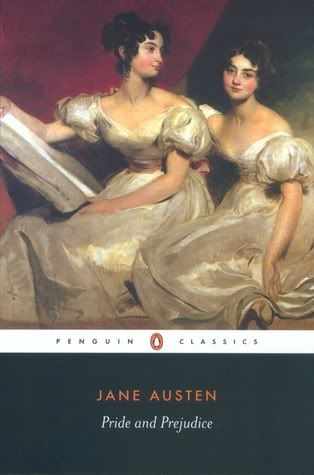
Pride and Prejudice by Jane Austen


"There are few people whom I really love, and still fewer of whom I think well. The more I see of the world, the more am I dissatisfied with it; and every day confirms my belief of the inconsistency of all human characters, and of the little dependence that can be placed on the appearance of merit or sense." 

After numerous failed attempts over the years to read this novel , I can now finally proclaim that the task has been completed without falling asleep or abandoning it half-way through! Phew. Upon further reflection, my initial lukewarm response has slowly developed into a general appreciation of the text. However, it still baffles me as to the exact reasons why Jane Austen's writing or more specifically, Pride and Prejudice has gained such popularity amongst modern day readers considering the estrangement of Austen's 17th century England. Her prose is delectably florid containing a wry sense of humor and clever irony although the style of writing is excessively ornate. A common criticism is that the narrative is often tediously dull (a fair argument that I agree with to a certain extent). In addition, the central love story between Elizabeth and Darcy along with the relationships between the other romantic couples comes across as  insipid because they are based entirely on social decorum; thus, there is a severe lack of genuine emotional affection existing between the respected partners. From a modern perspective, the relationships in the novel must seem incredibly banal and antediluvian but one must take into consideration of the cultural milieu pertaining to Austen's time. Marriages were rarely based on romantic affection whereas other factors such as economic inheritance and the potential opportunity to move up in social rank took precedence. Austen keenly emphasizes various tensions between the established social hierarchy and the intrusively mobile class of the bourgeoisie. Much of the novel concerns itself with the dichotomy between old and new wealth -- the emergence of a more liberal society and the creating a new cultural identity that is shaped by all of England as opposed to just being inherited by the aristocracy.

How can modern readers even possibly enjoy reading this novel without a firm understanding of the historical context and cultural milieu of Austen's generation? To only focus on the various romances while disregarding the invariably social, political and economic concerns of the text is bound to leave the reader rather disappointed. It seems reasonable to suggest that many find amusement in the aberration of reading Pride and Prejudice as an entertaining fairy-tale romance where a middle-class woman is able to challenge social conventions by winning the affections of a rich and powerful man of the landed elite. As a result, Austen's pre-industrial England becomes a type of fantasy: a fashionable and elegant society where the only concern is to achieve a respectable marriage. With the lush and verdant countryside serving as the backdrop, beautiful women of modest means attempt to marry into wealth; they attend fancy balls held in luxurious mansions with the hopes of meeting and falling helplessly in love with Prince Charming, whom in due time will propose (in which the intended female will accept the offer with alacrity) and they will live happily ever after at his massive estate whilst enjoying the many privileges of the aristocratic way of life. Of course, the relationship between Elizabeth and Darcy is far more complicated and does not unfold in this ideal manner as conflict arises between the social barriers between them as well as their own misconceptions of each other.

Pride and Prejudice is a deceiving novel because the charming heroine and the impressively lavish England she inhabits coaxes the reader into an imaginary world. The extravagant Pemberly estate is awe-inspiring to both Elizabeth and the reader. Consequently, it is a comfort to indulge in escapism, overlooking the perplexing underlying subtext. An important question to ruminate after reading the novel is, what does the union between Elizabeth and Darcy suggest? The juxtaposition between a feminist and conservative interpretation seems clear but which perspective holds merit? My viewpoint on the matter is that Austen cunningly manages to propose both simultaneously; that is, Elizabeth's radical independence and control over her own consciousness ironically affirms the propriety of social hierarchy, thus allowing for a new national identity to materialize.


Read from August 22 to 25, 2011

Note: Reading this novel completes several challenges:

Literature Frenzy!
Books I Should Have Read by Now
Bout of Books Read-a-Thon!


Monday, 22 August 2011

It's Monday! What Are You Reading?


It's that time again and you know the drill. This meme is hosted by Sheila @ Book Journey.

Despite having to work 50+ hours last week including the entire weekend, any free time to sit down and read has been greatly diminished. I managed to finish Faulkner's As I Lay Dying but was hoping to get through Muriel Spark's The Ballad of Peckham Rye as well. Unfortunately, I had to return the novel to the library because it was overdue, bah. To redeem myself this week, I am currently reading several novels:

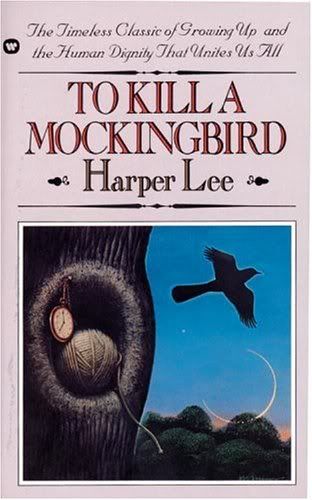
It is embarrassing to admit that I never read this much beloved American classic before and only getting around to it now. I blame the inadequate English department during my high-school years for not bothering to teach this novel. My lack of initiative to read this on my own time is also at fault.


Jane Austen is one of my literary downfalls and I have lost count as to how many times I have started and abandoned P&P. Surprisingly, this time around my feelings of trepidation has drastically subsided and I am actually enjoying the novel a great deal. Austen's prose can be haughtily stylized but the use of irony and social witticisms are humorously entertaining. Hoping to finish this in the next few days.


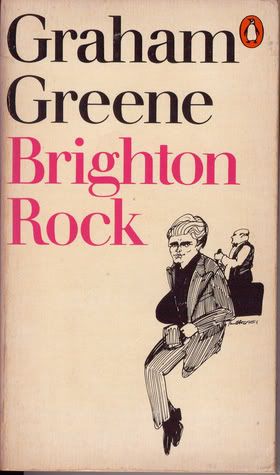
Graham Greene can do no wrong, in my humble opinion. Even his lesser works are still brilliant and Brighton Rock is shaping up to be one of his best. Pinkie is one of the more fascinating characters I have come across in fiction.

What else is everyone reading? Let me know below in the comments section because I am always looking for recommendations. Happy Monday everyone!


Sunday, 21 August 2011

A Burnt-Out Case by Graham Greene


 "I feel discomfort, therefore I am."

In my reluctant haste to read as many novels as possible this year, I severely fell behind on writing reviews. Graham Greene's A Burnt-Out Case is a fascinating literary work that warrants an extensive review but alas, right now I can only provide some haphazard thoughts before any recollections of this novel slip completely from my mind.

Set in the harsh, isolated African wilderness of a Congo leprosy commune, the story revolves around a famous architect named M. Querry (an odd, if not deliberate emblematic name) suffering from a mid-life crisis who decides to abandon his old privileged life to start anew in a dangerous unfamiliar third world country where he can furtively remain an anonymous foreign stranger, or so he thinks...

The comparison of this novel to Conrad's Heart of Darkness is inevitable: the moral and psychological journey of a white man traveling by steam-boat up the Congo river into a world of  the "unknown" governed by colonialism, but this is where the similarities end. Greene is a master story-teller and is intent on telling an exciting adventure story with an intricate plot and engaging characters. That is not to say that the novel lacks any substantial depth, on the contrary -- spirituality and metaphysical philosophy is a recurring thematic concern for Greene and forms the central crux of the narrative. Querry is one of Greene's most psychologically complex and memorable characters. His very name alone bears an uncanny resemblance to the word "query" and reflects the prodigious skepticism and doubt he feels towards the Catholic faith. Despite claiming to be an agnostic, his altruistic behavior in the leprosy camp seems contradictory: rescuing his black servant Deo Gratis lost in the treacherous underbrush, tending the sick with Doctor Colin or building a church  raises the suspicions of the various Catholic clergymen who become convinced that Querry is an agent of God's work. His refusal to accept this point of view leads to extensive polemical religious discourse that is at times a little overwrought but does not detract from the flow of the story. A common motif in Greene's novels is to place his characters struggling with their faith as they desperately attempt to deal with the consuming guilt and regret from the past. Querry certainly falls into this category and whose past has a way of catching up with him no matter if he decides to isolate himself half-way across the world in a small leprosy camp in the Congo.

In contrast, Conrad's novel is far more politically motivated and overtly metaphorical in approach; exploring the nebulous depths of humanity through narrative innovation. Heart of Darkness may be admirable in aesthetic technique but it is incessantly dense. A Burnt-Out Case does not suffer from any of these hindrances and is enrapturing from start to finish -- a cynical reflection on morality and the endurance of the human spirit. Greene's keen insight into human psychology and the perception to understand our inherent flaws and desires is awe-inspiring; his uncanny ability to tap into the essence of what it means to be human with such pithy sophistication is unprecedented. He proves once again why is a master of story-telling craft and one of the best author's of the 20th century.


Read from April 12 to 14, 2011

Bout of Books Read-a-Thon!


As if I didn't have enough on my plate right now... 

Hosted by Amanda from On a Book Bender, I came across this challenge through happenstance and thought to myself, what the hell -- this is far too alluring to avoid participating. Besides, this event is a great opportunity to meet fellow book bloggers and learn to better manage my extra reading time around the hectic work schedule. Not to mention, this challenge provides incentive to reach my goal of reading 50 novels for the summer. Only 4 more to go! Here is a tentative list of what I plan on reading:
  1. To Kill a Mockingbird by Harper Lee
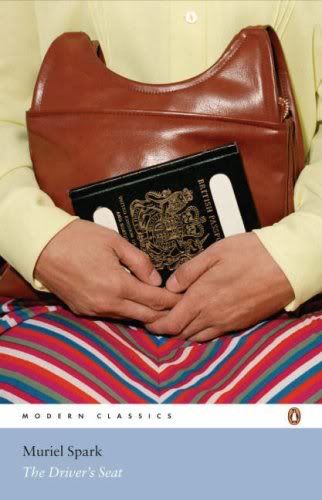
  2. The Driver's Seat by Muriel Spark (re-read)
  3. Brighton Rock by Graham Greene 
  4. Everything is Illuminated by Jonathan Safran Foer 
  5. Pride and Prejudice by Jane Austen
Let's see how I do.