Wednesday, 14 December 2016

Deal Me in Challenge: The Last Question by Isaac Asimov


So, according to the math, I have exactly 17 days to complete the Deal in Challenge for 2016. No doubt, an impossible feat considering the upcoming deadline and my penchant for procrastination but after all, there is a reason why this blog is called Literature Frenzy! It is high-time to jump into turbo mode and read voraciously, entering a ravenous statue of delirium where only literature can satisfy my insatiable appetite! Muahahahahhahahaha!! 

*ahem*

Anyways, I do intend to power-through this challenge and read every single short story or poem from my list. However, with such limited time constraints, it would be impractical to hammer out a full-length review for each one. Perhaps a few short sentences will suffice? Maybe. It all depends on how long it takes me to run out of gas or if these delusions of grandeur blow up in my face. Either way, I surely hope Jay from Bibliophilopolis hosts this challenge again next year so that I can redeem myself. That is enough dilly dallying, let's get this show on the road with the first short story picked randomly from the deck, which turned out to be (as if the title of the post or bold image did not already give it away but let's all pretend it is a surprise)...


The Last Question by Isaac Asimov! 

Entropy. The end of the universe. Isaac Asimov, you damn genius! My mind is blown right now and The Last Question is easily one of the best, if not, the best short-story that I have read in my entire life. Please, I encourage everyone to take 10-15 minutes out of their day (or however long it might take you) and read this story here. You won't regret it. Afterwards, if you feel up to it, come back and let me know what you think in the comments section. I would love to get a discussion going since this story is bound to spark some interesting reactions and interpretations. The debate between science and religion has always been a contested issue and here, Asimov puts forth a potential theory that is controversial as much as it is fascinating. On a side note, he also considered this story to be his personal favorite out of the almost everything he ever wrote and that is saying something since this dude was an extremely prolific writer throughout his lifetime. 

As a science-fiction fan, I am kicking myself for not reading Asimov sooner (I did start  his Foundation Trilogy during my youth but never finished it so that hardly counts) because as this story clearly demonstrates, he deserves to be recognized as one of the great writers of our time, regardless of genre. In addition to his literary ambitions, Asimov was also a highly respected scientist (biochemistry) and his scientific background unequivocally informs his writing. Yet, he doesn't alienate the reader with technical jargon; rather, his expansive knowledge of science influences his unique imagination that is beyond anything that I have ever encountered in literature other than perhaps Philip K. Dick who was surely influenced by Asimov. Both authors are capable of coming up with some of the most mind-boggling stories and concepts but it is difficult for me to say at this point as to who deserves the crown as the reigning king of science-fiction without reading more of Asimov's work. Based solely on this one story, it is safe to say that P.K.D. might have some competition. 

Although some people might find Asimov's writing to be cold and detached, which reflects his empirical 'scientific' approach to story-telling, one should not completely overlook the subtle irony and humor that underlies a lot of his work. Indeed, one can make the argument that this particular story is satirical, offering a critique on humanity's pride to fully comprehend the universe. The juxtaposition between ontology and epistemology is brought to the forefront and Asimov demands from the reader to ask those big existential questions after reading this story. He cleverly emphasizes the fact that humans are flawed; we will never have the answers to everything. Rather, we can only continue to ask more questions and must learn our limits. No matter how advanced our technology becomes, we cannot stop the universe from expanding but what happens after trillions and trillions of years later when space and time cease to exist? Asimov has a hypothesis and it is truly out-of-this-world. 


Tuesday, 13 December 2016

Russian Literature Challenge 2017


I keep telling myself that 2017 will be different. A fresh start, new goals. Let's see if I can actually follow through and complete a reading challenge this year. Russian Literature has always intimidated me but after reading Crime and Punishment a few years back and having my mind blown (instantly jumping into my arbitrary "Top 10 novels of all-time list"), I have been interested in reading more works by Russian authors. Here is the perfect opportunity to do so. Thank you Keely from we went outside and saw the stars for hosting the challenge. All we have to do is read but here is how it works:

Like with many challenges there will be four levels (going to make it interesting and name them after my favourite Russian writers):


  • Level One (Tolstoy): 1-3 books 
  • Level Two (Chekov): 4-6 books 
  • Level Three (Dostoevsky): 7-11 books
  • Level Four (Turgenev): 12+ books

Let's face it, it will be quite the accomplishment if I manage to finish level 1. Here are some titles that have piqued my interest (subject to change):

  • Notes from the Underground by Dostoevsky
  • The Brothers Karamazov by Dostoevsky
  • Various short stories by Dostoevsky
  • Collected Short Stories by Anton Chekhov 
  • Short Stories by Tolstoy
  • Anna Karenina by Tolstoy
  • Plays by Chekhov? Turgenev?
  • Eugene Onegin by Pushkin
  • We by Yevgeny Zamyatin
  • The Collected Tales of Nikolai Gogol
I got this...right?

Monday, 12 December 2016

Back to the Classics 2017!


Yikes, where did 2016 go? Talk about a wild ride. I have made several resolutions for the new year, which includes reading more and getting back into writing reviews. In the attempt to resurrect my blog from the ashes, I shall be participating in the Back to the Classics Challenge hosted by Books and Chocolate.

Here's how it works:

The challenge will be exactly the same as last year, 12 classic books, but with slightly different categories. You do not have to read 12 books to participate in this s
  • Complete six categories, and you get one entry in the drawing
  • Complete nine categories, and you get two entries in the drawing
  • Complete all twelve categories, and you get three entries in the drawing
And here are the categories for the 2016 Back to the Classics Challenge:

1.  A 19th Century Classic - any book published between 1800 and 1899.


2.  A 20th Century Classic - any book published between 1900 and 1967. Just like last year, all books MUST have been published at least 50 years ago to qualify. The only exception is books written at least 50 years ago, but published later, such as posthumous publications.


3.  A classic by a woman author


4.  A classic in translation.  Any book originally written published in a language other than your native language. Feel free to read the book in your language or the original language. (You can also read books in translation for any of the other categories).


5.  A classic published before 1800. Plays and epic poems are acceptable in this category also.


6.  
An romance classic. I'm pretty flexible here about the definition of romance. It can have a happy ending or a sad ending, as long as there is a strong romantic element to the plot.

7.  A Gothic or horror classic. For a good definition of what makes a book Gothic, and an excellent list of possible reads, please see this list on Goodreads

8.  A classic with a number in the title. Examples include A Tale of Two Cities, Three Men in a Boat, The Nine Tailors, Henry V, Fahrenheit 451, etc.


9.  A classic about an animal or which includes the name of an animal in the title.  It an actual animal or a metaphor, or just the name. Examples include To Kill a Mockingbird, Of Mice and Men, The Metamorphosis, White Fang, etc. 


10. A classic set in a place you'd like to visit. It can be real or imaginary: The Wizard of Oz, Down and Out in Paris and London, Death on the Nile, etc.

11. An award-winning classic. It could be the Newbery award, the Prix Goncourt, the Pulitzer Prize, the James Tait Award, etc. Any award, just mention in your blog post what award your choice received.


12. A Russian Classic. 2017 will be the 100th anniversary of the Russian Revolution, so read a classic by any Russian author. 

And now, the rest of the rules:


  • All books must be read in 2017. Books started before January 1, 2017 do not qualify. All reviews must be linked to this challenge by December 31, 2017. I'll post links each category the first week of January which will be featured on a sidebar on this blog for the entire year. 

  • You must also post a wrap-up review and link it to the challenge no later than December 31, 2017. Please include links within your final wrap-up to that I can easily confirm all your categories. 

  • All books must have been written at least 50 years ago; therefore, books must have been written by 1967 to qualify for this challenge. The ONLY exceptions are books published posthumously.

  • E-books and audiobooks are eligible! You may also count books that you read for other challenges.

  • Books may NOT cross over within this challenge. You must read a different book for EACH category, or it doesn't count.

  • Children's classics are acceptable, but please, no more than 3 total for the challenge.

  • If you do not have a blog, you may link to reviews on Goodreads or any other publicly accessible online format. 

  • The deadline to sign up for the challenge is March 1, 2017. After that, I will close the link and you'll have to wait until the next year! Please include a link to your original sign-up post, not your blog URL. 

  • You do NOT have to list all the books you're going to read for the challenge in your sign-up post, but it's more fun if you do! Of course, you can change your list any time. Books may also be read in any order. 

  • The winner will be announced on this blog the first week of January, 2018. All qualifying participants will receive one or more entries, depending on the number of categories completed. One winner will be selected at random for all qualifying entries. The winner will receive a gift certificate in the amount of $30 (US currency) from either Amazon.com OR $30 worth of books from The Book Depository. The winner MUST live in a country that will receive shipments from one or the other. For a list of countries that receive shipments from The Book Depository, click here

This sounds way too fun to pass up. I am still in the process of figuring out what to read for the challenge but here are just a few titles that will likely make the final cut:

  • Gulliver's Travels by Jonathan Swift  
  • Pilgrim's Progress by John Bunyan
  • Oroonoko by Aphra Behn
  • The Brothers Karamazov by Dostoevsky
  • Notes from the Underground by Dostoevsky   
  • Jane Eyre by Charlotte Bronte  
  • The Adventures of Augie March by Saul Bellow 
  • Selected Stories by Anton Chekhov 
  • Their Eyes Were Watching God by Zora Neale Hurston

Saturday, 30 April 2016

Spenser's Faerie Queene Readalong!


In celebration of Poetry Month for the month of April, several bloggers are participating in reading Edmund Spenser's Faerie Queene and despite my recent return, I could not help but jump at the opportunity to  tackle one of the preeminent  literary works to come out of the English Renaissance. While Spenser's epic is unequivocally one of the most challenging poems ever written, reading it with others should prove to be far more rewarding as well as super helpful in making sense of the immense complexities found in this text. My initial approach was to write an in-depth review for each Canto but that seems impractical and doomed to fail, especially considering how daunting such a task would be. Instead, I plan to provide short reviews on only some of the Cantos from each Book while focusing on how the allegory works in the poem.

Before we even jump into Book 1, let us take a closer look at the prefatory letter addressed to Sir Walter Raleigh that provides some insight into how this poem ought to be read according to the author. Spenser describes his work as a "continued allegory, or darke conceit" in which "the generall end therefore of all the booke is to fashion a gentleman or noble person in vertuous and gentle discipline." Taking up similar ideas found in Sidney's 'Defense of Poetry,' Spenser claims that his poem functions an allegory to instruct and delight the reader to instill a moral self-fashioning but the actual meaning is hidden within this 'dark conceit.' Incidentally, the letter is also a 'dark conceit' and reveals that the allegory does not function as mere didacticism or sententiousness; one cannot be simply taught a lesson and must work through the text to figure it out.

Spenser always withholds complete understanding, which makes reading this poem increasingly difficult. Not only does he put a fence around meaning with many possibilities of interpretation, the reader must learn how to read allegory properly and must always stay on the quest for meaning. This letter also highlights how allegories can be misinterpreted and this problem has larger implications in the context of the poem, especially in relation to RedCrosse's spiritual journey in Book 1. For Spenser, misreading is the difference between being saved or falling into sin. I intend to explore this concept of the "dark conceit" further and see how Spenser's allegory operates to conceal and reveal meaning simultaneously. 

And so it begins...

Wednesday, 27 April 2016

Deal Me in Challenge 2016!

IMG_5345-1

I figured it was time to resurrect this blog from the ashes. I failed to complete the last "Deal Me In Challenge" last year hosted by Jay at Bibliophilopolis but still enjoyed discovering a lot of great short-stories in the process. Perhaps Round 2 will be different and I certainly won't be overly ambitious and tackle multiple anthologies again. One short story a week is more than reasonable and should help me get back into the groove of writing reviews. Here is how it works:

What is the goal of the project?
To read 52 short stories in 2016 (that’s only one per week)

What do I need?1) Access to at least fifty-two short stories (don’t own any short story collections or anthologies? See links to online resources below) 2) A deck of cards3) An average of perhaps just thirty minutes of reading time each week

Where do I post* about my stories? (*You don’t have to post about every single story, of course, but if you have something to say about the story you read any given week, your fellow participants would love to hear it.)1) On your own blog or website if you have one (I will link to your post at the bottom of my weekly post. I currently plan to do my weekly post on Sundays)2) if you don’t have a blog or website you may comment on my weekly post, sharing thoughts on your own story – or start one at WordPress or blogspot – it’s easy and free to create a basic blog.

How do I pick which stories to read?(The 52 stories themselves are totally up to you.) Before you get start reading, come up with a roster of fifty-two stories (you can use any source) and assign each one to a playing card in a standard deck of cards. It can be fun to use different suits for different types of stories, but that is optional. Each “week,” (if you’re like me, you may occasionally fall a story or two behind) you draw a card at random from your deck and that is the story you will read. There are links to last year’s participants’ rosters here if you want to see some examples.

What if I don’t have time to read a story every single week?Try one of the challenge variations noted below, the Fortnight (or “payday” if you prefer) version is one story every two weeks or the “Full Moon Fever” version with just thirteen stories read or selected on seeing each full moon…

How do I sign up?Leave a comment below with your URL and I will link you. My first wrap-up post of the year (I post weekly, usually Sunday night or Monday morning) will include links to any new Deal Me In posts and a list of the participants with links to their roster of stories. What is the purpose?To have FUN and to be exposed to new authors and stories and maybe get in the habit of reading a short story a week. Isn’t that enough?

Once again, I tweaked my list into categories for organizational purposes and there will definitely be some cross-over from last year with the addition of some new genres, including Poetry. I may choose to review just one poem or several by each writer. I obviously have a lot of catching up to do so let's get this show on the road.

Spades: American Lit
A - Adventure by Sherwood Anderson
2 - Punch, Brothers, Punch! by Mark Twain
3 - The Gift of the Magi by O. Henry
4 - Mountain Victory by William Faulkner
5 - To Build a Fire by Jack London
6 - Who Am I This Time? by Kurt Vonnegut
7 - Fat by Raymond Carver
8 - The Rocking Horse Winner by D.H. Lawrence
9 - The Cask of Amontillado by Edgar Allen Poe
10 - Uncle Wiggily in Connecticut by J.D. Salinger
J - Winter Dreams by F.Scott Fitzgerald
Q - The Boarded Window by Ambrose Bierce
K - The Open Boat by Stephen Crane

Clubs: Science Fiction
A - The Last Question by Isaac Asimov
2 -
Bloodchild by Octavia Butler
3 - Kaleidoscope by Ray Bradbury
4 - They're Made Out of Meat by Terry Bisson
5 - I Have No Mouth and I Must Scream by Harlan Ellison
6 - The Ones Who Walk Away From Omelas by Ursula Le Guin
7 - Fondly Fahrenheit by Alfred Bester
8 - All You Zombies by Robert Heinlein
9 - Melancholy Elephants by Spider Robinson
10 - Driftglass by Samuel Delany
J -  The Wub by Philip. K. Dick
Q - The Doors of His Face, The Lamps of His Mouth by Roger Zelazny
K - The Star by Arthur C. Clarke


Hearts: Random
A - I Spy by Graham Greene
2 - Kew Gardens by Virginia Woolf
3 - Harrison Bergeron by Kurt Vonnegut
4 - Thank You for Having Me by Lorrie Moore
5 - The Balloon by Donald Barthelme
6 - The Lady with the Dog by Anton Chekhov
7 - The Man in the Black Suit by Stephen King
8 - The Grave by Katherine Anne Porter
9 - Canadian Experience by Austin Clarke
10 - Sea Oak by George Saunders
J -  That in Aleppo Once... by Vladimir Nabokov
Q - Bliss by Katherine Mansfield
K - Paper Menagerie by Ken Liu

Diamonds: Racial Diversity
A - Ashes to Ashes by Jabari Asim
2 - Miss Lora by Junot Diaz
3 - The Library of Babel by Jorge Luis Borges
4 - Borders by Thomas King
5 - Can't Beat Em' by Nalo Hopkinson
6 - New York Day Women by Edwidge Danticat
7 - Dead Man's Path by Chinua Achebe
8 - On Being Crazy by W.E.B. DuBois
9 - God Bless America by John O. Killens
10 - Everyday Use by Alice Walker
J - One Christmas Eve by Langston Hughes
Q - Sweat by Zora Neale Hurston
K Going to Meet the Man by James Baldwin

Sunday, 25 October 2015

Deal Me In Challenge: Souls Belated by Edith Wharton


Card Drawn: 9 of Diamonds.

So much for my triumphant return in May only to make an appearance 5 months later...

To those few individuals who actually follow my blog, I offer my sincere apologies. It was never my intention to go completely AWOL but I am back for now and that is what counts, right?  Whether or not I will be able to provide new material on a regular basis is anyone's guess. Nonetheless, I figured the best way to ease back into writing reviews would be start off small to reignite my passionate enthusiasm towards literature and gradually build up momentum towards more extensive reviews. The Deal Me in Challenge is a great way to get started again. There still remains a little over two months to finish reading 52 short-stories for the year and I am determined to complete this challenge! 

Let me preface this review by saying that Edith Wharton is one of those highly-acclaimed authors whose writing never appealed to me in the least with a reputation that seemed completely undeserving of merit. In fact, prior to reading Souls Belated, I was quite certain that Wharton, along with her pal Henry James, might just be the two most overrated American writers during this particular time period. Despite its short length, reading Ethan Frome remains one of the most dull and painful reading experiences in recent memory. Both House of Mirth and Age of Innocence produced similar feelings of distaste and extreme boredom, which compelled me toss them aside after the first few chapters without any remorse. Suffice it to say, I approached Wharton with much trepidation, expecting to be  disappointed once more. Consider my surprise then to discover a wonderfully complex and emotionally compelling short-story that made me question my previous assessment of Wharton altogether. I will not go so far as to proclaim a complete change of heart but my resentment towards her as a writer has certainly subsided. I might even consider tackling one of her famous novels again sometime down the road. 

Similar to the many works of Henry James, Wharton adopts an "international theme" and sets her story in Europe rather than America. Lydia and Gannet are an American couple traveling abroad from Milan and elsewhere, all the way to France. When we first meet them on the train to Paris, an undeniable tension is brewing, ready to explode at any possible moment. They find themselves caught between their own sense of morality and the pressures of societal norms--factors which begin to cause a great strain on their relationship. What makes this story fascinating is not so much the actual story but the rich underlying subtext and emotional resonance that reaches its highest point during the climax. Wharton shows complete control of tone, influencing reader response through shifting focalization and ambiguity. The ending is purposefully left open to interpretation, carefully constructed with such vivid and meticulous descriptions that is nothing short of stunning. Rarely have I come across an author who uses the ellipsis in such a lyrical and profound way.

Wharton utilizes subtle nuances, symbolism, foreshadowing and ambiguity to emphasize some of the story's larger thematic concerns. She is critical of marriage as an institution--subverting many conventions associated with the"marriage plot" and is keen to highlight the superficiality of the upper classes. Gender politics, sexuality, male hegemony, paralysis vs. consciousness and hypocrisy are also worth paying attention to in the text. Even as a harsh social critique bound up in heavy drama, spots of ironic humor shine through Wharton's comedy of manners. The title of the story is important as well and loaded with multiple meanings associated with "souls": lost souls, spiritual souls, personal souls, soul mates, death. The standard definition of "belated" referring to lateness or delay of some sort, makes sense within the context of the relationship between Lydia and Gannet. Additionally, the word can also mean "archaic" or "old-fashioned" that further emphasizes Wharton's total disregard for traditional values and norms, which no longer have a place in the so-called "modern world." I may not be completely sold on Wharton yet but this is an excellent short story that contains a great deal of complexity and cleverly defies expectations. Highly recommended.

Wednesday, 13 May 2015

April in Review (Or How I OD'ed on Romantic Lit and Went on Hiatus)

Bender rules.
For how much longer is anyone's guess.

In retrospect, trying to read The Prelude by William Wordsworth in a single sitting may not have been the wisest decision on my part. I clearly got overzealous in my determination to do a crash-course on the Romantic Period for Fanda's Classic Lit Challenge and paid for it dearly in the end. One can never get enough John Keats and he still remains my favorite poet next to Shakespeare but I must confess: Endymion, Lamia and Hyperion gave me a lot of trouble. Let's just say that I much prefer his shorter poems. The first section of Endymion is actually quite magnificent to behold but falters in quality shortly thereafter, dragging on interminably that nearly put me into a catatonic state. Don't worry Keats, you're still a straight up OG. Afterwards, I decided to delve into the works of some underrated female writers of the period including Charlotte Smith, Hannah More and Anna Letitia Barbauld. All great poets in their own right that deserve to be recognized alongside their male counterparts but at this point in my reading, I was running on fumes. I did manage to write a brief review on Mary Wolfstonecraft's A Vindication for the Rights of Women but it was subpar at best, just barely glossing the surface. Then came Blake, Shelley and Byron, which was enough to burn me out completely. I so much wanted to write extensively on the work of these great poets but struggled immensely to say anything that was even remotely compelling or insightful. Frustrated with my own inadequacies along with the stress associated with work and the myriad of life's challenges, it was time to take that mini-vacation I spoke about at the beginning of April...

And now I'm back. I have plenty of reading challenges to catch up on and the pile of books to review is quite daunting. Not to mention, having to work 40+ hours a week does not leave much time for reading and writing reviews. After coming home from an exhausting shift, sleep takes precedence and blogging is an afterthought. Truth be told, I've been discouraged lately. It also pains me to say this but my interest in writing reviews has been diminishing for quite some time. I used to find it enjoyable and rewarding but now it seems like a chore. Not to mention, I'm not very good at it either. Granted, I have never considered myself a literary critic, just a regular dude with eclectic taste who likes to read. I'd rather leave the critical analysis to the experts and those talented bloggers out there who are capable of writing such compact and intelligent reviews.

I hope to find the time and energy over the next little while to prevent this blog from falling asunder due to neglect but make no promises at this current juncture. My goal for the month of May is to at least read one new novel and write a half-ass review for Virginia Woolf's A Voyage Out. Seems reasonable, right?


Tuesday, 21 April 2015

Top Ten Tuesday: All Time Favorite Authors


Oh, boy. This is a tough one. It sure would be a lot easier to list my top 10 least favorite authors. I will never be satisfied with this list because it tends to change quite often but as of this April 21, 20015, here are my Top 10 favorite authors. Drum roll, please.


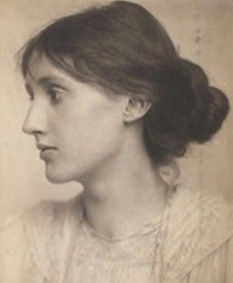
 1. Virginia Woolf: For those who follow my blog, the inclusion of Virginia Woolf at the top of the list should come as no surprise. She gets the edge for having written two of my favorite novels of all time: To the Lighthouse and Mrs. Dalloway. Will I ever read anything better than these two novels in my life-time? I highly doubt it. Not only was she an astounding novelist, capable of writing some of the most beautiful and mesmerizing prose I have ever encountered, but also a prolific literary scholar and influential feminist who helped to usher in the women's movement during the 1920's. She lived a fascinating but troubled life, battling mental illness which eventually lead to suicide. That reminds me, I recently finished her wonderful first novel The Voyage Out and need to write a review on that one soon.


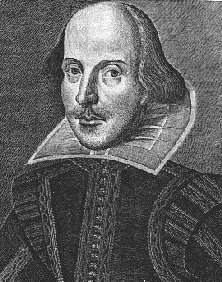
2. William Shakespeare: The list did not specify that we had to only include novelists. As the most famous writer in the English language, the bard does not need any introduction. I adore his sonnets and his many plays, Hamlet being my all-time favorite. 


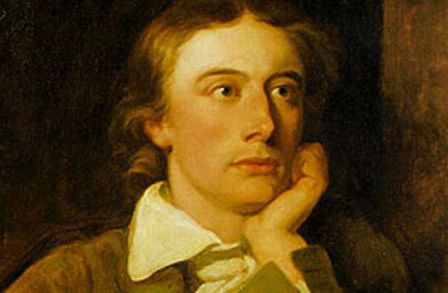
3. John Keats: Other than Shakespeare, Keats is my favorite poet so it was inevitable that he would show up on this list. It's fascinating to me that he was able to write some of the most brilliant poetry in the history of literature before his early death at the age of 25! The young man was a genius, hands down. There is no telling what he might have accomplished had he lived longer. As I have mentioned many times before, Ode to a Nightingale is indeed, my favorite poem of all-time but his letters also happen to be some of my favorite pieces of writing as well. The correspondence between himself and Fanny Brawne is breathtaking and probably the most romantic display of writing that I have ever read. ****swoons**** Time to go watch the movie Bright Star again for the 100th time.


4. Philip K. Dick: He may not be the most consistent of writers to appear on my list (some of his novels are pretty bad) but in my eyes, he still reigns supreme as the King of Science-Fiction. He is an ideas man and the concepts he comes up with for his stories are nothing short of mind-blowing. He constantly pushes the boundaries of science-fiction, often leaving readers to question the very fabric of reality. Reading PKD is often like stepping into bizarro world that is unlike anything you have ever encountered in literature before. He was a very prolific writer over the course of his life and while his novels tend to receive a lot of his attention, he tends to be underrated when it comes to short-stories: Check out "The Wub,"We Can Remember it For You Wholesale," "Pay For The Printer,"The Variable Man," "Second Variety." In fact, just get your hands on his volumes of short-stories. They are all great. As far as his novels go, A Scanner Darkly, Ubik and Valis are my favorites.


5. Saul Bellow: Another one of those authors who tends to be hit-or-miss but when Saul Bellow is on his game, there are not many writers who can match his sophistication, wit, and effusive writing style that is simultaneously compelling and challenging. I completely understand if his verbose and overwrought prose tends to drive reader's crazy but when he finds the right balance between heavy-handed philosophical discourse and didacticism, he is an absolute pleasure to read. I am still making my way through all of his writing for my "Saul Bellow Project" featured on this blog and Herzog would easily find its place at the top of all-time favorite novels list, right next to Woolf's To the Lighthouse and Mrs. Dalloway. His short-stories and letters have proven to be excellent as well.


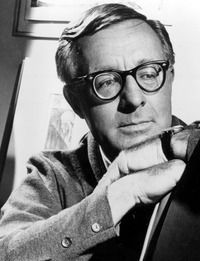
6. Ray Bradbury: Everyone's familiar with Fahrenheit 451, which is a great novel in its own right, but Ray Bradbury should be receive a lot more attention for his short-stories. He is the master of the craft in my humble opinion, no one writes better short-stories than him. NOBODY. Don't believe me? Check out his famous collections "The October Country" and "The Illustrated Man." If you are still not convinced, be sure to read some of these stories: "Mars is Heaven!," "The Scythe," "The Lake" or "The Small Assassin." If you are not a convert by then, you might as well give up on Bradbury.  


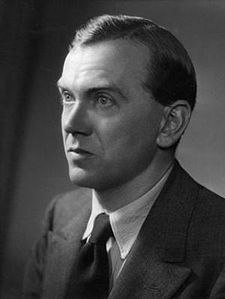
7. Graham Greene:  I have been on a mission over the years to read everything by Graham Greene and he rarely disappoints. Some of his early works along with those near the end of his long writing career pale in comparison to his middle period when he was at the peak of his creative talents: The End of the Affair, The Quiet American, A Burnt Out Case, The Power and the Glory, The Comedians and Our Man in Havana are all solid. A lot of his novels have been turned into great films as well. I have been thinking about doing a Graham Greene reading event on this blog for a while now but keep putting it off for some reason or another. He's an author I wish more people would read.


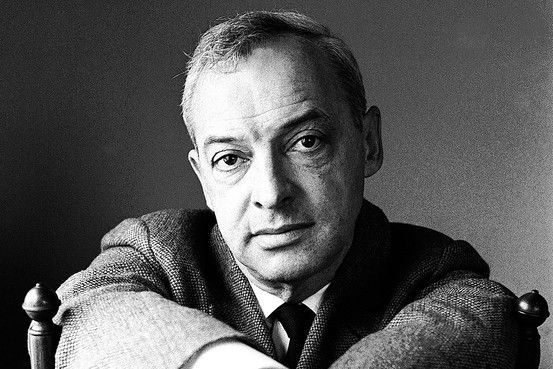
8. J.D. Salinger: I still think Franny and Zooey is J.D. Salinger's best work even though it tends to always be overshadowed by The Catcher in the Rye. His short-stories are also fantastic ("A Perfect Day for Bananafish" is absolutely brilliant). Salinger will always remain a personal favorite of mine for igniting my passion for literature.


9. Guy Gavriel Kay: The only author to appear on my list who is still alive. I have even met him once and he was a really cool, um...guy. His sweeping epics offer a unique blend of fantasy and history that are so absorbing, imaginative, richly detailed and beautifully written. I would highly recommend Tigana or The Lions of Al-Rassan.


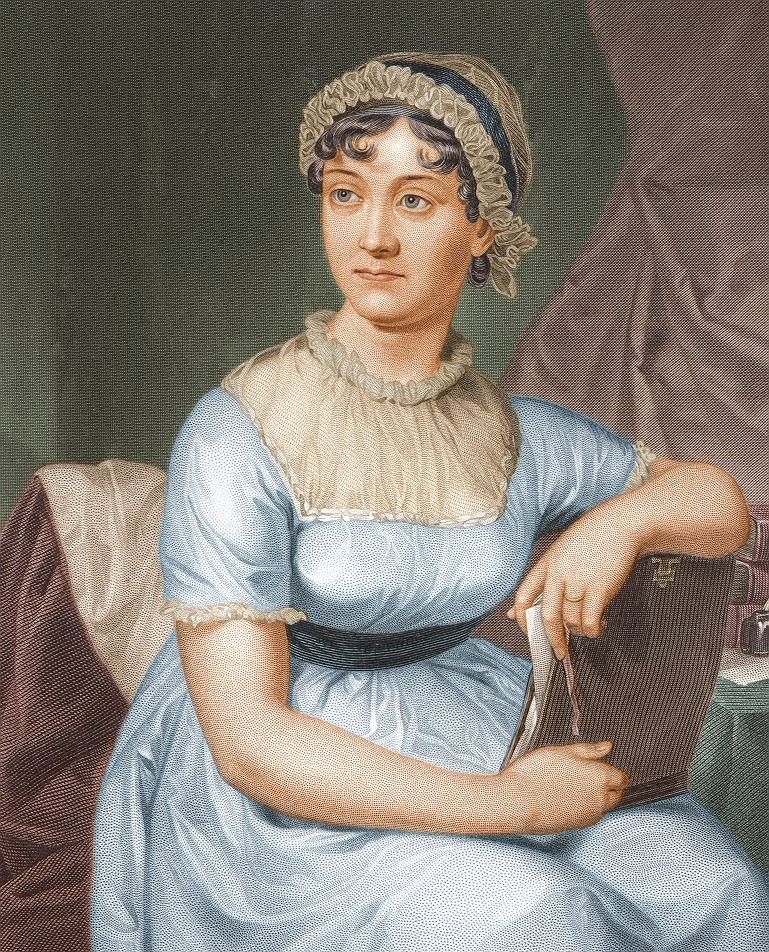
10. Jane Austen: I am not ashamed to admit that Jane Austen is one of my favorite authors. To claim that her novels only appeal to women is ludicrous--they can be enjoyed by both sexes. I expected to get some odd looks from people while reading Persuasion on the subway but it didn't bother me. Austen is one of those few authors whose works are always a delight and grow in my esteem upon subsequent readings.

To be continued...

So, who are some of your favorite authors? Please let me know in the comments section!

Friday, 17 April 2015

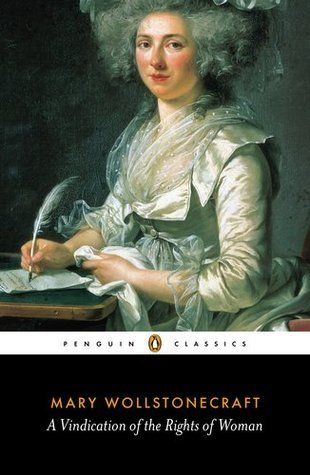
The Vindications of the Rights of Women by Mary Wollstonecraft (1792)


“I do not wish them [women] to have power over men; but over themselves.” 

If you were a woman living during the 19th century, there were very few options available other than get married at a young age, popping out babies at a steady rate, taking care of the home and raising children. Some feminist critics would argue that not much has really changed since then because gender inequality still thrives today. I am not here to get into the polemics of gender ideologies, since endless volumes of research and critical essays have already been expounded on this subject. I'd much rather leave the debate to the historians and sociologists. My concern is simply with the literature itself, to to see how different writers of the period approached issues of gender. Additionally, I find it fascinating that only male writers of the Romantic period receive the most attention whereas female writers of the time are forgotten or ignored completely. The "big six" are all male: Wordsworth, Coleridge, Keats, Byron, Blake and Shelley. Why is it that Mary Wollstonecraft, Hannah Moore, Anna Laetitia Barbauld or Charlotte Smith are rarely recognized for their contributions to this literary movement? Once again, gender politics. Therefore, I intend to take the opportunity to focus on some of these female writers who have been overshadowed by their male-counterparts.

One of the first and most influential pieces of feminist writing is Mary Wollstonecraft's The Vindications of the Rights of Women. If the last name sounds familiar it is because Mary Wollstonecraft was the mother of Mary Shelley who would go on to write Frankenstein. Wollstonecraft's lengthy treatise is her sophisticated and philosophical way of giving the middle finger to male hegemony. She calls for radical change by rejecting patriarchal interpretations of feminine virtue for being bias, inaccurate and plainly offensive. She champions female equality, passionately supports female independence and is keen to point out that men are either tyrants or sexual deviants who do not have women's best interests at heart. She provides a long and detailed account of the "history of women," highlighting the fallacy of female gender roles that have been promoted by a predominant male society. The first three chapters form the crux of the essay where she makes her main arguments that will be emphasized throughout the rest of the work:  1) Women must be educated. 2) Reason leads to virtue. 3) Marriage and vanity only lead to oppression.  4) Principles of the French Revolution should be applied to women. 5)Women must be restored to the status of human beings instead of being treated like inferior creatures by men. She is pretty harsh towards the male sex but considering the time period in which she lived, do you really blame her?

Mary Wollstonecraft deserves major props for writing such a brave and radical feminist work at a time when women possessed no rights or personal freedoms, their lives dictated entirely by men. When it comes to philosophy or critical essays, my experience is limited and what I have read has been unpleasant to say the least. I find reading this type of literature to be a real chore, dull or downright perplexing (I'm looking at you Mr. Immanuel Kant). Even though Wollstonecraft is prone to didacticism, digressions and extraneous details, she more than makes up for it by writing in an engaging style that is accessible. For those like myself who find a lot of philosophic writing to be convoluted and impenetrable, Wollstonecraft is a breath of fresh air.