Showing posts with label Top Ten Tuesday. Show all posts

Tuesday, 7 April 2015

Top 10 Tuesday: Top 10 Characters I'd Like to Check in With


This week's Top Ten Tuesday hosted by the Broke and the Bookish is a good one. Who wouldn't want to visit their favorite characters and see what they might be up to? Narrowing my list down to 10 proved to be quite a challenge.

"One man's ways may be as good as another's, but we all like our own best."
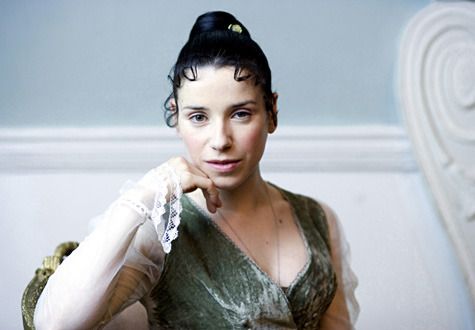
  1. Anne Elliot from Jane Austen's Persuasion: It took a while to grow on me, but I think Persuasion might be my favorite Austen and a lot of that has to do with Anne Elliot. Not going to lie, I've got a serious crush on Anne. Wentworth is one lucky guy. I wouldn't mind stopping by Kellynch Hall for dinner to see how they are getting on.
  2. The Harry Potter crew from J.K. Rowling's Harry Potter Series: I expect to see this one show up on many lists too. For us hardcore fans, the epilogue isn't enough to satisfy our curiosity as to what happened during those intervening years or what comes next. 
  3. Clarissa Dalloway from Virginia Woolf's Mrs. Dalloway: I always wondered if she would eventually reconcile her true feelings towards Peter and leave Richard. Would she still have the same ideas about life and death in her older age?
  4. Lily Briscoe from Virginia Woolf's To the Lighthouse: Did she ever receive any marriage proposals or remain a spinster? I wonder what happened to her painting--did it end up in the attic or perhaps put on display at the National Gallery?
  5. Holden Caulfield from J.D. Salinger's Catcher in the Rye: Bound to be a popular choice. Did he ever grow up or become a phony adult himself? 
  6. Various characters from Guy Gavriel Kay's Tigana: I did not include specific names to avoid spoilers. Oh man, how I would love to return to the amazing world of the Palm in Tigana and see how the survivors of the great war are getting on.
  7. Various characters from Guy Gavriel Kay's The Lions of Al-Rassan: Avoiding spoilers again. The Jaddite Kingdom is still unstable. Will death find its way to the  doorstep of those who managed to survive the previous civil war?
  8. Esther Greenwood from Sylvia Plath's The Bell Jar: I really hope she found happiness and met a nice guy who loved her unconditionally. I would hate to see her locked up in a psych-ward or find out she committed suicide.
  9. Moses Herzog from Saul Bellows Herzog: Did Moses ever come to terms with his own life or did his disillusionment and eventual self-destruction send him to the grave?
  10. Joe Chip from Philip K. Dick's Ubik: The ambiguous ending leaves a lot of unanswered questions. Does Joe find a way out of this crazy world or just accept this new reality?

Tuesday, 17 March 2015

Top Ten Tuesday: Top Ten Books On My Spring TBR List


It's that time of the week again. Thanks to the good folks at The Broke and the Bookish for hosting this meme, which is always fun. My track record for following through with reading lists has been rather spotty to say the least but surprisingly, I have doing pretty well so far this year. I'm keeping up with several of the reading challenges (even ahead in some despite the lack of reviews). There are so many novels that I anxiously want to read this spring but of course, time is a factor. Here is my tentative list (in no particular order):

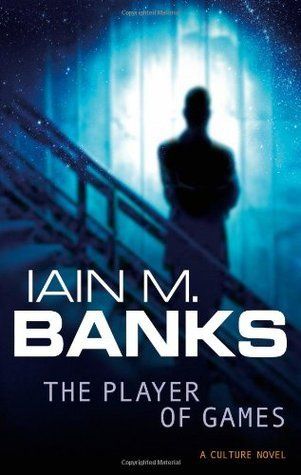
1. Player of Games by Iain M. Banks: The EPIC space-opera of Banks' Culture Series continues. Even with its flaws, I thoroughly enjoyed the first installment and it was a perfect set-up for what might just turn out be one the more ambitious and highly entertaining Science-Fiction sagas ever.


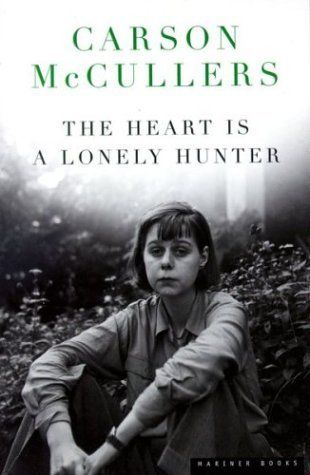
2. The Heart is a Lonely Hunter by Carson McCullers: I have been slacking a little bit on my Classics Club Challenge and it was about time I got around to reading this novel, which has been on my shelf for a while now. I seem to have a certain fondness for stories set in the American south during the early part of the 20th century (Flannery O'Connor, Faulkner, etc). Word around the campfire is that McCullers' writing has a similar feel to the works of Steinbeck. That's more than enough incentive for me to finally read this one. 


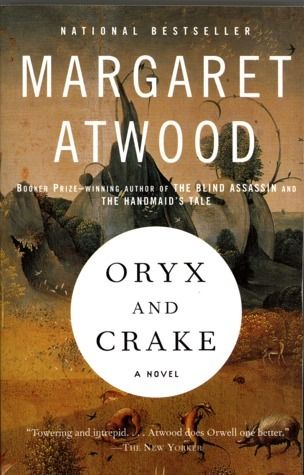
3. Oryx and Crake by Margaret Atwood: Being a Canadian and all, it's kinda embarrassing that I really haven't read much from Ms. Atwood. She's our most celebrated author and it would be nice to say that I have at least read more than one of her novels. Granted, I have read some of her short-fiction and a handful of poetry. That's gotta count for something right? I have also been meaning to read more SF from female authors, so this kills two birds with one stone.


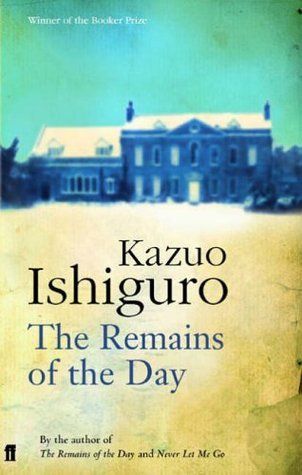
4. The Remains of the Day by Kazuo Ishiguro: For the Reading England Challenge. I have heard nothing but high praise for this novel ('a modern masterpiece', etc) and hope it lives up to the hype. I also wouldn't mind watching the movie adaptation starring Emma Thompson and Anthony Hopkins afterwards.


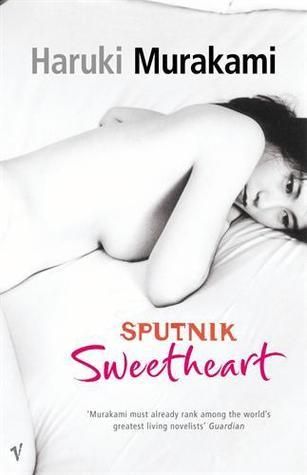
5. Sputnik Sweetheart by Haruki Murakami: Lately, I have found myself obsessed with Haruki Murakami's writing after devouring his collection of short-stories in After the Quake. This will be my first attempt to actually finish one of his novels instead of abandoning ship.

6. Who Fears Death by Nnedi Okorafor: I love that cover art! There isn't much cultural diversity in the SF genre, nor do female writers tend to receive as much recognition in contrast to their male counterparts. So to come across a  post-apocalyptic story set in Africa written by an African woman...yeah, I want to read this. 


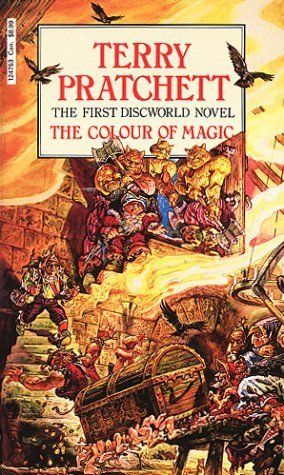
7. The Color of Magic (Discworld #1) by Terry Pratchett: As usual, I'm late to the party. With his recent passing, I now feel obligated to start the Discworld series. I've been putting it off for far too long and Pratchett also happens to be Priya's favorite author--so, naturally, I'm very interested to see if he will prove to my liking.

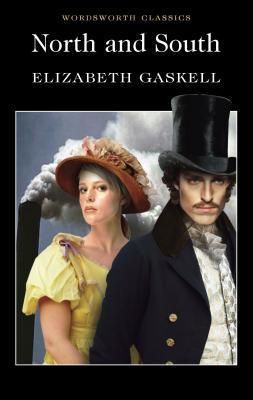
8. North and South by Elizabeth Gaskell: Another novel for both the Reading England and Classics Club Challenge. Score. Hey, doesn't the gentleman on the cover look like Matthew Mcconaughey?

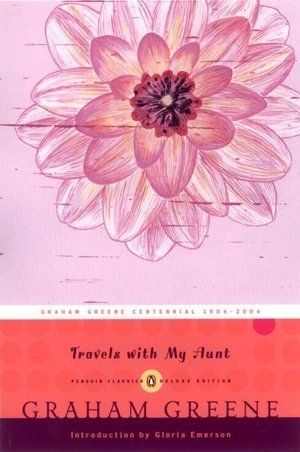
9. Travels with my Aunt by Graham Greene: Yep, another Reading England Challenge novel. However, I have also been meaning to check this one out for a while, since it is an anomaly in Greene's oeuvre; a light-hearted and entertaining novel that stands in stark contrast to his usual serious efforts.


10. The Sorrows of Young Werther by Goethe: For the Literary Movement Challenge of March, focusing on the enlightenment period. I tend to be apprehensive when it comes to reading philosophy (it's just not for me) but the premise of this one sounds fairly interesting, not to mention Fanda's enthusiastic endorsement.   
So, what's everyone else planning to read this spring? 

Tuesday, 10 March 2015

Top Ten Tuesday: Top Ten Books for Readers Who Like Science-Fiction


It's Tuesday, so you know what that means. This week's topic for a Top 10 list hosted by  The Broke and the Bookish is an exciting one: Top Ten Books for Readers Who like  _______.

I decided to go with Science-Fiction. For those who are already familiar with the genre, this list might seem a little generic but I am hoping that it will benefit those who are new to the genre a little more. Perhaps you are interested in exploring Science-Fiction but don't know where to start? I had the same problem. Granted, I'm no expert and have yet to read many of those classics of the genre but this is not a "top 10 sci-fi books of all time" list but more of a "top 10 sci-fi books to check out that will hopefully inspire you to read more from the genre" type of list.


1. Sirius (Old-school) by Olaf Stapledon: H.G. Wells or Jules Verne might have been more obvious choices but Stapledon tends to receive the short end of the stick. He's one of those pioneers of the genre but is often overlooked or forgotten; many of his works are still out of print! The only copy available for Sirius is in this Dover edition that also comes with one of his other stories, Odd John. I haven't read that one yet. His prose can be very clunky and descriptive at times (reminiscent of the Victorian style) but Sirius is an important novel for laying down the groundwork for other authors to follow. It also happens to be a very intriguing piece speculative fiction. It is about a dog with super-human intelligence who attempts to integrate himself within human society. For dog lovers, this story is bound to be a real tear-jerker.


2. The Foundation (classic) by Isaac Asimov : There are a whole bunch of other novels in the Foundation series, but the first one remains the best. Asimov's influence on the genre is insurmountable and he is a must read for any lover of Sci-Fi.


3. Way Station (Vintage) by Clifford D. Simak: If John Steinbeck had written science fiction stories, it might have turn out to be something like Way Station. Winner of the Hugo Award in 1964, this novel boasts a very cool premise even though it might sound lame: Living on his farm in rural American, the protagonist cannot age and inside his home is an alien designed galactic rest-stop, or Way Station, for aliens all across the galaxy. You would think that with a premise like that there would be tons of action, violence, high-speed chases among parallel dimensions but that is not the case here. This is a slow novel that takes its time to establish the setting and main character; Simak's strengths as a writer reside in his ability to create an emotionally charged story and he succeeds admirably. A lot of science-fiction novels place a much higher importance on the exploration of ideas over character development and story but it is those memorable works like Way Station that are able to find the right balance.


4. The Stars My Destination (Vintage) by Alfred Bester: Science-Fiction really took off the late 50's and 60's and it is authors like Alfred Bester who paved the way. This novel is entertaining as much as it is thought-provoking. Gully Foyle is a fascinating anti-hero who can teleport across galaxies. Pretty darn cool. For anyone who enjoys poetry from the Romantic period, they might get a kick out of this novel because the author uses William Blake's poem The Tyger as an influence on the story. Read review here


5. Ubik (New-Wave) by Philip K. Dick: Mark my words: it is only a matter of time before Ubik will be adapted into a film. The premise behind this novel is so brilliant, so bizarre and so unique that only Philip K Dick could have written it. Containing some of his craziest ideas and memorable characters, the novel is deeply philosophical but also remains highly entertaining. Not to be presumptuous, but it wouldn't surprise me if Ubik was a direct influence on the Wachowski's The Matrix. I could have picked any number of great novels by Philip K. Dick for this spot but Ubik tends to be underrated and more people need to read it. You can check out my review here.


6. October Country by Ray Bradbury (short-stories): I was tempted to include Fahrenheit 451 but it already receives enough attention. However, if you haven't read it yet, please do so -- the novel is a SF classic classic for a reason. The amount of short-stories written in this genre is astounding but it was important to include at least one collection on this list. I am breaking the rules a bit here but you can't ignore great writers like J.G. Ballard, Theodore Sturgeon, James Tiptree Jr. (alias for Alice Bradley Sheldon) and so many others who have preferred to use the short-story as their main literary form. Personally, Ray Bradbury ranks as the most talented of his peers when it comes to the short-story, but the more I read from J.G. Ballard, the more it seems my opinion might change. Bradbury wrote a ton of short-stories over his long career spanning over half a decade. The Illustrated Man is another great collection that is worthy of this list but I choose October Country because it contains several of my all-time favorites by him: The Scythe, The Man Upstairs, The Lake and of course, The Small Assassin. You can read my review of that one here.


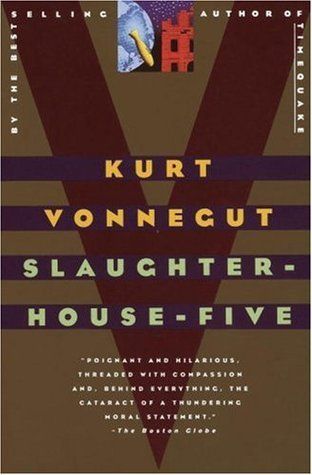
7.  Slaughterhouse-Five by Kurt Vonnegut (modern classic) : Time traveling, WWII,  aliens, slap-stick humor, fragmentation, absurdity, satire, this novel has it all. And so it goes...


8. Blindsight (hardcore SF) by Peter Watts: I tend to keep away from hardcore science-fiction because it can often feel like sitting through a graduate program science lecture where the professor is going on and on about formulas and technical jargon that makes absolutely no sense. However, Blindsight is one of those rare cases where all of the complicated science stuff does not hinder the actual story. Watts puts his own unique spin on the alien-contact premise that is absolutely mind-blowing. His ideas and the amount of research put into this novel is astounding to behold. He also happens to be a Canadian too.


9. Consider Phlebas (space opera) by Iain M. Banks: Whenever the label "space opera" is through around, it tends to only be associated with negative connotations. Adopting this narrow-minded point of view only prevents the discovery of great science fiction works and brilliant authors like Iain M. Banks. I discovered him far too late and sadly, he passed away in 2013. At least I can take comfort in the fact that he left behind a great body of work. Consider Phlebas is the first novel from his Culture Series and the most accurate word I can use to describe its awesomeness is EPIC. War stretches across the galaxy between an  alien race and a technologically advanced civilization known as the Culture (the premise might sound a bit hokey but rest assured, it's a lot more complicated and fascinating than it might seem). Even though the story is very entertaining with plenty of action, Banks also happens to be a really intelligent writer who isn't all about spectacle and can tell a great story. He explores a lot of important issues concerning technology, religion and social structures but the most impressive aspect of this novel is the vast narrative scope. Once again, it is EPIC. He possesses such a wild imagination and some of the concepts and creative ideas he comes up with is literally out of this world. I can't wait to start reading the rest of the series.


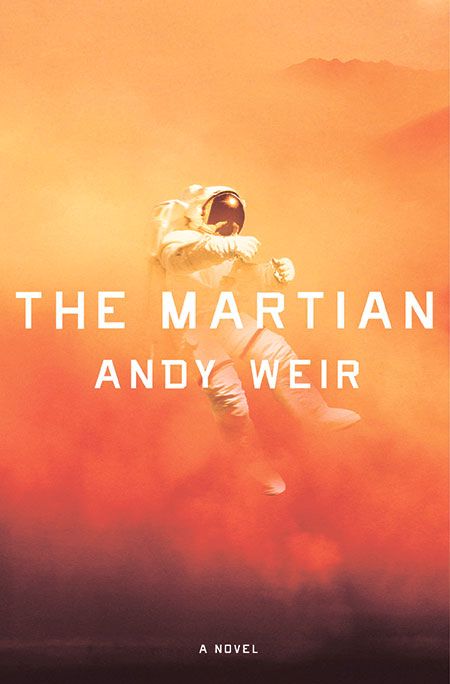
10. The Martian (contemporary) by Andy Weir: Chances are you have already read this novel. If not, you have likely heard of it. Either way, The Martian is very accessible SF novel for those new to the genre and looking to get their feet wet. A thrilling, humorous and highly addicting read that had me turning the pages at a feverish pace.  

Post-script: Satia made a shrewd observation in the comment section that my list does not include any female authors from the genre. Please do not think that I am a male chauvinist pig because this is not true. The fact is, I just have not come across enough great works by female authors, yet. The key word is YET. I have read Atwood's Handsmaid Tale which was a decent dystopia novel but not one I believe that would be best suited to this particular list. I have also read plenty of great SF short stories by female authors (I mentioned James Tiptree earlier; Le Guin and Butler would be included as well) but obviously need to read more novels. This list would look entirely different in a few months.

Well, that's it for now. Hopefully a few titles managed to catch your attention and you are now ready to take the plunge into the realm of SF where anything is possible. One of these days I hope to compile a top 50 of my favorite Science Fiction novels. Now that would be fun...
Tuesday, 3 March 2015

Top Ten Tuesday: All-Time Favorite Books from the Past 3 Years


It's been a while since I've participated in the Top Ten Tuesday hosted by The Broke and the Bookish and this week's topic is far too enticing to pass up. At first, I thought that they meant to list your top 10 favorite books published within the last three years (which of course, would be impossible for me to do) but since this is not the case, it is a whole different ball-game. I have read a lot of great novels since 2013 and narrowing down my list proved to be a grueling process. However, I am fairly content with the end results:

  1. Herzog by Saul Bellow
  2. Crime and Punishment by Fyodor Dostoyevsky (review pending)
  3. The Lions of Al-Rassan by Guy Gavriel Kay
  4. Animal Farm by George Orwell 
  5. Tigana by Guy Gavriel Kay
  6. Fahrenheit 451 by Ray Bradbury
  7. Seize the Day by Saul Bellow
  8. Native Son by Richard Wright (review forthcoming)
  9. Everything is Illuminated by Jonathan Safren Foer
  10. Valis by Philip K. Dick  
Initially, I tried to include only one book per author but these constraints served no real purpose. As you can see, Saul Bellow and Guy Gavriel are the only ones to appear twice but their works are so exceptional that excluding them would only make me appear false to myself. 

If I were to make an arbitrary list consisting of my favorite novels of all time, Herzog would easily make the Top 5. In fact, my passionate adoration for this novel is so profound that I might even boost it up into the the top 3. I've read it twice now and currently making my way through it again for a third time. If this were Saul Bellow's only novel, I would have no qualms of proclaiming him as one of the great writers of the 20th century. Luckily for us, he wrote extensively over his lifetime and Seize the Day helps to confirm his status.


Crime and Punishment would likely make my top 10. I've been putting off writing a review for over a year now because I cannot possibly do this novel justice. Every single time I attempt to sit down and crank something out, my mind goes blank. I could easily bestow a heap of superlatives to describe many of its admirable qualities but that would come across as redundant--come on now, it's a Russian classic for a reason. However, I can state with the utmost confidence that it does rank as the most complex and intense psychological case studies on morality and religion that I have ever come across in a piece of literature. I really need to read more from Dostoyevsky.

If you have been following my blog at all, my rabid obsession with Guy Gavriel Kay has been well documented and I'm always eager to recommend his works to others. You won't find many authors as talented or original as him when it comes to the fantasy genre. I plan to organize a GGK read-a-thon in the near future, stay tuned.

George Orwell's allegorical masterpiece Animal Farm might seem all cute and fuzzy on the surface but it is a serious and important literary work that takes a firm stance against Marxist ideologies. I may not always agree with Orwell's political views but his general premise that communism only works in principle and not practice, is difficult to refute.

Ray Bradbury is probably more famous for his short-stories but Fahrenheit 451 has always remained at the top of SF's best novels of all time lists and for good reason. It's depiction of a terrifying world where books are considered a threat to the very foundation of a Utopian society because they encourage free-will and independent thought, has lost none of its relevance. The rise of totalitarianism through censorship, media control and our increasing reliance on technology, Bradbury's future seems right around the corner.

Richard Wright's unflinching portrayal of the black experience in his novel Native Son is so controversial, so thought-provoking, so powerful and so heartbreaking that it will remain an undisputed classic for many generations to come. It's scary to think that not a lot has really changed in 2015 concerning race relations in American since Richard Wright's time during the 1930's. Reading this novel today is a painful reminder that we still have a long way to go in achieving racial equality.

Everything is Illuminated defies accurate categorization. A truly original work from a young author that mixes fiction, autobiography, magical realism and history--the story is intricately written, flipping back and forth between past and present; combining an abstract epistolary narrative with a fragmented one that is most ingenious. In less talented hands, this convoluted approach would spell disaster but Jonathan Safren Foer somehow manages to pull it off swimmingly. I strongly believe that with enough time, he will be recognized one of the great writers of the new millennium. 

It was inevitable that Philip K. Dick would appear on this list. After all, he is my favorite SF writer and Valis proves once again why I hold him in such high regard. This novel is mind-blowing and for those who might be under the false impression that the genre has nothing substantial to offer in ways of originality or ideas, think again. 

Tuesday, 30 September 2014

Top Ten Tuesday: The Top Ten Most Difficult Books I Have Read...Or how I learned to avoid Ulysses

 
Yikes, I can't believe it's Tuesday again! Where does the time go? Soon Christmas will be around the corner. I've been meaning to post some more reviews last week but work has kept me quite busy and any free time has been spent, well, reading voraciously. Don't worry, I promise to post some new content soon. In the mean time, it's time for another round of Top Ten Tuesday hosted by The Broke and Bookish and this week they ask book bloggers to list their most difficult reads. I'm going to include some novels that I started but never finished because those ones exemplify my most painful reading experiences.

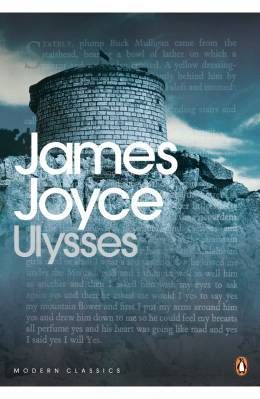
  1. Ulysses by James Joyce: The constant thorn in my side. This is supposed to be the greatest novel ever written? Balderdash! I've lost count as to how many times I have tried to read this monstrosity only to toss it aside in a fit of rage. This book right here is the apotheosis of literary masturbation. For 800 pages, Joyce wants to prove to the world that he is a literary genius. This may be true but I can never get past chapter three to find out. Oddly enough, I don't despise Joyce as a writer and really enjoyed Dubliners and Portrait of the Artist as a Young Man but Ulysses is beyond my intellectual capabilities, only serving to put me in a foul mood of consternation. 
  2. The Ambassadors by Henry James. I detest Henry James and his convoluted, ostentatious writing style. Enough already with the excessive details and run-on sentences that stretch a full page amounting to nothing of significance! Get to the bloody point, geez! Here is my rant
  3. A Tale of Two Cities by Charles Dickens: I don't know what it is about his writing exactly but it's aggravating to me. I've tried several times to get past the firsts few chapters but gave up. Sorry Mr. Dickens, looks like you and I aren't meant to be friends. 
  4. Sons and Lovers by D.H. Lawrence: Again, another one of those "classics" that I have tried to finish countless times but failed because it proved far too effective as a sleeping drought. I am big fan of Lawrence's short stories but this novel along with some of the others I have attempted are so tedious and verbose as to drive me mad.
  5. The Sound and the Fury by William Faulkner: Probably the most difficult novel that I have forced myself to read cover to cover. Maybe I am used to Woolf's more elegantly composed stream-of-consciousness but Faulkner's attempt in this style is so rough, jagged, violent and completely incomprehensible. The various time lapses and abrupt jump cuts between past and present left my mind reeling in agony. I might tackle this novel again in the future to see if I am able to make better sense of it. 
  6. Wuthering Heights by Emily Bronte: Ugh. I really had to force myself to finish this novel and came very close to tossing it out the window. I'd rather gouge my eyes out than have to read this rubbish again.
  7. A Farewell to Arms by Ernest Hemingway: Dull. Dull. Dull. 
  8. As for Me and My House by Sinclair Ross: Apparently, this is is a Canadian literary masterpiece. What a joke. I had to read this for class and if anything, it sets Canadian literature back another 50 years. Terrible writing and tedious. Probably one of the worst books I have had the displeasure of reading.
  9. Catch-22 by Joseph Heller: One of the most overrated 'classics' in my opinion. Not a difficult read by any means, just overlong and repetitive. It's just the same joke over and over and over and over...
  10. The Waves by Virginia Woolf: My favorite author but this novel puts stream-of-consciousness and free association into overdrive. The writing is achingly beautiful as much as it is utterly perplexing. 
I'd be curious to know if any of these titles would make your list or what other novels gave you much difficulty. Feel free to leave a comment below.

Tuesday, 23 September 2014

Top Ten Tuesday: Top Ten Books On My Fall To-Be-Read List

 
It's been a while since I last participated in the Top Ten Tuesday held by the Brooke and the Bookish so let's give this another go. As the first day of fall, this weekly meme is quite appropriate and asks fellow book bloggers to list their top 10 books to be read during this season. It's doubtful that I will be able to even get through three books, let alone ten before winter peaks its head around the corner but we'll have to wait and see what the next few months bring.
  
 104101
  1.  The Lions of Al-Rassan by Guy Gavriel Kay - If I only manage to read one book this fall, it will be this one. Mr. Kay is probably my favorite living author right now and I even had the distinguished honor of meeting him last week where he signed two of my books. He was very down to earth and a really cool dude to chat with. Tigana is the best novel that I have read this year and I plan on reading everything he has ever written. 
  2. A Song for Arbonne by Guy Gavriel Kay - Same as above.
  3. Pastures of Heaven by John Steinbeck - Steinbeck is one of my favorite authors but there is still so much of his early work that I have not yet had the pleasure to read. I adore short stories and this collection has been on my radar for quite some time. I have not come across many authors other than Steinbeck who are able to combine beauty, intellect and pathos so seamlessly into their writing. 
  4. Blood Meridian by Cormac McCarthy - I still think The Road is one of the most overrated novels ever but this one sounds awesome. I'm getting a Red Dead Redemption type of vibe from the premise. 
  5. The English Patient by Michael Ondaatje - For my Canadian Reading Project. I have been avoiding this one for years but feel that it is time to see what all the hoopla is about. This books receives a lot of negative flak but my gut tells me that I will end up enjoying it.
  6. The Left Hand of Darkness by Ursala Le Guin - Often praised as one of the great science fiction writers of all time and I still have yet to read a single novel by her! For shame. Granted, I have managed to read several of her short-stories and enjoyed them immensely. 
  7. Persuasion by Jane Austen - I am always down for some more Austen.
  8. City & the City by China Mieville - I finally took the plunge into the bizarro world of China Mieville this year with Embassytown and look forward to seeing what other craziness he can conjure up. The premise behind this book sounds totally insane!
  9. Retribution Falls by Chris Wooding: Apparently it shares many similarities to Firefly. Sold.
  10. The Yiddish Policeman's Union by Michael Chabon - I've never read anything by Chabon and perhaps it is time to see whether or not he really deserves all the critical acclaim.
What's everyone else planning to read this fall? Let me know in the comments below.

Tuesday, 9 July 2013

Top Ten Tuesday: The Ten Best Movie Adaptations


This weeks top ten hosted by The Broke and the Bookish is a very fun topic: the best movie adaptations of literary works. Here is mine:

  1. A Scanner Darkly: A Keanu Reeves film that isn't cringe-worthy? You betcha. Richard Linklater is one of the most talented directors working today and here he somehow manages to adapt this wacky and complex science fiction masterpiece by Philip K. Dick, which I thought would be impossible to translate to the screen. The rotoscoping technique and psychedelic visuals compliment the story perfectly.
  2. Lord of the Rings: Epic and beyond anything I could have possibly imagined. 
  3. High Fidelity: It doesn't matter that the setting is changed from London to Chicago, adaptations don't get much better than this one. John Cusack is the freakin' man.
  4. A Clockwork Orange: With this film, Kubrick proves again why he is one of the greatest directors and such a daring visionary. Controversial and banned for decades, he takes on the demanding task of adapting a difficult novel and although he makes significant changes, he keeps true to the spirit of the original source material. Plus, Malcolm McDowell as Alex is just perfect casting and his performance is legendary.
  5. The Third Man: Graham Greene + Carol Reed + Orson Welles + Zither = Film-noir masterpiece.
  6. Pride and Prejudice (2005): Joe Wright has proven to be quite the maverick when it comes to book adaptations. Even though I was initially skeptical of having Kiera Knightly playing Elizabeth Bennet, she quickly won me over and so did the entire film. I think Jane Austen would be proud.
  7. Barry Lyndon: Kubrick strikes again. He takes a mediocre Victorian novel and transforms it into a visual masterpiece. The cinematography, mise-en-scene and musical score is just breathtaking. It gets my vote for the most beautiful film ever made.
  8. Sin City: Sure, it's all green screen but Frank Miller's violent graphic novel finally gets the proper adaptation it deserves.
  9. Perks of Being a Wallflower: Stephen Chobsky decides to direct his own novel and delivers one of the biggest surprises of 2012. Hermione even pulls off a very convincing American accent.
  10. Atonement: It's rare to come across a film adaptation that is better than the original but Joe Wright manages to pull it off here. A great cast and stunning visuals (that long tracking shot on the beach is very impressive).