Showing posts with label Science-Fiction. Show all posts

Monday, 23 March 2015

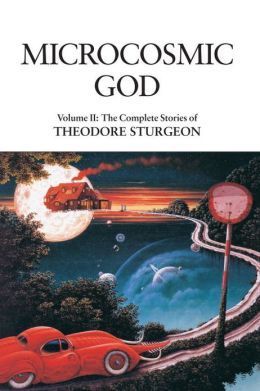
Deal Me in Challenge: Microcosmic God by Theodore Sturgeon

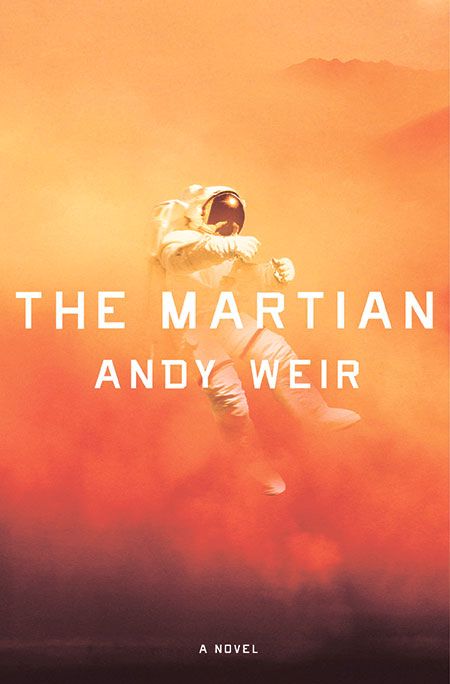
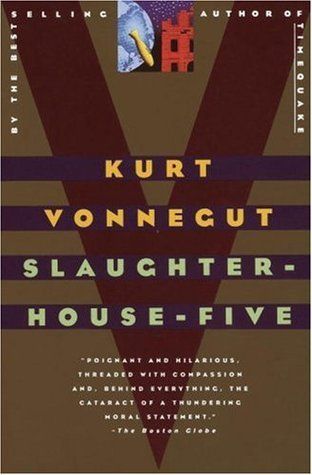
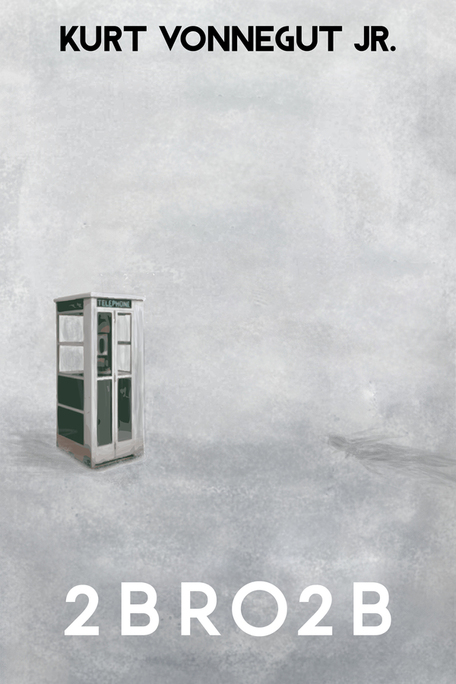
These vintage Sci-Fi covers are so cool.

Card Drawn: Jack of Spades.

Theodore Sturgeon is one of those dominating figures of the Science-Fiction genre who has yet to really impress me. Prior to this short-story, I had read two of his novels: Marry to Medusa and More Than Human--both decent but lacking a certain level of finesse that would otherwise propel him to greatness in my eyes. Sturgeon's ideas and unique approach to the genre is far more appealing to me than his actual writing.

In his introduction to The Complete Stories of Theodore Sturgeon Vol. I, renowned Science-Fiction/Fantasy author Gene Wolfe writes, "The first [sf] story I read was 'Microscopic God' by Theodore Sturgeon. It has sometimes occurred to me that is has all been downhill from there." High praise, indeed. However, I must disagree with Mr. Wolfe's estimation of this particular short-story, which to my mind, is not nearly deserving of such a distinguished accolade. Surely, the story is adequate enough and contains certain positive attributes but let's be reasonable: there are so many better short-stories from this genre out there. Clearly, such an argument is a matter of personal opinion. While I do appreciate Sturgeon's attempt to deliver an interesting spin on 'mad scientist playing God' story-line, which goes far back as Mary Shelley's Frankenstein, the writing is choppy, sporadic and wildly uneven; more often than not coming across as amateurish. Perhaps Sturgeon can be forgiven for these blunders since this was one of his earliest attempts at writing, first published in"Astounding Science-Fiction" in 1941. With the outbreak of WWII, it is interesting to view this work within a social and historical context. The rapid advancement of nuclear technology proved to be a dangerous threat to the extinction of humanity and Sturgeon's work can certainly be interpreted as a parable or allegory, suggesting a certain level of fear for the future because of these scientific developments.

In 1984, Sturgeon commented on Microcosmic God

"I have always disliked this story--not for its basic idea, which has been called unique, but for its writing. Just out of my teens, I had not yet learned that nobody is ever and altogether good and nobody is all bad. Ignorant of that, one can produce 100% purified vintage dyed-in-the-wool cardboard characters." 

I couldn't have summed up my position on this story any better. The author's self-criticism and bold honesty deserves the utmost respect. He admits to being an obstinate young writer prone to making mistakes, which included weak writing and "dyed-in-the-wool cardboard characters." What a wonderful expression: Dyed-in-the-wool. I'll have to try and use that expression in casual conversation more often. But I digress, Sturgeon touches upon the main problems with this story: the writing is poor and the characters are flat. The story starts off with a very interesting premise but quickly dissolves into absurdity. A highly inventive biologist creates a species of super-intelligent micro-organisms (hence the title of the story) that he names "Neoterics," capable of adapting to any type of environment and able to make scientific breakthroughs at such a high speed beyond human capacity. He lives on an isolated island, cut off from the larger world. He spends most of his time in the laboratory, observing and experimenting with his fascinating new "children" as their intelligence evolves at an accelerated rate. His financial backer is a devious banking executive who becomes a very powerful figure in the world through the scientist's many inventions. This introverted scientist is only interested in the advancement of human knowledge; he cares nothing about financial gain and only wants to be left alone. Unfortunately, the banker has different plans for him and is compelled to use the scientist as a pawn for his diabolical plans for world domination. This is where the story becomes downright silly and preposterous, which is a shame because there is so much potential gone to waste. 

Since the writing is mediocre at best, the narrative and characters follow a similar pattern. Instead of a well-told story, the end result is a bloated, cheesy and incongruous collection of scenes and ideas. Reading this story felt like sitting through one of those incredibly lame Science-Fiction B-Movies with numerous plot-holes and hokey acting that makes you wonder if the people involved were all hopped up on psychedelics during film-making. Science-fiction demands the suspension of belief on the part of the reader more so than many other genres but unfortunately, the narrative here gets bogged down in trivialities, often meandering interminably without a clear sense of purpose. For a short-story, it's actually quite lengthy. Sturgeon could have really used a better editor but that might not even have saved the story from imploding on itself. Despite these numerous flaws, the story has one redeeming quality: the Neoterics. These are fascinating creatures and Sturgeon's creative inventiveness shines through. I only wish he had focused more on exploring the relationship between the scientist and these highly-intelligent beings instead of shifting gears towards the unfolding of a zany plot.

Wednesday, 11 March 2015

The Martian by Andy Weir


“It’s true, you know. In space, no one can hear you scream like a little girl.” 

Andy Weir's The Martian has received a lot of buzz since its release, generating a media-circus of attention, making best-sellers lists and highly praised by many readers. Whenever a book garners this much hype and attention, I tend to remain skeptical concerning it's true merit. So, I kept this novel on my radar, unwilling to conform to the general reading public, since everyone and their grandmother seemed to own a copy. As an unabashed science-fiction geek, I was still mildly interested in what all the hoopla was about but remained convinced that with such high expectations, it  the novel would more than likely turn out to be a huge disappointment. Nonetheless, curiosity got the better of me when it was announced that Hollywood was planning a movie adaptation starring Matt Damon, a bunch of other great actors and directed by Ridley Scott. I may not be the biggest Matt Damon fan but having Ridley Scott attached to the project was enough for me to finally break down and give into peer pressure. This is the guy who directed such science-fiction masterpieces like Alien and Blade-Runner! Plus, he's getting up there in age and if he was willing to come out of semi-retirement to bring this novel to life on the big screen, he must have seen something special and worthwhile in it.

Well, what do you know...Ridley Scott recognizes another great story containing cinematic qualities that should be suited to his particular style of film-making. If Alien is any indication, this is a director who has a great visual sense and knows exactly how to create a dreadful atmosphere of thrilling suspense within a confined setting. He is perfect for the job because The Martian caters to his artistic sensibilities: a story about an astronaut named Mark Watney, who finds himself stranded on Mars due to a freak accident that occurs during a surveying mission, left behind by his crew because they think he is dead. With no one else to rely on but himself, Watney must use his wits, skills, engineering training and scientific knowledge to survive. Limited supplies, short on food, unable to communicate with NASA, he finds himself all alone on the red planet. If the harsh environment of Mars doesn't kill him first, starving to death surely will. The comparison to Defoe's Robinson Crusoe seems inevitable but Weir's novel does not have a socio-political agenda, nor does he dabble in allegory--his main intention here is to tell an absorbing piece of science-fiction, which he definitely delivers. The narrative is written largely as an epistolary, taking on the form of journal entries by Mark Watney who documents his day-to-day activities on Mars, which largely include brainstorming survival strategies, performing risky experiments and dealing with life-threatening catastrophes. He also spends an exorbitant amount of time watching re-runs of 70's sitcoms that were left by one of the other crew members and listening to disco music that drives him up the wall. How else is a  guy supposed to unwind after spending an exhausting day alone on a planet that is trying to constantly kill him, without access to Netflix? Weir also presents a third person narration, providing different perspectives of members working at NASA who discover Mark is still alive and now must try and figure out a way to bring him home. By cutting back and forth between Watney's personal account of his exploits on mars and with NASA, keeps the story from becoming too solipsistic, adding another dimension to the narrative arc.

Watney's self-deprecating personality is refreshing, often creating moments of comedic relief, which help to counterbalance the more serious elements of the novel. He realizes that his chances of survival are slim and that death is imminent, but he manages to maintain a wry sense of amusement about the whole situation. I hope the film adaptation manages to keep the humor of the novel intact.

The amount of scientific research that must have went into this novel is astonishing. Even though it takes on certain characteristics of hardcore-science fiction where the author bombards the reader with technical details, relying heavily upon math, physics and chemistry as a narrative device (all subjects that gave me the most trouble in school), the novel still remains accessible. It is not important to fully understand the exact science being described, since Weir does an admirable job of conveying the primary essence of these scientifc technicalities. Who would have thought that reading about potato farming on Mars could be so interesting?

I am glad to report that my initial assumptions were wrong and The Martian is well deserving of its favorable prestige. Having read my fair share of science-fiction that take place on Mars--Ray Bradbury's Martian Chronicles and Kim Stanley Robinson's Mars Trilogy come to mind--Andy Weir puts a unique spin on the colonization of a distant planet story-line, proving himself to be a capable writer who succeeds in telling a highly entertaining story, holding me in suspense and gripping my attention until the very last page.


Tuesday, 10 March 2015

Top Ten Tuesday: Top Ten Books for Readers Who Like Science-Fiction


It's Tuesday, so you know what that means. This week's topic for a Top 10 list hosted by  The Broke and the Bookish is an exciting one: Top Ten Books for Readers Who like  _______.

I decided to go with Science-Fiction. For those who are already familiar with the genre, this list might seem a little generic but I am hoping that it will benefit those who are new to the genre a little more. Perhaps you are interested in exploring Science-Fiction but don't know where to start? I had the same problem. Granted, I'm no expert and have yet to read many of those classics of the genre but this is not a "top 10 sci-fi books of all time" list but more of a "top 10 sci-fi books to check out that will hopefully inspire you to read more from the genre" type of list.


1. Sirius (Old-school) by Olaf Stapledon: H.G. Wells or Jules Verne might have been more obvious choices but Stapledon tends to receive the short end of the stick. He's one of those pioneers of the genre but is often overlooked or forgotten; many of his works are still out of print! The only copy available for Sirius is in this Dover edition that also comes with one of his other stories, Odd John. I haven't read that one yet. His prose can be very clunky and descriptive at times (reminiscent of the Victorian style) but Sirius is an important novel for laying down the groundwork for other authors to follow. It also happens to be a very intriguing piece speculative fiction. It is about a dog with super-human intelligence who attempts to integrate himself within human society. For dog lovers, this story is bound to be a real tear-jerker.


2. The Foundation (classic) by Isaac Asimov : There are a whole bunch of other novels in the Foundation series, but the first one remains the best. Asimov's influence on the genre is insurmountable and he is a must read for any lover of Sci-Fi.


3. Way Station (Vintage) by Clifford D. Simak: If John Steinbeck had written science fiction stories, it might have turn out to be something like Way Station. Winner of the Hugo Award in 1964, this novel boasts a very cool premise even though it might sound lame: Living on his farm in rural American, the protagonist cannot age and inside his home is an alien designed galactic rest-stop, or Way Station, for aliens all across the galaxy. You would think that with a premise like that there would be tons of action, violence, high-speed chases among parallel dimensions but that is not the case here. This is a slow novel that takes its time to establish the setting and main character; Simak's strengths as a writer reside in his ability to create an emotionally charged story and he succeeds admirably. A lot of science-fiction novels place a much higher importance on the exploration of ideas over character development and story but it is those memorable works like Way Station that are able to find the right balance.


4. The Stars My Destination (Vintage) by Alfred Bester: Science-Fiction really took off the late 50's and 60's and it is authors like Alfred Bester who paved the way. This novel is entertaining as much as it is thought-provoking. Gully Foyle is a fascinating anti-hero who can teleport across galaxies. Pretty darn cool. For anyone who enjoys poetry from the Romantic period, they might get a kick out of this novel because the author uses William Blake's poem The Tyger as an influence on the story. Read review here


5. Ubik (New-Wave) by Philip K. Dick: Mark my words: it is only a matter of time before Ubik will be adapted into a film. The premise behind this novel is so brilliant, so bizarre and so unique that only Philip K Dick could have written it. Containing some of his craziest ideas and memorable characters, the novel is deeply philosophical but also remains highly entertaining. Not to be presumptuous, but it wouldn't surprise me if Ubik was a direct influence on the Wachowski's The Matrix. I could have picked any number of great novels by Philip K. Dick for this spot but Ubik tends to be underrated and more people need to read it. You can check out my review here.


6. October Country by Ray Bradbury (short-stories): I was tempted to include Fahrenheit 451 but it already receives enough attention. However, if you haven't read it yet, please do so -- the novel is a SF classic classic for a reason. The amount of short-stories written in this genre is astounding but it was important to include at least one collection on this list. I am breaking the rules a bit here but you can't ignore great writers like J.G. Ballard, Theodore Sturgeon, James Tiptree Jr. (alias for Alice Bradley Sheldon) and so many others who have preferred to use the short-story as their main literary form. Personally, Ray Bradbury ranks as the most talented of his peers when it comes to the short-story, but the more I read from J.G. Ballard, the more it seems my opinion might change. Bradbury wrote a ton of short-stories over his long career spanning over half a decade. The Illustrated Man is another great collection that is worthy of this list but I choose October Country because it contains several of my all-time favorites by him: The Scythe, The Man Upstairs, The Lake and of course, The Small Assassin. You can read my review of that one here.


7.  Slaughterhouse-Five by Kurt Vonnegut (modern classic) : Time traveling, WWII,  aliens, slap-stick humor, fragmentation, absurdity, satire, this novel has it all. And so it goes...


8. Blindsight (hardcore SF) by Peter Watts: I tend to keep away from hardcore science-fiction because it can often feel like sitting through a graduate program science lecture where the professor is going on and on about formulas and technical jargon that makes absolutely no sense. However, Blindsight is one of those rare cases where all of the complicated science stuff does not hinder the actual story. Watts puts his own unique spin on the alien-contact premise that is absolutely mind-blowing. His ideas and the amount of research put into this novel is astounding to behold. He also happens to be a Canadian too.


9. Consider Phlebas (space opera) by Iain M. Banks: Whenever the label "space opera" is through around, it tends to only be associated with negative connotations. Adopting this narrow-minded point of view only prevents the discovery of great science fiction works and brilliant authors like Iain M. Banks. I discovered him far too late and sadly, he passed away in 2013. At least I can take comfort in the fact that he left behind a great body of work. Consider Phlebas is the first novel from his Culture Series and the most accurate word I can use to describe its awesomeness is EPIC. War stretches across the galaxy between an  alien race and a technologically advanced civilization known as the Culture (the premise might sound a bit hokey but rest assured, it's a lot more complicated and fascinating than it might seem). Even though the story is very entertaining with plenty of action, Banks also happens to be a really intelligent writer who isn't all about spectacle and can tell a great story. He explores a lot of important issues concerning technology, religion and social structures but the most impressive aspect of this novel is the vast narrative scope. Once again, it is EPIC. He possesses such a wild imagination and some of the concepts and creative ideas he comes up with is literally out of this world. I can't wait to start reading the rest of the series.


10. The Martian (contemporary) by Andy Weir: Chances are you have already read this novel. If not, you have likely heard of it. Either way, The Martian is very accessible SF novel for those new to the genre and looking to get their feet wet. A thrilling, humorous and highly addicting read that had me turning the pages at a feverish pace.  

Post-script: Satia made a shrewd observation in the comment section that my list does not include any female authors from the genre. Please do not think that I am a male chauvinist pig because this is not true. The fact is, I just have not come across enough great works by female authors, yet. The key word is YET. I have read Atwood's Handsmaid Tale which was a decent dystopia novel but not one I believe that would be best suited to this particular list. I have also read plenty of great SF short stories by female authors (I mentioned James Tiptree earlier; Le Guin and Butler would be included as well) but obviously need to read more novels. This list would look entirely different in a few months.

Well, that's it for now. Hopefully a few titles managed to catch your attention and you are now ready to take the plunge into the realm of SF where anything is possible. One of these days I hope to compile a top 50 of my favorite Science Fiction novels. Now that would be fun...

Saturday, 7 March 2015

Deal Me in Challenge: 2BR02B by Kurt Vonnegut


Card Drawn: Ace of Clubs.

2BR02B. That is the question...

Is that not an awesome title or what? I couldn't have picked a better card from the deck to start the Deal Me in Challenge. Kurt Vonnegut is one of those authors that I have been meaning to read more from, especially since Slaughter-House Five is one of my favorite novels. He remains one of the best, if not the best, modern literary satirist of our time; an intelligent writer with a sardonic sense of humor and inimitable style whose caustic social commentary is thought-provoking as much as it is hilarious. I have always admired the talent of certain writers are able to write effective satire -- truth be told, not many come close to pulling it off with the sophistication and sharpness as Kurt Vonnegut. 

2BR02B would be classified as belonging to the dystopia science-fiction genre. The story takes place in the not so-distance future where population control is regulated by the state. There exist certain strict guidelines that must be followed concerning child-birth that involves...well, I've said enough already. Giving away the rest of the plot would ruin the fun of experiencing this wonderful story for yourself. Lately, I have been reading an exorbitant amount of short-stories to catch up with challenge (I'm currently 10 weeks behind, yikes!) and noticed several recurring patterns amongst a good portion of them: a sense of incompleteness, being abstract, haphazard, inchoate; essentially, they felt inconsequential. J.G. Ballard is a master of the short-story and he once said that "There have been plenty of perfect short-stories, but no perfect novels." He might be on to something there because 2BR02B is as close to a perfect short-story that I have ever come across. The novelist can get away with digressions, side-plots, elaborate descriptions or detailed exposition quite easily, but not the short-story writer. Crafted meticulously, Vonnegut doesn't fill the limited space with empty words; nothing is amiss or superfluous; he doesn't miss a beat. As always, his trademark wit and acerbic social critique hits all the right notes. However, it is the tightly wound story and stunning climax that left me in complete awe. What a brilliant ending! Many short stories seem disposable, like dime novels or pulp fiction. You read them once, get some kick out of it and then move on to the next one without dwelling much on it. 2BRo2B does not fall into that category and will linger in my mind for a long time to come.

Going back to that J.G. Ballard quote, it seems to be that great novels can be flawed because they have so much other story material to make up for their deficiencies whereas there is very little room for error when it comes to the short-story. The author must work within far more  rigid parameters, striving to be as concise as possible without compromising the integrity of the narrative. No easy task. Vonnegut somehow makes it look easy.

Friday, 20 February 2015

Mini Reviews #2: Mistborn - The Final Empire, Valis, The Brief Wondrous Life of Oscar Wao.

Having been away for a prolonged period of time, it's time to play catch-up again with some more mini-reviews. Round two.


Mistborn: The Final Empire (Mistborn #1) by Brandon Sanderson


Here I am embarking on another epic fantasy series after swearing to myself that I would avoid them after several disappointing encounters with other works in the genre. However, the first novel of the Mistborn series proved to be surprisingly entertaining with a well-conceived world and characters that don't fall into typical fantasy cliches. They are flawed and contain a lot more depth in contrast to the usual fanfare. Sanderson proves to be a very capable writer and he can certainly spin a good story full of intrigue, suspense and action but with this novel he seems to be setting the stage for the rest of the series so it feels underwhelming as a whole. I wanted more. I suppose that means the author should be complimented for writing a compelling enough story to keep me interested.
 

I also want to note that the magical system he creates here is probably one of the best I have ever come across in a fantasy novel albeit, slightly confusing at first. Even though Sanderson doesn't bring anything new to the genre in terms of story (a ragtag group of rebels plan to overthrow a Dark Lord, sound familiar?) I am still curious to see where he goes from here with the next two novels in the series. The best part of the novel for me is the final few chapters which builds up nicely to an explosive finale revealing a lot of key components that opens up the story to countless possibilities. This gives me hope that Sanderson knows what he is doing and actually has a clear idea of where the story is heading instead of other authors who tend to have no clear resolution in sight and just drag the series along. That's right, I'm looking at you Robert Jordan and George R.R. Martin. 


Valis by Philip K. Dick


This novel is insane and only the brilliant mind of Philip K. Dick could have written it. Semi-autobiographical, hallucinogenic and overflowing with ideas, the story follows Dick's alter-go named Horselover Fat (Philip in Greek translates to "fond of horses" and Dick in German is "Fat") who believes that he has been touched by the hand of God or some kind of supreme being through a beam of a light that enters his brain. He embarks on a theological quest to seek the "truth" but of course, he is seen by others as a crazy person. Or maybe he is the one who is sane and everyone else is crazy. For those out there who think that science-fiction is cheesy or has nothing significant to offer, look no further than Philip K. Dick to shatter those preconceived notions. Like several of his other novels, this one is far from perfect, containing various flaws in terms of plot development and a lackluster ending but Philip K. Dick has never been renowned for his story-telling abilities. First and foremost he is a philosopher, a man of ideas. Philip K. Dick is one of those special writers dear to my heart. He possesses such a wild and creative imagination and always leaves the reader contemplating the BIG questions of existence, reality and the universe: Valis is unlike anything I have ever read before and there has been nothing ever written like it since.


 The Brief Wondrous Life of Oscar Wao by Junot Diaz


I seem to be in the minority here but I absolutely adored this novel. Winner of the Pulitzer prize in 2008, Junot Diaz came out of the nowhere to snatch the coveted prize much to the disbelief and outrage of the literary world. I'm not one to follow these prestigious book awards but I think the committee might have made the correct choice for once. Granted, Diaz's novel isn't groundbreaking by any stretch of the imagination but he has a unique voice, writes beautifully even when using excessive profanity (no small accomplishment) but above all, he packs such raw emotion into the story and characters. You can tell that he really loves his characters, which makes it easy to sympathize with them even though they aren't exactly the most honorable or likable individuals. The title is meant to be facetious because the protagonist's life really isn't all that wondrous--in fact, its actually quite ordinary without a happy ending, full of  sadness and heartbreak. Oscar Wao is a character that I can personally relate to, which helps to explain why this novel resonated with me on a such deep level: he's a book nerd who loves Star Wars and fantasy, shy, introverted,  an outsider, socially awkward, hopeless when it comes to women. Hey, Mr. Diaz, are you sure you didn't happen to base Oscar on me? 

Anyways, the story also doesn't just focus on Oscar himself but contains several flashbacks of his different family members living in the Dominican Republic (his mother, grandfather) and the narrative moves towards the present day when the Wao's eventually immigrate to America. At one point, Oscar's cousin even becomes a narrative voice. This now brings us to the footnotes. You see, not only is the author interested in telling his story, he also wants to provide a history lesson at the same time. Many people are bound to be annoyed by the long, detailed notes that provide a historical background concerning the tumultuous social and political landscape of the Dominican Republic as it transitioned from corrupt fascism to democracy but I actually found it quite informative. Diaz also uses playful rhetoric and humor as well within these footnotes so it's not as if one is being forced to endure a dry and tedious lecture. Furthermore, Diaz manages to touch upon some very important issues such as social displacement, the diaspora, racism, religion, cultural barriers, even the conflicts that arise with generation gaps. Funny, intelligently written, poignant. Diaz has a bright future ahead of him and I can't wait to see what he comes up with next. Don't let the hype get to you, this is a great novel that stands tall on its own merits.

Monday, 13 October 2014

Mini Reviews #1: Retribution Falls, Embassytown, Veronica Mars

Happy Thanksgiving everyone!

I've been working a lot lately and also trying to squeeze in as much reading as possible, which unfortunately, has not left much time for writing reviews. The only reason I'm even posting today is because it is a stat holiday and I finally have a day off. Truth be told, I've been lacking in the motivational department and can't seem to focus on writing anything at all, endlessly frustrated with my own incompetence. I'm burnt out. I think it might be time to take a vacation, perhaps go someplace warm and try to relax. Better yet, I ought to quit my perfunctory and mind-numbing job which is surely causing my brain cells to deteriorate at a rapid rate. Not to mention the unnecessary stress. I have even detected a few gray hairs! After coming home from a grueling and laborious shift, I tend to be in a foul mood where only alcohol and sleep is at the forefront of my mind. Reading offers a slight reprieve from my woes but I can't even enjoy my favorite past time very long before passing out due to exhaustion. 

On those rare occasions when I'm able to muster enough energy to sit down and attempt to hash out a review, my mind goes blank. I really hope this is just a dry-spell and I'll be back to writing more reviews on a regular basis but as my previous track record has shown, I tend to be rather inconsistent in updating this blog with new content. Therefore, I hope to make these "mini reviews" more of a common feature. Besides, my reviews tend to be quite lengthy and not many people read them anyways, so perhaps I will be inspired to write more if I keep my reviews nice and short. 

Retribution Falls by Chris Wooding


I can see the similarities to Firefly but Chris Wooding ain't no Joss Whedon. He pays homage to his predecessor, mixes in some steam-punk, a bit of Star Wars, Pirates of the Caribbean, blends all of these elements together and presto! You get Retribution Falls. Except, I think the author forgot to add the necessary ingredient to hold everything together: good writing. The story starts off promisingly enough with a great action sequence but soon loses momentum and becomes silly, contrived, all too predictable--a flimsy rehash of its pop-culture influences. Although the novel doesn't pretend to be anything but entertaining fiction, the story never fully develops into an exciting adventure as I was lead to believe by the synopsis or the high praise bestowed by other readers. The narrative drags along at a sluggish pace and I found myself bored, anxious to be done with it. Often disjointed and clumsily written, the story has so much potential but is poorly executed. The characters are flat and the world-building is underdeveloped. The writing lacks polish and a certain level of finesse where everything comes across as amateurish. Perhaps Chris Wooding intends to expand on these narrative deficiencies with the next books in the series but I'm not in any hurry to find out.


Embassytown by China Mieville


I'm left with mixed feelings on this one. Embassytown marks my first foray into the surreal, nightmarish and bizarro world of China Mieville. Although I enjoyed my stay, it might be a while before I visit again. He's clearly an intelligent fellow, an erudite word-smith (be sure to have a dictionary handy) and a talented writer with a wild imagination. This story is unlike anything I have ever encountered before--seriously, some of the stuff he comes up with is totally insane--floaking, biorigging, bladderwrackish, polyps, aeoli (breaking apparatus), amniotic fluids and pabulum (food sources) just to name a few of the crazy aspects of this world--but I'm not sure this was the best starting place for me to experience his unique brand of weirdness. 

My lukewarm impression stems more from my own personal taste rather than faults with the author or the actual novel itself. Stepping back and viewing the novel objectively, Mieville has written an intelligent and absorbing piece of hard science-fiction. Cognitive estrangement is one of the defining characteristics of the genre and Mieville is able to take this concept and put his own unconventional spin on it. However, I tend to enjoy a novel a lot more if I able to connect with the characters or the actual story on some emotional level and found it difficult to do so here. Then again, Mieville deliberately uses narrative distance to emphasize themes of otherness and alienation that connect to the larger ideas of cognitive estrangement.

I adore Science-Fiction and Mieville certainly pushes the limits of the genre in a new direction, subverting many of the familiar tropes that have become all too commonplace in a human/alien contact narrative.  By focusing on semantics and the complexities of  "Language" in relation to understanding culture and others (humans or otherwise) makes this novel wholly unique.


 Veronica Mars: The Thousand Dollar Tan Line by Rob Thomas and Jennifer Graham


A long time ago, we used to be friends...

That song still gets me super-excited and brings back so many fond memories. Pure nostalgia. I'm an unabashed Veronica Mars fan, not going to lie. I have a huge crush on Kristen Bell. I've seen the television series many times including the disappointing season 3, even contributed to the kick-starter movie campaign and went to see it on opening night. As a fellow marshmallow (fans of the show will understand the label), I can't get enough of Veronica Mars and when I found out that there was going to be book series that will continue the story of our favorite private detective, I was all over it like white on rice. A quick and entertaining read, I burned through this novel in a few days. This also marks the first time I have read anything by two collaborative authors. I am still unsure if Rob Thomas, the creator of the show, wrote anything that made its way into the novel or just provided the  idea and left it up to Jennifer Graham to work her magic. Either way, I am more than satisfied with the end result and so happy to see that the awesomeness of Veronica Mars will live on in book form. Boo-ya.


It's difficult to review this novel without any personal bias since I can overlook some of its minor flaws. The mystery aspect of the story isn't particular exciting and is a tad predictable in the end but it is still manages to deliver a few unexpected surprises that is sure to delight fans and create anticipation for the next installment. Both authors should be commended for successfully transporting the television show into a novel. I had my doubts at first but it didn't take long to realize that they were equal to the task. The show comes to life on the pages. The quality of writing is adequate enough to suit the material and the story moves along at a brisk pace. The most striking aspect is that the authors do such an excellent job of capturing the voices and personalities of the characters. Veronica's sharp wit and sarcastic sense of humor is spot-on. A common feature of the show is Veronica's internal monologues and the novel form provides more liberty to get inside her head. Also, where would Veronica be without help from her dad Keith or best friends Mac and Wallace? What about her relationship with Logan? The authors manage do justice to these fabulous supporting characters and its hard not to see the actual actors in their respective roles.

The Thousand Dollar Tan Line takes place soon after the events of the movie so be sure watch that first before picking up this novel to avoid huge spoilers. In fact, if you haven't seen the show before, do yourself a favor and acquire the first three seasons and then the movie. You can thank me later.  


Logan: I thought our story was epic, you know, you and me.
Veronica: Epic how?
Logan: Spanning years and continents. Lives ruined, bloodshed. EPIC. But summer's almost here, and we won't see each other at all. And then you leave town... and then it's over.


*sigh*


Friday, 17 January 2014

Fahrenheit 451 by Ray Bradbury


“Stuff your eyes with wonder, he said, live as if you'd drop dead in ten seconds. See the world. It's more fantastic than any dream made or paid for in factories.”

"It was a pleasure to burn." Wow, what a great opening sentence that immediately hooks the reader; or at least that was the effect on me and I was unable to put the novel down for very long before the nagging compulsion to start reading again became almost too much to bear. I sneaked in some reading during work hours, took several "washroom breaks" and even missed my stop on the subway line home. A testament to the power of great literature--the capability to capture the reader's imagination, inspire, inform and enlighten. Ironically, the plot of this novel involves an oppressive state that is intent on the total destruction of the written word for some of those very reasons. It is easier to control a society if free-will and independent thought is marginalized.

Ray Bradbury was a true visionary. Here is another novel that has been on my radar for many years but never got around to picking up. I am ashamed to admit that it took so long to finally read this brilliant literary work. I have often praised his talents as a short-story writer but after finishing Fahrenheit 451, I can proudly declare him to be one of my favorite authors that I have had the distinguished pleasure of ever reading. He possesses such a wild imagination, overflowing with so many fascinating story-ideas and cannot be pigeon-holed into writing in the same genre or becoming anachronistic. Despite how bizarre the story may be, his works remain distinctively human--that is to say, there often exists an underlying subtext regarding various aspects of humanity and social order that keeps his ideas relevant. He always remains fresh even though some of his novels were written more than half a century ago. He is fully capable of writing some of the creepiest horror stories or can spin frightening dystopias such as this novel, which takes place in a world where firefighters no longer put out fires; rather, they are responsible for starting them with their main prerogative being to burn books. With increased dependence on technology and brain-washing by the media, most individuals are living in a fog of illusion. Doesn't this sound eerily familiar in today's technologically obsessed world?

I find that what places him far and above other writers (regardless of genre) is that he is a master story-teller and has the literary talent to back it up. Anyone can write a story but to tell a good story with purpose, style and conviction that leaves the reader shaken up and wanting more is rare. He is the type of writer that I aspire to be one day. It still saddens me to reflect on his passing, but much like in this novel, the preservation of his memory through the many literary works he has left behind will hopefully not be forgotten.


This novel is part of the Classics Club Challenge.

Wednesday, 19 June 2013

Brave New World by Aldous Huxley


“But I don't want comfort. I want God, I want poetry, I want real danger, I want freedom, I want goodness. I want sin."

It seems like a pointless exercise to write a review on this widely popular dystopian classic that has been analyzed to the point of no return and has been required reading for most high-school students over the many decades since its publication in 1932 (unfortunately, I was not provided this luxury). Not to mention, a lot of the story details have escaped my memory but I clearly recall being fascinated by the sociological ideas presented in the novel  along with Huxley's accurate depiction of advanced technology and its negative effect on future human civilization. He was simply, ahead of his time.

Even though the novel is prone to heavy doses of pedantic discourses (especially during lengthy conversations between Mustapha Mond and the Savage) and the characters themselves are often perceived as caricatures (then again, one could argue that this is intentional since individuality has been eradicated from society) for Huxley to use irony, satire and even allegory to express his ideas, this narrative approach does not diminish the novel's power to engage the reader to think critically about a wide range of important issues that are still, if not, more relevant today than ever. Technology is moving at such a rapid pace and can be dangerous in influencing the way people think and conduct themselves; the media has become such a dominant force in most cultures and social conditioning  is becoming an all too real concept. In Huxley's futuristic society, a hallucinogenic drug named "soma" is used to control the masses and numb people into a state of complacency; they become slaves to the system. At one point, Mond explains that "unorthodoxy" is dangerous because it strikes at the heart of society itself so in order to achieve stability, individual identity must be squashed out. A scary premonition but one that is all too plausible with the influence of technology and the media. False consciousness tends to distract people from the reality of their situation. For me, the most interesting approach to the novel is from a sociological perspective. I've barely scratched the surface of this complex work--the concept of free will vs. predestination along with the contrast between Marxist and capitalist ideologies deserves a much thorough analysis.

On a side note, I was fascinated to learn that on his death bed, Aldous Huxley requested that he be given LSD to ease the pain--an ingenious idea!