Friday, 20 February 2015

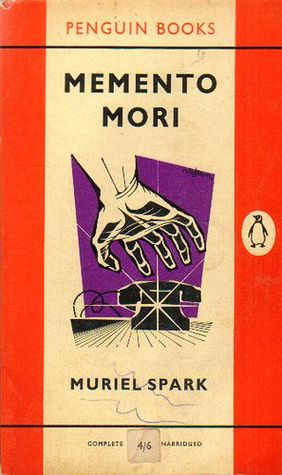
Book Beginnings on Friday: Memento Mori by Muriel Spark


I can't believe its Friday already. This week has gone by exceptionally fast but that means it is time for another Book Beginnings on Friday held by Rose City Reader. To participate, share the first line or two of the book you are currently reading and, if you feel so moved, let us know what your first impressions were based on that first line. 


"Dame Lettie Colston refilled her fountain-pen and continued the letter: One of these days I hope you will write as brilliantly on a happier theme. In these days of cold war I do feel we should soar above the murk & smog & get into the clear crystal."

I seem to have a love/hate relationship with Muriel Spark. I have enjoyed several of her works and there are others that I find to be downright deplorable. I happen to have bunch of books scattered on the floor of my room and just randomly picked this one out of the pile last night around 1 am. I wasn't even planning on reading it but after the first couple of pages, I was hooked. It's difficult to pinpoint exactly what grabbed my attention at first since the opening sentence isn't particularly striking in any way. A woman with a literary background is composing a letter to an undisclosed author. So what? Well, after reading a bit more, I instantly recognized Spark's penchant for acerbic wit, humor and satire. Even in my sleep deprived state, she managed to make me laugh. I soon got that wonderful feeling in the pit of my stomach that this novel might just prove to be one of her better works. Then again, I have been wrong in the past on my first impression, especially pertaining to The Ballad of Peckham Rye, which started off promising only to turn out as a complete abomination. Guess we'll just have to see how this one goes.

Mini Reviews #2: Mistborn - The Final Empire, Valis, The Brief Wondrous Life of Oscar Wao.

Having been away for a prolonged period of time, it's time to play catch-up again with some more mini-reviews. Round two.


Mistborn: The Final Empire (Mistborn #1) by Brandon Sanderson


Here I am embarking on another epic fantasy series after swearing to myself that I would avoid them after several disappointing encounters with other works in the genre. However, the first novel of the Mistborn series proved to be surprisingly entertaining with a well-conceived world and characters that don't fall into typical fantasy cliches. They are flawed and contain a lot more depth in contrast to the usual fanfare. Sanderson proves to be a very capable writer and he can certainly spin a good story full of intrigue, suspense and action but with this novel he seems to be setting the stage for the rest of the series so it feels underwhelming as a whole. I wanted more. I suppose that means the author should be complimented for writing a compelling enough story to keep me interested.
 

I also want to note that the magical system he creates here is probably one of the best I have ever come across in a fantasy novel albeit, slightly confusing at first. Even though Sanderson doesn't bring anything new to the genre in terms of story (a ragtag group of rebels plan to overthrow a Dark Lord, sound familiar?) I am still curious to see where he goes from here with the next two novels in the series. The best part of the novel for me is the final few chapters which builds up nicely to an explosive finale revealing a lot of key components that opens up the story to countless possibilities. This gives me hope that Sanderson knows what he is doing and actually has a clear idea of where the story is heading instead of other authors who tend to have no clear resolution in sight and just drag the series along. That's right, I'm looking at you Robert Jordan and George R.R. Martin. 


Valis by Philip K. Dick


This novel is insane and only the brilliant mind of Philip K. Dick could have written it. Semi-autobiographical, hallucinogenic and overflowing with ideas, the story follows Dick's alter-go named Horselover Fat (Philip in Greek translates to "fond of horses" and Dick in German is "Fat") who believes that he has been touched by the hand of God or some kind of supreme being through a beam of a light that enters his brain. He embarks on a theological quest to seek the "truth" but of course, he is seen by others as a crazy person. Or maybe he is the one who is sane and everyone else is crazy. For those out there who think that science-fiction is cheesy or has nothing significant to offer, look no further than Philip K. Dick to shatter those preconceived notions. Like several of his other novels, this one is far from perfect, containing various flaws in terms of plot development and a lackluster ending but Philip K. Dick has never been renowned for his story-telling abilities. First and foremost he is a philosopher, a man of ideas. Philip K. Dick is one of those special writers dear to my heart. He possesses such a wild and creative imagination and always leaves the reader contemplating the BIG questions of existence, reality and the universe: Valis is unlike anything I have ever read before and there has been nothing ever written like it since.


 The Brief Wondrous Life of Oscar Wao by Junot Diaz


I seem to be in the minority here but I absolutely adored this novel. Winner of the Pulitzer prize in 2008, Junot Diaz came out of the nowhere to snatch the coveted prize much to the disbelief and outrage of the literary world. I'm not one to follow these prestigious book awards but I think the committee might have made the correct choice for once. Granted, Diaz's novel isn't groundbreaking by any stretch of the imagination but he has a unique voice, writes beautifully even when using excessive profanity (no small accomplishment) but above all, he packs such raw emotion into the story and characters. You can tell that he really loves his characters, which makes it easy to sympathize with them even though they aren't exactly the most honorable or likable individuals. The title is meant to be facetious because the protagonist's life really isn't all that wondrous--in fact, its actually quite ordinary without a happy ending, full of  sadness and heartbreak. Oscar Wao is a character that I can personally relate to, which helps to explain why this novel resonated with me on a such deep level: he's a book nerd who loves Star Wars and fantasy, shy, introverted,  an outsider, socially awkward, hopeless when it comes to women. Hey, Mr. Diaz, are you sure you didn't happen to base Oscar on me? 

Anyways, the story also doesn't just focus on Oscar himself but contains several flashbacks of his different family members living in the Dominican Republic (his mother, grandfather) and the narrative moves towards the present day when the Wao's eventually immigrate to America. At one point, Oscar's cousin even becomes a narrative voice. This now brings us to the footnotes. You see, not only is the author interested in telling his story, he also wants to provide a history lesson at the same time. Many people are bound to be annoyed by the long, detailed notes that provide a historical background concerning the tumultuous social and political landscape of the Dominican Republic as it transitioned from corrupt fascism to democracy but I actually found it quite informative. Diaz also uses playful rhetoric and humor as well within these footnotes so it's not as if one is being forced to endure a dry and tedious lecture. Furthermore, Diaz manages to touch upon some very important issues such as social displacement, the diaspora, racism, religion, cultural barriers, even the conflicts that arise with generation gaps. Funny, intelligently written, poignant. Diaz has a bright future ahead of him and I can't wait to see what he comes up with next. Don't let the hype get to you, this is a great novel that stands tall on its own merits.
Thursday, 19 February 2015

Storm Front (The Dresden Files #1) by Jim Butcher


“I'd made the vampire cry. Great. I felt like a real superhero. Harry Dresden, breaker of monsters' hearts.” 

I'd like to make a shout out to Priya over at Tabula Rasa (check out her blog, it's really quite excellent) for recommending this book because let's face it, this really isn't the type of stuff I usually read. If this were a few years back and I happened to be browsing a bookstore where this novel was out on display, it's unlikely that I would give it a second glance before moving on, let alone stop in my tracks to pick it up out of sheer curiosity. Come on, just look at the ridiculous cover! It's laaaaaaaaame. A dude wearing a cowboy hat, dressed in black trench-coat holding a staff. Really? Yes, I admit to being a literary snob sometimes, focusing more of my attention on the "classics" as opposed to more contemporary works in general or anything from the urban fantasy genre for that matter. However, I have managed to put aside the elitist attitude and open myself up to a wider range of literature. I've been a lot happier in my reading ever since then and have discovered plenty of new favorites along the way. Not everything has to be Shakespeare.

Jim Butcher's Storm Front is a fast-paced and entertaining novel, a pure joy to read. The premise is pretty darn cool and I wish that had come up with it. Harry Dresden is a hard-boiled Wizard Private Investigator (what's up with famous wizards with the name Harry? Heh.) working out of Chicago who deals in paranormal cases. Think Van Helsing meets Raymond Chandler with a little dose of Elmore Leonard thrown in for good measure. Butcher creates a pastiche of the horror genre, detective film-noir and fantasy, which under different circumstances might have turned out to be a complete mess but Butcher successfully manages to pull it off with style. 

There are many aspects that make the novel appealing and it starts off with a wonderfully drawn lead protagonist: Harry Dresden. He is such a likeable hero and the only way that I can properly describe him is badassssss. He's also got a wicked sense of humor, he's clever, smart (of course he's smart, he's a wizard. Duh.) but above all, he's resourceful and despite being thrown into crazy situations with his life in constant danger, he still tries to act with a sense of morality. This brings me to another positive characteristic of novel that might get overlooked. Not everything is so black and white--yes, there is good vs. evil but it's remains a gray area. Butcher presents an ethical conundrum. Harry Dresden might be playing for the good side but is he in fact a moral individual? Are the villains truly evil or are they motivated to taking specific actions because of circumstances or other reasons? Worth considering.

So, you have your demons, vampires, faeries and evil sorcerers that are common in horror stories. Then you have the femme fatale, gangsters, prostitutes and of course, the rugged, wisecracking, never-play-by-the-rules detective who finds himself in tangled web of double-crossings and murder. I have heard that many people have accused Butcher of being misogynistic in his portrayal of women but one must remember that he is working within the detective genre. If you have ever watched film-noir movies or read Raymond Chandler, then it should be apparent that women are often presented in a demeaning manner. While the novel does play around with genre conventions in a clever way, it does have that pulpy B-movie quality, which some folks might consider silly but it worked for me. Butcher also uses a great deal of humor and comedy that had me laughing while still pinned to the edge of my seat, turning the pages at a rapid pace, anxious to know what happens next. Give me a well-told story and I'm one happy camper. Storm Front would obviously not be considered "serious" literature and is far from perfect but it sure is one hell of a ride. The ending is a bit hokey feels a little rushed but I can overlook such flaws since the positive attributes leading up to the denouement far outweigh the negative. I won't bother going into plot details because it is would ruin all the fun. Take a chance, it's a quick read and you might just be pleasantly surprised. I for one am looking forward to reading the rest of the series. Oh, and I absolutely love this quote:

“I don't want to live in a world where the strong rule and the weak cower. I'd rather make a place where things are a little quieter. Where trolls stay the hell under their bridges and where elves don't come swooping out to snatch children from their cradles. Where vampires respect the limits, and where the faeries mind their p's and q's. My name is Harry Blackstone Copperfield Dresden. Conjure by it at your own risk. When things get strange, when what goes bump in the night flicks on the lights, when no one else can help you, give me a call. I'm in the book.”  

Yep, like I said earlier: Badassssssssssss.

Tuesday, 17 February 2015

Theft of Swords by Michael J. Sullivan


“I like any plan where I don’t die a horrible death.”

Never judge a book by its cover right? Well, guilty as charged. I don't really read a lot of fantasy novels and Michael J. Sullivan's Theft of Swords -- the first volume of the Riyria Revelations -- reminds me why this tends to be the case. Sloppy writing, overflowing with cliches, plot holes galore and a knack for excessive info dumping. What happened to a little subtlety? Split into two novels, the story revolves around two expert thieves and their adventures as they are hired to steal back two different swords. They get dragged into the political turmoil of the land, meet a bunch of different characters along the way who help them on their journey, find themselves in sticky situations where they have to rely on their skills and wit to escape, encounter treacherous villains, get into lots of swords fights, hook up with some Wizard and at one point even do battle with an ancient flying basilisk. Sounds exciting right? Well, not really. It's all sorta dull. The premise is decent enough and the story actually starts off great but it goes quickly downhill from there. There were so many parts that left me scratching my head in confusion or disbelief. If you are working within the fantasy genre, it is imperative for the author to make sure that the world and story they create is believable. Unfortunately for Sullivan, none of it makes a whole lot of sense.

Sorry if it sounds harsh, but this novel comes across as amateur fan-fiction. I'm probably being overly generous in giving it two stars when it probably deserves much less. I don't give out half-stars but if I did, 1.5 sounds about right. See, the first section isn't completely terrible and captured my interest just enough to keep me reading but the second part is where the novel really suffers. During my recovery in hospital, I was looking for something light and entertaining at the time. With such a cool-looking cover and after reading a brief synopsis, Theft of Swords seemed most promising. Unfortunately, my instincts were wrong again and despite the novel's numerous flaws, I still somehow managed to finish it. Don't ask me how, it must have been the meds I was on that messed up the synapses in my brain. Anyways, the story has potential and I was hoping that it would develop into something worthwhile but instead it left me thoroughly frustrated with its inconsistencies--the slapdash narrative, uneven pacing and shoddy world-building being the most glaring negative aspects. I couldn't help but feel that the author was making up the story as he went along without any clear sense of where the actual narrative was heading and unsure of how to reach a proper conclusion.
Leaving out key plot details either through incompetence or as a narrative strategy to create suspense or intrigue  is ineffective here because Sullivan is not a skilled enough writer so the story ends up floundering in no-man's land. Not once did I ever get a clear picture of this particular world, its inhabitants, various regions or places (The wizard's prison comes to mind. What the hell was that?) It's all a jumbled mess that is barely comprehensible. The two main characters are interesting enough and share good chemistry but it's a shame that every other aspect of the story falls flat. They are supposed to be expert thieves, capable of coming up with expert plans but the solution to every problem seemed so predictable. In fact, most of the story is silly and predictable.

Then again, there are still several more novels in the series so hopefully I am wrong in my current assessment. Perhaps the author manages to do a complete 360: fleshing out the story and characters and then somehow tying everything together with coherent narrative. Suffice it to say, I have my doubts. Had I read this novel under different circumstances, I would have abandoned it sooner instead of forcing myself to wad through 600+ pages of mediocrity. It is highly unlikely that I will continue with the series but if I'm ever scrambling to find something to read while on the toilet, The Riyria Revelations might prove to be most convenient.

Monday, 16 February 2015

Literary Movement Reading Challenge


Once again, I'm late to the party but I hope to make up for it within the next few months. This will be an intense year-long event hosted by Fanda over at Fanda Classiclit so a shout out to her for organizing it all. Participants will be required to read works from particular literary movements designated for each month, starting with the middle ages all the way to post-modernism. Yikes. It's like English 101 all over again. I already missed January but I plan to go back and finish it up at some point in time. Here is my tentative list so far:

January: Medieval - The Canterbury Tales by Geoffrey Chaucer  

February: Renaissance - Astrophil and Stella by Philip Sydney

March: Enlightenment - Poetic works by Dryden, Pope, Marvell, Katherine Phillips...  

April: Romanticism - Various works by the big six: Wordsworth, Coleridge, Shelley, Byron, Keats, Blake. Plus over-looked female writers: Charlotte Smith, Hannah More.  

May: Transcendentalism - Walden by Henry David Thoreau

June: Victorian - North and South by Elizabeth Gaskell, Jane Eyre by Charlotte Bronte, 

July: Realism - Huckleberry Finn by Mark Twain  

August: Naturalism - The Call of the Wild, White Fang and other stories by Jack London  

September: Existentialism - The Stranger by Albert Camus  

October: Modernism - Women in Love by D.H. Lawrence; various short stories

November: The Beat Generation - Howl by Alan Ginsberg, Naked Lunch by William Burroughs, On the Road by Jack Kerouac  

December: Post-Modernism - Breakfast of Champions by Kurt Vonnegut, Song of Solomon by Toni Morrison, The Man in the High Castle by PKD, Snow Crash by Neal Stephenson, The Crying of Lot 49 by Thomas Pynchon...

 Well, I really got my work cut out for me now.

Friday, 13 February 2015

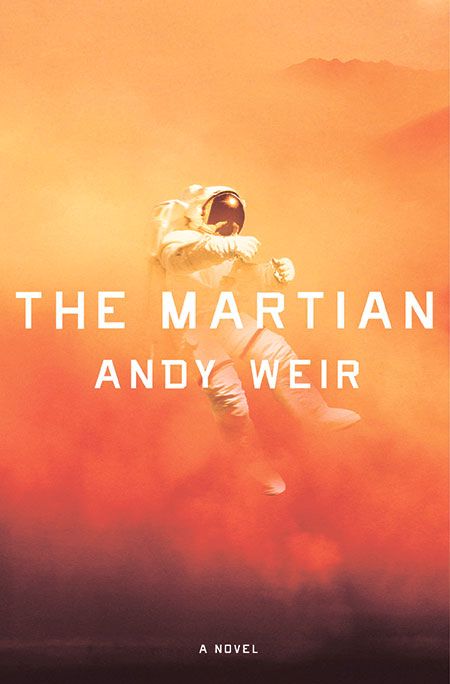
Book Beginnings on Friday: The Martian by Andy Weir


I figured it might be best to ease back into blogging again by participating in a weekly meme. Jumping right back into writing reviews and engaging in critical analysis seems a little daunting to me right now. One step at a time...

Thank you Rose City Reader for hosting the event where people share the first line or two from the current book(s) they happen to be reading and then write a few words about their first impressions or any other related thoughts they might have concerning said book.


LOG ENTRY: SOL 6

I’m pretty much fucked.
 
Ok, Mr. Weir, you certainly grabbed my attention. Considering that the main character is stranded on Mars all alone and will likely die from any number of possible reasons (starvation, harsh weather conditions, lack of O2, etc) the use of profanity is completely warranted. I've been on a sci-fi kick lately and this novel is delivering the goods in spades. It also got the green-light from Hollywood and is currently being made into a film with Matt Damon in the title role, directed by Ridley Scott. As much as I like Matt Damon, I just don't see him in the role, nor do I feel that Scott is the right director for this project. Hopefully I am proven wrong.

Even though the novel is mostly a suspenseful thriller, Weir manages to infuse plenty of humor to balance out the serious subject matter which works surprisingly well. Considering that this is the author's debut novel, I am fairly impressed so far with his ability to tell an exciting and absorbing story that has me turning the pages at a ravenous pace. The amount of mathematics, physics and scientific research that went into this novel is quite astounding and I am looking forward to see how Mr. Weir wraps it all up. I don't usually put much faith in my gut, but I have the feeling that this novel might just become a new favorite. 

Has anyone else read this?  If you have, please no spoilers!

Tuesday, 10 February 2015

Well, I'm back for now...


So it's 2015 you say? Balderdash! The last several months have been a blur and a real emotional roller coaster for me. To those select individuals who actually follow my blog, I do sincerely apologize for falling off the face of the Earth but I have crawled out from under a rock and hope to get back into the swing of things very soon. Thank you for your understanding and heartfelt support.

~ Jason

Wednesday, 22 October 2014

The Bell Jar by Sylvia Plath


 “The trouble was, I had been inadequate all along, I simply hadn't thought about it.”

Esther Greenwood is a young college girl who travels to New York for a publishing job, has a rotten time assimilating into this new life, undergoes a mental breakdown, attempts suicide, is thrown into a psychiatric ward, receives shock-treatment and once deemed healthy enough by her doctors, she is released back into the world. Whether or not she will succumb to her mental illness again remains uncertain. Not exactly your typical feel-good novel. Plath is uncompromising, successfully conveying the despair, gloom, helplessness and downward mental spiral of her protagonist with bleak overtones, which makes the story a unsettling reading experience.

As someone who has battled with depression for many years, Sylvia Plath's The Bell Jar hits very close to home. Of course, it's difficult to resist the urge in making parallels between the story and the author's own troubled personal life, especially pertaining to her history with mental illness. Published soon after her suicide, the novel is eerily autobiographical in nature but an overwhelming amount of scholarly effort has already been expended on this particular subject matter. Thus, my aim with this review is to convey my own personal reflections and determine whether or not The Bell Jar is worthy of its iconic status. In short, the novel doesn't quite live up to its reputation--the narrative is often dull and disjointed; it lacks a sense of cohesiveness. Of course, one could make the argument that Plath's aesthetic is deliberate; her sporadic prose is supposed to reflect the protagonist's fragmented state of mind as she descends into madness. Plath is a wonderful poet and a superb writer of letters, but she doesn't seem to hit her stride as a novelist. However, Esther Greenwood is such an empathetic character, which makes it easier for me to overlook the narrative discrepancies. I found myself connecting with Esther on a deeply personal level because many of her thoughts and experiences mirror my own: cynicism, depression, attempted suicide, hopelessness, misanthropy, shame, personal inadequacies, loneliness, social alienation, disillusionment, the obsession with death. She feels like a kindred spirit and I just wanted to give her a warm hug and tell her that everything will be ok. You'll get through this Esther, I'm here for you. You're not alone. 

Plath should be applauded for her honest depiction and keen insight into a neurotic psyche. Only someone who suffered from mental illness and severe depression could have written such an accurate portrayal of being stuck in the hell of one's own mind. The novel is also rather forthright in its feminist ideologies and a great deal of analysis can be focused on the exploration of gender inequality. Plath infuses so much of her own personal life, painful experiences, and somber reflections into the novel, which is truly admirable.

The sum of its parts are greater than the whole, containing a plethora of powerful aphorisms and astounding golden nuggets of wisdom. Here are a few of my favorites:

“There is something demoralizing about watching two people get more and more crazy about each other, especially when you are the only extra person in the room. It's like watching Paris from an express caboose heading in the opposite direction--every second the city gets smaller and smaller, only you feel it's really you getting smaller and smaller and lonelier and lonelier, rushing away from all those lights and excitement at about a million miles an hour" (17). 

Wow, she really understands what it feels like to suffer from loneliness. I've always been an outsider, stuck on the sidelines, an observer, detached from the world. Hence, relationships are foreign to me. I'm not exactly envious of others who find happiness through love; rather, it is the despair that comes with being completely incapable of making those personal connections. The thought of never experiencing love and dying alone is quite disheartening.

"If you expect nothing from somebody, you are never disappointed" (63).

I feel ya there, Esther/Sylvia. I have placed way too much trust in people and only ended up getting hurt in the end. They either let me down in some way, put up a front, or stab me in the back. I've lost faith in humanity.

Wherever I sat—on the deck of a ship or at a street café in Paris or Bangkok—I would be sitting under the same glass bell jar, stewing in my own sour air" (195).

The bell jar is obviously an important metaphor in the novel but it is used expertly by Plath to convey the debilitating anxiety of being trapped in the madness of one's own mind. Paradoxically, the bell jar is a defense mechanism against a hostile world so it's no surprise that suicidal tendencies are inevitable.

"I saw my life branching out before me like the green fig tree in the story.  From the tip of every branch, like a fat purple fig, a wonderful future beckoned and winked.  One fig was a husband and a happy home and children, and another fig was a famous poet and another fig was a brilliant professor, and another fig was Ee Gee, the amazing editor, and another fig was Europe and Africa and South America, and another fig was Constantin and Socrates and Attila and a pack of other lovers with queer names and offbeat professions, and another fig was an Olympic lady crew champion, and beyond and above these figs were many more figs I couldn't quite make out.  I saw myself sitting in the crotch of this fig tree, starving to death, just because I couldn't make up my mind which of the figs I would choose. I wanted each and every one of them, but choosing one meant losing all the rest, and, as I sat there, unable to decide, the figs began to wrinkle and go black, and, one by one, they plopped to the ground at my feet" (81).

Story of my life.

Wednesday, 15 October 2014

The English Patient by Michael Ondaatje


“All I ever wanted was a world without maps.”

Often regarded as one of Canada's greatest living writers, Michael Ondaatje doesn't strike me as an author who would reach a wide audience at all. Granted, my only exposure to his writing is with this particular novel but it is far too abstract, fragmented and heavily infused with poetic language to appeal to many readers. Visit any used book store or second-hand thrift shop (with a book section) here in Toronto, and I can guarantee you that several copies of this novel--along with other titles by the author--can more often than not be found at low bargain prices or in the "free bin." Most people don't seem particularly fond of Ondaatje or The English Patient in particular, and they seem more than happy to be rid of it, which helps to partially explain the overwhelming amount of copies floating around. 

I have been avoiding this novel for years and probably never would have picked up this novel had it not been for my Canadian Reading Project. Even though I don't feel that all of the negative flak it tends to receive is completely warranted, it is perfectly understandable why so many people are keen to express their vitriolic hatred towards this novel. Those looking for a well-told story are bound to be disappointed and frustrated. The narrative is convoluted and disorienting: jumping around between past and present, distorted by fragments of memory; the characters exist on the periphery, obscured by shadows. It does not surprise me that Ondaatje was a poet before turning towards fiction because his writing revels in lyrical diction, elevated language and imagery. There is no denying that the prose is beautiful, sensual and even provocative at times (bringing to mind the writings of Virginia Woolf minus the stream-of-consciousness) but it is overdone, inadvertently encouraging mockery. At one point, Ondaatje tries to convey the overflowing passion between the mysterious pilot and his lover by describing one of their sexual experiences together where he licks up her menstrual blood. Sorry, but that is just gross no matter how eloquently one might describe this act. There does exist scattered moments of stylistic virtuoso and profound insight but the novel ultimately collapses under the weight of its superfluous purple prose--all style, very little substance. Ondaatje would much rather focus on establishing a specific mood or explore the fallibility of memory. I don't usually mind this type of poetic style but he gets too caught up in trivialities and seems a little smug in showcasing his literary pretensions.

It's the end of WWII, a Canadian nurse from Toronto (bonus points) is caring for a severely burnt patient at an abandoned Italian villa where two other people eventually enter their little sanctuary. Utilizing shifting character perspectives and flashbacks, the story (or lack thereof) unfolds in a cryptic fashion shrouded in ambiguity. We get glimpses of these people but the reader is always kept at a distance. The basic premise of the novel is intriguing enough but I really wish Ondaatje had spent more time fleshing out the different characters and focused more on the story, instead of leaving it dormant and veering off into elaborately discursive territory. I'm no medical doctor, but it bothered me that this pilot who is suffering from life-threatening burns could stay alive so long with only the aid of morphine and still be able to maintain complete mental acuity. This novel could have been a sweeping historical epic with a powerful love story at its core but Ondaatje has other intentions. If he somehow managed to balance his poetic aspirations and brand of literary impressionism with developing a solid story containing believable, strong, well-rounded characters, he might have been able to achieve something truly spectacular. 

Taking into consideration that very little action takes place in the novel, it baffles me that it was even adapted into an Oscar winning film. To my mind, the end result can only be disastrous and I am very curious to watch that train-wreck unfold on the screen. My two star rating might seem a tad generous but I didn't find the novel to be completely without merit, even though my general impression was that of indifference. Ondaatje might be self-indulgent but his writing can be quite beautiful and enrapturing in small doses.


This novel is part of my Canadian Reading Project.