Friday, 20 March 2015

E-Readers + Friday Memes

My new bookshelf fits in the palm of my hands.
I'd like to take this opportunity to make a confession: I finally caved in and bought myself an E-Reader: a Kindle to be precise. This might not seem particularly shocking but I do feel like a hypocrite of sorts considering my staunch opposition over the last few years. Not that I ever had a vendetta against Kindles or Kobos or whatever type of e-readers are available on the market but rather, my aversion was mostly personal: making the transition felt immoral in some way. Not to mention, replacing physical books with digital copies seemed like a profane slap in the face to our long held literary traditions. I'm sure that our ancestors who used to tell stories through oration or on the drawings of rocks felt a similar way when parchment was introduced. I am sure others would agree that there is something special about holding an actual book in your hands, the intoxicating smell of an old book, being able to flip back and forth through the pages. Ever since Gutenberg's printing press, books have always been printed but now with technology, this literary tradition seems like it will soon become archaic like ancient Egyptian hieroglyphics. A scary thought, indeed. I won't bother going into a lengthy debate about the pros and cons of E-Readers since enough energy has already been expended on the subject; however, I will say this: despite my adoration for the Kindle, I will not stop buying or reading printed books. It's going to take a whole lot more than being able to store 1000's of books in a small device and reading a screen to get rid of my highly decorated bookshelves. 

Anyways, one of several problems that I have encountered with the e-reader so far is that without a protective cover, it can get damaged quite easily. If you accidentally drop it, then it's likely toast. The obvious solution would be to buy a cover but they can be fairly expensive and the various color designs are plain. I decided to look around and see if there were more elaborate covers available but this proved to be in vain. So, I decided to ask around, putting  out severals requests for a custom-made e-reader cover, which of course, I would gladly pay for. When it seemed that no one would answer the challenge, I got an email from a wonderful woman who decided to take me up on my offer. I couldn't be more ecstatic. She even has a quaint little blog called Princess on a Pence so check it out. The cover should be arriving by mail soon, can't wait! Just out of curiosity, how many of you out there prefer the e-reader to actual books or vice versa? I'd like to know where you stand so please feel free to leave a comment below.

I have been really caught up with reading lately, hence the lack of reviews this week. I'm making my way through a plethora of short-stories, poetry and juggling several novels at once including 'Half of a Yellow Sun' by Chimamanda Ngozi Adichie, 'Under the Sun' by Guy Gavriel Kay and 'The Man Who Was Thursday' by G.K. Chesterton. I plan to focus more on reviews next week. In the mean time, here are a few Friday memes:

This is my first time participating in the Feature and Follow Friday held by Parajunkee and Alison Can Read. This is another great way to discover new book blogs and connect with others. There is also a question presented each week for everyone to answer:

Question of the Week: Have you ever been inspired by a book character to do something? Who was the character and what was it?

This is a tough one. There have been many authors and specific books as a whole that have inspired me in some way but fictional characters? Not so much. However, Santiago from Ernest Hemingway's The Old man and the Sea would be my answer. To me, Santiago is one of those unforgettable and inspiring characters for his sheer determination to achieve his goals, pushing himself to the limit and the unwillingness to admit defeat against so many obstacles. Perhaps it is a cliche to reinforce familiar adages such as "never give up" but sometimes cliches are useful in offering the most influential life lessons.

Thanks to Freda's Voice for hosting The Friday 56. The rules are simple: Grab a book, any book. Turn to page 56 or 56% in your eReader. Find any sentence (or few, just don't spoil it). Post it.


I'll be using the Kindle for the first time:

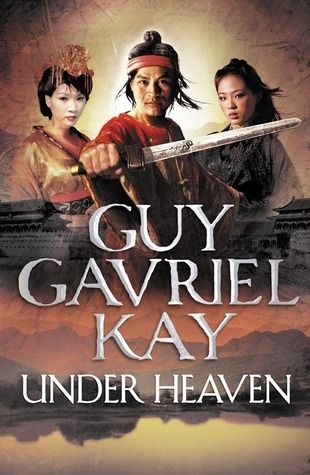
"She knows how to ride, was taught as a child because her father thought it important, even for a girl, but this much time on a horse, day after day, is hard for her, and ------- is not inclined to rest very often."

For those who follow my blog, my love for the writings of Guy Gavriel Kay has been well documented. He's one of my favorite authors and Under Heaven is one of his newer offerings, an epic historical fiction influenced by the Ancient Chinese dynasties. One of his many talents is the portrayal of well-drawn, complex, strong, independent women who don't necessarily fall into specific gender stereotypes that tends to be norm in a lot of genre fiction. As always, his impeccable writing and solid-storytelling is on display here. There is such a visceral and cinematic quality to this novel that would be perfect for a movie adaptation. I can so envision Zhang Yimou (the director of House of Flying Daggers, Hero and Raise the Red Lantern) at the helm of this project, starring Ziyi Zhang in one of the key female roles. 


That's it for now, have a great weekend everyone!


Tuesday, 17 March 2015

Top Ten Tuesday: Top Ten Books On My Spring TBR List


It's that time of the week again. Thanks to the good folks at The Broke and the Bookish for hosting this meme, which is always fun. My track record for following through with reading lists has been rather spotty to say the least but surprisingly, I have doing pretty well so far this year. I'm keeping up with several of the reading challenges (even ahead in some despite the lack of reviews). There are so many novels that I anxiously want to read this spring but of course, time is a factor. Here is my tentative list (in no particular order):

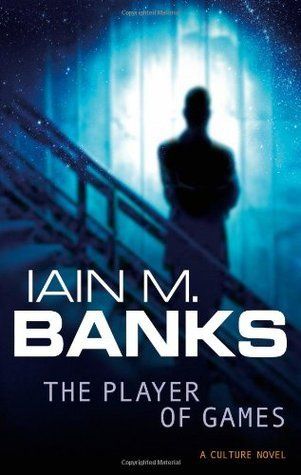
1. Player of Games by Iain M. Banks: The EPIC space-opera of Banks' Culture Series continues. Even with its flaws, I thoroughly enjoyed the first installment and it was a perfect set-up for what might just turn out be one the more ambitious and highly entertaining Science-Fiction sagas ever.


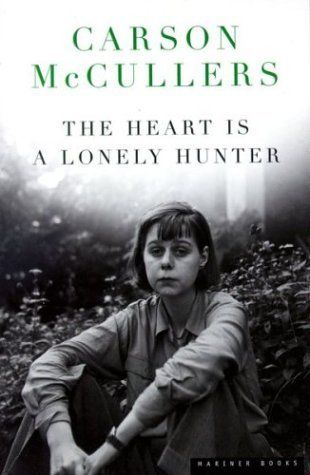
2. The Heart is a Lonely Hunter by Carson McCullers: I have been slacking a little bit on my Classics Club Challenge and it was about time I got around to reading this novel, which has been on my shelf for a while now. I seem to have a certain fondness for stories set in the American south during the early part of the 20th century (Flannery O'Connor, Faulkner, etc). Word around the campfire is that McCullers' writing has a similar feel to the works of Steinbeck. That's more than enough incentive for me to finally read this one. 


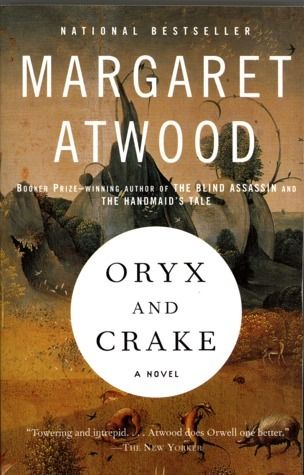
3. Oryx and Crake by Margaret Atwood: Being a Canadian and all, it's kinda embarrassing that I really haven't read much from Ms. Atwood. She's our most celebrated author and it would be nice to say that I have at least read more than one of her novels. Granted, I have read some of her short-fiction and a handful of poetry. That's gotta count for something right? I have also been meaning to read more SF from female authors, so this kills two birds with one stone.


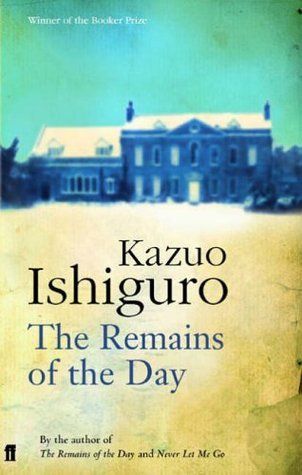
4. The Remains of the Day by Kazuo Ishiguro: For the Reading England Challenge. I have heard nothing but high praise for this novel ('a modern masterpiece', etc) and hope it lives up to the hype. I also wouldn't mind watching the movie adaptation starring Emma Thompson and Anthony Hopkins afterwards.


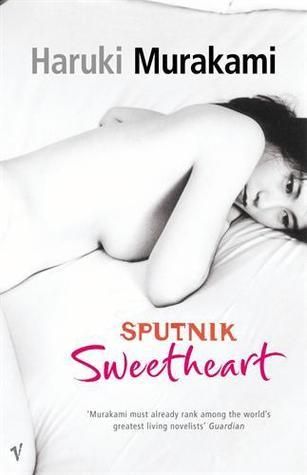
5. Sputnik Sweetheart by Haruki Murakami: Lately, I have found myself obsessed with Haruki Murakami's writing after devouring his collection of short-stories in After the Quake. This will be my first attempt to actually finish one of his novels instead of abandoning ship.

6. Who Fears Death by Nnedi Okorafor: I love that cover art! There isn't much cultural diversity in the SF genre, nor do female writers tend to receive as much recognition in contrast to their male counterparts. So to come across a  post-apocalyptic story set in Africa written by an African woman...yeah, I want to read this. 


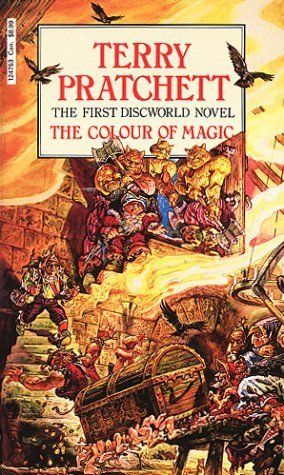
7. The Color of Magic (Discworld #1) by Terry Pratchett: As usual, I'm late to the party. With his recent passing, I now feel obligated to start the Discworld series. I've been putting it off for far too long and Pratchett also happens to be Priya's favorite author--so, naturally, I'm very interested to see if he will prove to my liking.

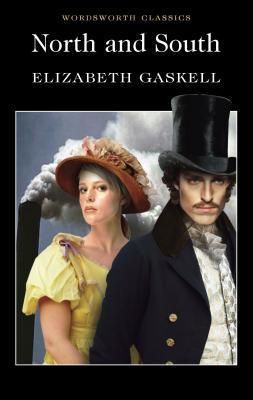
8. North and South by Elizabeth Gaskell: Another novel for both the Reading England and Classics Club Challenge. Score. Hey, doesn't the gentleman on the cover look like Matthew Mcconaughey?

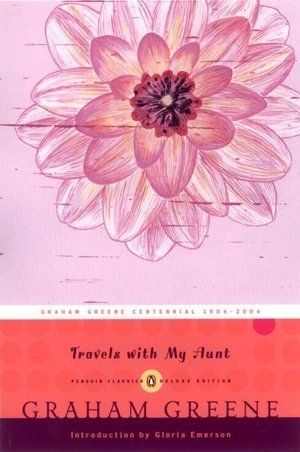
9. Travels with my Aunt by Graham Greene: Yep, another Reading England Challenge novel. However, I have also been meaning to check this one out for a while, since it is an anomaly in Greene's oeuvre; a light-hearted and entertaining novel that stands in stark contrast to his usual serious efforts.


10. The Sorrows of Young Werther by Goethe: For the Literary Movement Challenge of March, focusing on the enlightenment period. I tend to be apprehensive when it comes to reading philosophy (it's just not for me) but the premise of this one sounds fairly interesting, not to mention Fanda's enthusiastic endorsement.   
So, what's everyone else planning to read this spring? 

Monday, 16 March 2015

Deal Me in Challenge: Super-Frog Saves Tokyo by Haruki Murakami


Card Drawn: 6 of Diamonds.

This is a weird one. With a title like Super-Frog Saves Tokyo, this should come as no surprise. Yet, the story is not just weird for weirds sake; indeed, there is plenty going on beneath the surface as the author dabbles in magical realism: blurring the lines between dreams and reality; juxtaposing the fantastic and the mundane; illustrating the negative implications of disillusionment; the abstract taking precedence over empiricism as the author's primary epistemological argument. Perhaps if I were more familiar with Japanese culture, this story might make a little more sense by having the metaphorical conceit contextualized but the appeal of this story is not in discovering all the answers; but rather, relishing in Murakami's hypnotic surrealism that takes on the qualities of a twisted nightmare. He is purposefully ambiguous to emphasize the hallucinogenic elements of his dream-world that makes for a truly delectable, albeit bizarre read. Or maybe I am reading too much into it and the story is simply about a banker who encounters a giant frog in his apartment, urging him on to help defeat a giant worm burrowed underneath Tokyo that will soon devastate the city with a powerful earthquake. Such an interpretation is specious at best. Murakami comes across as a very intelligent writer, subtlety hinting at some kind of allegory at work here but leaves the story widely open to interpretation. 

Haruki Murakami is one of those authors that I have placed on the back-burner after being frustrated with some of his other works; more specifically, The Wind-Up Bird Chronicle. I couldn't even get past the first 50 pages before tossing it aside in utter exasperation. Despite my limited exposure to his work, his style does tend to be rather fragmented, long-winded, repetitive and often inscrutable but the short-story seems to suit his aesthetic far more effectively than the novel form does. Instead of a sprawling narrative that seems to meander interminably without any real purpose, the far more condensed and self-contained short-story keeps Murakami in line, a restraint from his typical excessive self-indulgence. In the author's defense, many will argue that his rambling and discursive prose is best suited to his unique brand of magical realism. Personally, I just prefer his writing in smaller doses. 

Haruki Murakami my not be the most consistent of writers in terms of narrative and character development but he more than makes up for it with an inimitable creative inventiveness along with the ability to generate such intense feelings of emotion and pathos. The protagonist's sense of self-worth is surprisingly poignant:
  
"I'm an absolutely ordinary guy. Less than ordinary. I'm going bald, I'm getting a potbelly. I turned forty last month. My feet are flat. The doctor told me recently that I have diabetic tendencies. It's been three months or more since I last slept with a woman--and I had to pay for it. I do get some recognition within the division for my ability to collect on loans, but no real respect. I don't have a single person who likes me, either at work in my private life. I don't know how to talk to people, and I'm bad with strangers, so I never make friends. I have no athletic ability, I'm tone-deaf, short, phimotic, nearsighted--and astigmatic. I live a horrible life. All I do is eat, sleep and shit. I don't know why I'm even living. Why should a person like me have to be the one to save Tokyo?" 

What a remarkable piece of writing. Rarely have I come across self-deprecation this funny and profound. Murakami is keen to emphasize the ordinary vs. the extraordinary in this particular story; often suggesting that regular people can accomplish the truly remarkable if they possess the proper mind-set. During one of their conversations, Mr. Frog goes on tell the banker about where the real fight in our lives takes place:

"The whole terrible fight occurred in the area of imagination. That is the precise location of our battlefield. It is there that we experience our victories and defeats."

The power of the imagination is a recurring theme here. The clash between conscious and unconscious thought--bridging the gap between fantasy and reality. From a Freudian perspective, the story follows the battle between the ego and the superego. Additionally, dreams become wish-fulfillment: the protagonist wants to transform his commonplace existence into a life worth living but in order to do that, he must face his fears that may, in fact, lay dormant in his subconscious.

Haruki Murakami also seems to share many similar ideas with Philip K. Dick pertaining to the mysterious nature of reality:

"What you see with your eyes is not necessarily real. My enemy is, among other things, the me inside me. Inside me is the un-me."

I absolutely love this line, especially in relation to Murakami's ideas of the imagination. Reality is elusive and cannot always be relied upon to represent the truth. In effect, the "un-me" can represent the darker aspects of humanity, those destructive unconscious feelings that can influence one's identity and moral/immoral actions.

My first encounter with this story left me completely discombobulated. It was not until a second reading that I was able to appreciate Murakami's ingenuity and virtuoso techniques. The reading experience was a lot more rewarding this time around because my attentions were more focused on the themes and ideas instead of solely attempting to wrap my head around the wacky story. It seems my earlier judgments towards Murakami were misconstrued and I am eager to check out more of his work. 

Friday, 13 March 2015

Friday Memes: Book Blogger Hop, Book Beginnings, Friday 56

This week sure went by fast didn't it? Daylight savings time certainly didn't help matters but it won't take much longer to fully adjust to the time change. Of course, the big literary news this week is the death of Terry Pratchett, who sadly died yesterday after a long battle with Alzheimer's. Even though he always remained on my radar, it is embarrassing to admit that I have yet to read anything written by him. His Discworld Series (comprising a total of 40 books!) has quite the cult following and if it is any consolation, I do plan on reading the first installment soon. It won't make up for my ignominious ways for avoiding him all these years, but that is a start in the right direction for redeeming myself, is it not?

I probably won't have much time for any reviews this weekend because of my busy work schedule so this is an ample opportunity to participate in several memes:


Hosted by Billy at Ramblings of a Coffee Addicted Writer, this is now round two of the Book Blogger Hop for me. This week's question was submitted by Elizabeth: What is more important to you when you are deciding to read a book?

Well, that is a fairly open ended question. I am not sure if she asking what aspects of a book are most important to me when deciding to start reading a new book or what personal factors might contribute to my decision. Either way, time is usually the deciding point of consideration. This question or some variation of it runs through my mind: do I really want to devote precious time to this particular novel when I could probably be reading something else or perhaps take up a different activity that is more productive? Don't get me wrong here, I think setting aside some personal reading time is important. Hell, I obviously wouldn't bother having a book blog if I didn't think otherwise. Additionally, it is also essential to my overall mental health and well-being to always be reading something. I have nothing against those who devote many of their waking hours to reading and writing--in fact, I truly envy those lucky individuals. Unfortunately, life has a habit of getting in the way of my reading goals so I tend to say a little prayer before picking up any novel: Please prove to be worthwhile and not a giant waste of my time.

Presuming that I have managed to free up some spare time to read, then the author becomes most important. If I really like a particular author, then I will often read as much as I can by them (Virginia Woolf, Philip K. Dick and Muriel Spark are just a few examples). Or if there happens to be an author that has piqued my curiosity or one that I have been meaning to read but never got around to doing so (Terry Pratchett and Ursula Le Guin for the present moment), then they jump up the queue.  


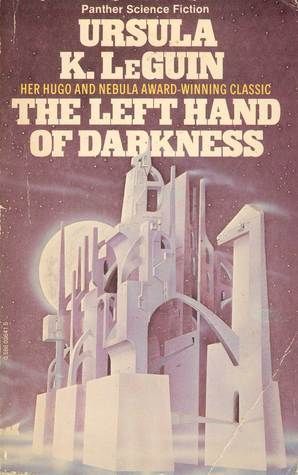
Thanks to Rose City Reader for hosting this meme. Right now, I am in the midst of of Ursula Le Guin's The Left Hand of Darkness, which begins, as thus: 

"I'll make my report as if I told a story, for I was taught as a child on my homeworld that Truth is a matter of the imagination."

Yep, I love this opening sentence. Notice that the word 'truth' is capitalized. The paradoxical relationship between truth and fiction will become an important thematic element of the story as it progresses. Le Guin is a fantastic writer and similar to my feelings concerning Terry Pratchett, I am beating myself up for not reading her work sooner.
This is actually my first time participating in this meme hosted by Freda's Voice. It's more of an extenuation of Rose City Reader's Book Beginnings: Grab a book, any book. Turn to page 56 or 56% in your eReader. Find any sentence, (or few, just don’t spoil it) that grab you. Post it. Sounds easy enough:

"Occasionally I was asked how my nose got broken. I have a flat nose; Gethenian noses are prominent and narrow, with constricted passages, well adapted to breathing subfreezing air." 

The protagonist is an envoy to a distant planet and it is important for him to assimilate himself into this foreign society but his physical appearance sets him apart as an alien to the local natives. Le Guin does an exceptional job developing his sense of estrangement and exploring the concept of difference in the novel. I still have about 3/4 to go but it is clear to me already that this is going to turn out to be a pretty great novel.

That's it for now. Have a great weekend everyone!
Thursday, 12 March 2015

Deal Me in Challenge: Oh! He's Charming! by Dorothy Parker


Card Drawn: 7 of Spades.

Penguin Classic editions tend to have some of the most well-designed and evocative covers around. Dorothy Parker's Complete Stories is one of them--a cartoon drawing of a woman peeking out of a men's washroom. Simple, candid, and a perfect representation of the author's strong feminist ideologies that constantly challenges the status quo; more specifically, the dominant social structures of patriarchy. Parker's irreverent and satirical critique of gender roles remains as bold today as it surely must have been during the the 1920's and 1930's when she was writing a lot of these stories. The Women's Rights Movement were at their peak in the U.S. during this time and Parker was right in the middle of it all. 

It would not surprise me in the least if Muriel Spark was largely influenced by the writings of Dorothy Parker. In fact, Spark's prose bears an eerie resemblance to Parker's with its satirical humor, sardonic wit, fast-paced dialogue, the use of irony and refusing to play by the conventional rules of narrative. Had the author of Oh! He's Charming! been keep anonymous, I would have been convinced that it came from the pen of Muriel Spark. The narrative consists largely of dialogue between a famous author and a a rabid female admirer of his work who reminded me of Annie Wilkes from Stephen King's Misery, except she doesn't drag him off to some remote cabin to torture the poor fellow. Instead, this woman in the story is so overwhelmed and hysterical to meet her favorite author, that she doesn't realize how ridiculous she appears to him. The dramatic irony employed by Parker is most effective to illustrate the dichotomy between both genders during social interaction. The woman is adamant to praises the author's virtuous character but we as readers know that he is far from honorable and more of a pompous douche-bag. The woman is keen to point out the author's superb talents at writing about women in his books with such accuracy but of course, he is a fraud. He knows absolutely nothing about women, is a male chauvinist and bases his female characters on people that he knows but she takes his writings as gospel.

Despite the sharp social commentary, the story is enjoyable enough and bustles along in a sprightly manner but does not seem to amount to anything substantial. The thinly veil contempt for male egotism lurks just beneath the surface and there exist brief moments of comedy. Not the laugh-out-loud hysterical type of comedy; more the silly, whimsical and "isn't that amusing" kind. The story feels more like a writing exercise. It pales in comparison to some of the other works in this collection that are more compelling in their social and political convictions.


Wednesday, 11 March 2015

The Martian by Andy Weir


“It’s true, you know. In space, no one can hear you scream like a little girl.” 

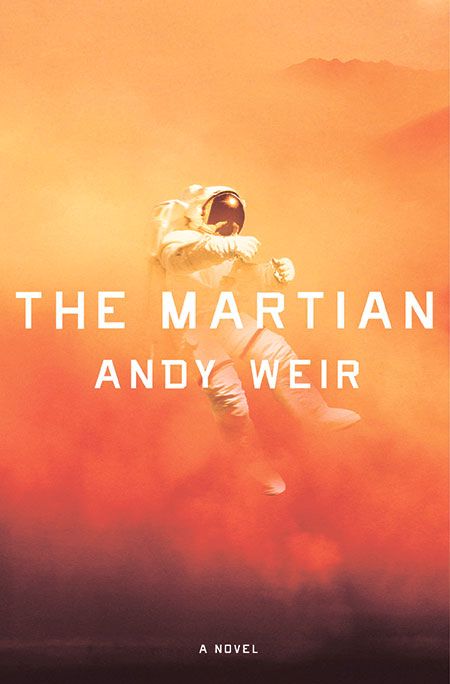
Andy Weir's The Martian has received a lot of buzz since its release, generating a media-circus of attention, making best-sellers lists and highly praised by many readers. Whenever a book garners this much hype and attention, I tend to remain skeptical concerning it's true merit. So, I kept this novel on my radar, unwilling to conform to the general reading public, since everyone and their grandmother seemed to own a copy. As an unabashed science-fiction geek, I was still mildly interested in what all the hoopla was about but remained convinced that with such high expectations, it  the novel would more than likely turn out to be a huge disappointment. Nonetheless, curiosity got the better of me when it was announced that Hollywood was planning a movie adaptation starring Matt Damon, a bunch of other great actors and directed by Ridley Scott. I may not be the biggest Matt Damon fan but having Ridley Scott attached to the project was enough for me to finally break down and give into peer pressure. This is the guy who directed such science-fiction masterpieces like Alien and Blade-Runner! Plus, he's getting up there in age and if he was willing to come out of semi-retirement to bring this novel to life on the big screen, he must have seen something special and worthwhile in it.

Well, what do you know...Ridley Scott recognizes another great story containing cinematic qualities that should be suited to his particular style of film-making. If Alien is any indication, this is a director who has a great visual sense and knows exactly how to create a dreadful atmosphere of thrilling suspense within a confined setting. He is perfect for the job because The Martian caters to his artistic sensibilities: a story about an astronaut named Mark Watney, who finds himself stranded on Mars due to a freak accident that occurs during a surveying mission, left behind by his crew because they think he is dead. With no one else to rely on but himself, Watney must use his wits, skills, engineering training and scientific knowledge to survive. Limited supplies, short on food, unable to communicate with NASA, he finds himself all alone on the red planet. If the harsh environment of Mars doesn't kill him first, starving to death surely will. The comparison to Defoe's Robinson Crusoe seems inevitable but Weir's novel does not have a socio-political agenda, nor does he dabble in allegory--his main intention here is to tell an absorbing piece of science-fiction, which he definitely delivers. The narrative is written largely as an epistolary, taking on the form of journal entries by Mark Watney who documents his day-to-day activities on Mars, which largely include brainstorming survival strategies, performing risky experiments and dealing with life-threatening catastrophes. He also spends an exorbitant amount of time watching re-runs of 70's sitcoms that were left by one of the other crew members and listening to disco music that drives him up the wall. How else is a  guy supposed to unwind after spending an exhausting day alone on a planet that is trying to constantly kill him, without access to Netflix? Weir also presents a third person narration, providing different perspectives of members working at NASA who discover Mark is still alive and now must try and figure out a way to bring him home. By cutting back and forth between Watney's personal account of his exploits on mars and with NASA, keeps the story from becoming too solipsistic, adding another dimension to the narrative arc.

Watney's self-deprecating personality is refreshing, often creating moments of comedic relief, which help to counterbalance the more serious elements of the novel. He realizes that his chances of survival are slim and that death is imminent, but he manages to maintain a wry sense of amusement about the whole situation. I hope the film adaptation manages to keep the humor of the novel intact.

The amount of scientific research that must have went into this novel is astonishing. Even though it takes on certain characteristics of hardcore-science fiction where the author bombards the reader with technical details, relying heavily upon math, physics and chemistry as a narrative device (all subjects that gave me the most trouble in school), the novel still remains accessible. It is not important to fully understand the exact science being described, since Weir does an admirable job of conveying the primary essence of these scientifc technicalities. Who would have thought that reading about potato farming on Mars could be so interesting?

I am glad to report that my initial assumptions were wrong and The Martian is well deserving of its favorable prestige. Having read my fair share of science-fiction that take place on Mars--Ray Bradbury's Martian Chronicles and Kim Stanley Robinson's Mars Trilogy come to mind--Andy Weir puts a unique spin on the colonization of a distant planet story-line, proving himself to be a capable writer who succeeds in telling a highly entertaining story, holding me in suspense and gripping my attention until the very last page.


Tuesday, 10 March 2015

Top Ten Tuesday: Top Ten Books for Readers Who Like Science-Fiction


It's Tuesday, so you know what that means. This week's topic for a Top 10 list hosted by  The Broke and the Bookish is an exciting one: Top Ten Books for Readers Who like  _______.

I decided to go with Science-Fiction. For those who are already familiar with the genre, this list might seem a little generic but I am hoping that it will benefit those who are new to the genre a little more. Perhaps you are interested in exploring Science-Fiction but don't know where to start? I had the same problem. Granted, I'm no expert and have yet to read many of those classics of the genre but this is not a "top 10 sci-fi books of all time" list but more of a "top 10 sci-fi books to check out that will hopefully inspire you to read more from the genre" type of list.


1. Sirius (Old-school) by Olaf Stapledon: H.G. Wells or Jules Verne might have been more obvious choices but Stapledon tends to receive the short end of the stick. He's one of those pioneers of the genre but is often overlooked or forgotten; many of his works are still out of print! The only copy available for Sirius is in this Dover edition that also comes with one of his other stories, Odd John. I haven't read that one yet. His prose can be very clunky and descriptive at times (reminiscent of the Victorian style) but Sirius is an important novel for laying down the groundwork for other authors to follow. It also happens to be a very intriguing piece speculative fiction. It is about a dog with super-human intelligence who attempts to integrate himself within human society. For dog lovers, this story is bound to be a real tear-jerker.


2. The Foundation (classic) by Isaac Asimov : There are a whole bunch of other novels in the Foundation series, but the first one remains the best. Asimov's influence on the genre is insurmountable and he is a must read for any lover of Sci-Fi.


3. Way Station (Vintage) by Clifford D. Simak: If John Steinbeck had written science fiction stories, it might have turn out to be something like Way Station. Winner of the Hugo Award in 1964, this novel boasts a very cool premise even though it might sound lame: Living on his farm in rural American, the protagonist cannot age and inside his home is an alien designed galactic rest-stop, or Way Station, for aliens all across the galaxy. You would think that with a premise like that there would be tons of action, violence, high-speed chases among parallel dimensions but that is not the case here. This is a slow novel that takes its time to establish the setting and main character; Simak's strengths as a writer reside in his ability to create an emotionally charged story and he succeeds admirably. A lot of science-fiction novels place a much higher importance on the exploration of ideas over character development and story but it is those memorable works like Way Station that are able to find the right balance.


4. The Stars My Destination (Vintage) by Alfred Bester: Science-Fiction really took off the late 50's and 60's and it is authors like Alfred Bester who paved the way. This novel is entertaining as much as it is thought-provoking. Gully Foyle is a fascinating anti-hero who can teleport across galaxies. Pretty darn cool. For anyone who enjoys poetry from the Romantic period, they might get a kick out of this novel because the author uses William Blake's poem The Tyger as an influence on the story. Read review here


5. Ubik (New-Wave) by Philip K. Dick: Mark my words: it is only a matter of time before Ubik will be adapted into a film. The premise behind this novel is so brilliant, so bizarre and so unique that only Philip K Dick could have written it. Containing some of his craziest ideas and memorable characters, the novel is deeply philosophical but also remains highly entertaining. Not to be presumptuous, but it wouldn't surprise me if Ubik was a direct influence on the Wachowski's The Matrix. I could have picked any number of great novels by Philip K. Dick for this spot but Ubik tends to be underrated and more people need to read it. You can check out my review here.


6. October Country by Ray Bradbury (short-stories): I was tempted to include Fahrenheit 451 but it already receives enough attention. However, if you haven't read it yet, please do so -- the novel is a SF classic classic for a reason. The amount of short-stories written in this genre is astounding but it was important to include at least one collection on this list. I am breaking the rules a bit here but you can't ignore great writers like J.G. Ballard, Theodore Sturgeon, James Tiptree Jr. (alias for Alice Bradley Sheldon) and so many others who have preferred to use the short-story as their main literary form. Personally, Ray Bradbury ranks as the most talented of his peers when it comes to the short-story, but the more I read from J.G. Ballard, the more it seems my opinion might change. Bradbury wrote a ton of short-stories over his long career spanning over half a decade. The Illustrated Man is another great collection that is worthy of this list but I choose October Country because it contains several of my all-time favorites by him: The Scythe, The Man Upstairs, The Lake and of course, The Small Assassin. You can read my review of that one here.


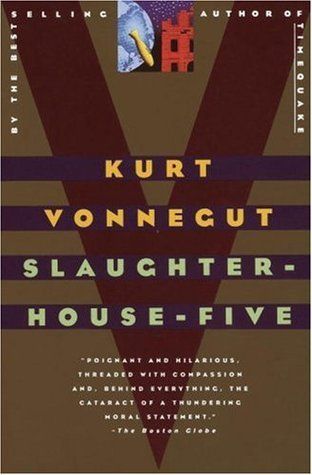
7.  Slaughterhouse-Five by Kurt Vonnegut (modern classic) : Time traveling, WWII,  aliens, slap-stick humor, fragmentation, absurdity, satire, this novel has it all. And so it goes...


8. Blindsight (hardcore SF) by Peter Watts: I tend to keep away from hardcore science-fiction because it can often feel like sitting through a graduate program science lecture where the professor is going on and on about formulas and technical jargon that makes absolutely no sense. However, Blindsight is one of those rare cases where all of the complicated science stuff does not hinder the actual story. Watts puts his own unique spin on the alien-contact premise that is absolutely mind-blowing. His ideas and the amount of research put into this novel is astounding to behold. He also happens to be a Canadian too.


9. Consider Phlebas (space opera) by Iain M. Banks: Whenever the label "space opera" is through around, it tends to only be associated with negative connotations. Adopting this narrow-minded point of view only prevents the discovery of great science fiction works and brilliant authors like Iain M. Banks. I discovered him far too late and sadly, he passed away in 2013. At least I can take comfort in the fact that he left behind a great body of work. Consider Phlebas is the first novel from his Culture Series and the most accurate word I can use to describe its awesomeness is EPIC. War stretches across the galaxy between an  alien race and a technologically advanced civilization known as the Culture (the premise might sound a bit hokey but rest assured, it's a lot more complicated and fascinating than it might seem). Even though the story is very entertaining with plenty of action, Banks also happens to be a really intelligent writer who isn't all about spectacle and can tell a great story. He explores a lot of important issues concerning technology, religion and social structures but the most impressive aspect of this novel is the vast narrative scope. Once again, it is EPIC. He possesses such a wild imagination and some of the concepts and creative ideas he comes up with is literally out of this world. I can't wait to start reading the rest of the series.


10. The Martian (contemporary) by Andy Weir: Chances are you have already read this novel. If not, you have likely heard of it. Either way, The Martian is very accessible SF novel for those new to the genre and looking to get their feet wet. A thrilling, humorous and highly addicting read that had me turning the pages at a feverish pace.  

Post-script: Satia made a shrewd observation in the comment section that my list does not include any female authors from the genre. Please do not think that I am a male chauvinist pig because this is not true. The fact is, I just have not come across enough great works by female authors, yet. The key word is YET. I have read Atwood's Handsmaid Tale which was a decent dystopia novel but not one I believe that would be best suited to this particular list. I have also read plenty of great SF short stories by female authors (I mentioned James Tiptree earlier; Le Guin and Butler would be included as well) but obviously need to read more novels. This list would look entirely different in a few months.

Well, that's it for now. Hopefully a few titles managed to catch your attention and you are now ready to take the plunge into the realm of SF where anything is possible. One of these days I hope to compile a top 50 of my favorite Science Fiction novels. Now that would be fun...

Monday, 9 March 2015

Crime and Punishment by Fyodor Dostoevsky


“Taking a new step, uttering a new word, is what people fear most.”

I have been meaning to write a review of Dostoevsky's masterful Crime and Punishment for ages but kept putting it off for mainly two reasons: 1) procrastination. 2)  my ineptitude at tackling such a complex novel. Now over two years have gone by and still I find myself in the exact same situation, struggling to come up with anything that might constitute a half-decent review that would do this novel justice. Then it dawned on me: I've been going about this all wrong. For the sake of posterity, this quintessential Russian classic has mesmerized readers for generations, firmly establishing its status as one of the greatest novels ever written. Thus, it would be an exercise in futility for me to attempt any sort of critical analysis that might shed some light on a particular aspect of the text that has yet to be recognized, since, an interminable amount of scholarly research has already been expended in that area. I could elaborate on the many ideas and various plots found in this thematically rich novel but that would be redundant as well. Therefore, it seems prudent to not focus on writing an elaborate essay but rather, present a less 'formal' review; one that is more delegated towards personal opinion. I can handle that.

First off, Crime and Punishment stands as one of the best novels I have ever read. Insert any number of superlatives here that typically follow such praise bestowed upon a literary work: powerful, brilliant, mind-blowing, beautiful, a work of genius! Indeed, all of these labels of approbation would apply. Second, as far as psychological character studies go, it is difficult to top Dostoevsky here. I have always found anti-heroes to be far more compelling; ones who battle their own personal demons, present an ethical conundrum, undergo an internal struggle as a means to rationalize their immoral behavior. The protagonist, Rodion Romanovich Raskolnikov (those Russian names sure are long and difficult to pronounce), is fascinating in this regard because even though he is despicable for having committed multiple murders (not a spoiler, the plot is well known), Dostoevsky manages to create sympathy towards him with great skill; or at least, make the reader question Raskolnikov's morality by exploring his troubled consciousness. As a rationalist, he attempts to justify murder but is driven to delirium, paranoia, even madness. His psychological turmoil is conveyed with such a striking intensity that is often exhausting on the part of the reader because the story is told primarily from Raskolnikov's point of view; thus, given direct access to his mind, we as readers, are placed in his shoes -- his suffering becomes our own. Raskolnikov struggles with the unspeakable evil of his crimes and there are plenty of religious ideas bouncing around but salvation does not come easy for him. 

On a final note, this brings us to the epilogue, which in turn, tends to be quite divisive amongst readers. Some will argue that it feels incongruous with the rest of the novel because of the dramatic shift in tone from nihilistic despair to hopeful optimism, emphasized by the ostensibly preposterous 'love conquers all' scenario. However, taking a closer look at the epilogue, I do not believe Dostoevsky's intentions were to show romantic love as the primary source for Raskolnikov's redemption, but more-so, the losing of himself in another person. Maybe I'm just a hopeless romantic and perhaps it does sound cheesy, but that does not make it any less true, at least from my own philosophical outlook. Prior to this pivotal moment, Raskolnikov was trapped within his own existential crisis, a prisoner of his own mind, living in a perpetual state of limbo. Lonely and depressed, he murders to release all of the frustration, inner strife and self-hatred plaguing his mind. This ennui and passivity is finally transformed into action. The pawnbroker just happens to be at the wrong place at the wrong time. Love can be inspiring, a powerful motivator and for the lucky ones, a reason to live. It's human nature to love and want to be loved. 

My initial apprehension in reading Crime and Punishment was largely based on the fact that it is a Russian text and I had a lot of difficulty deciding which translation would be most preferable. Rest assured, I do not harbor any xenophobic tendencies but there is no denying my predilection towards English-written literary works. I did a lot of snooping around the Internet, even posted on message boards asking others who were more familiar with the works of Dostoevsky, which versions they preferred -- all in the attempt to figure out which translations were considered the most 'accurate' in terms of keeping the original authorial voice intact. Unfortunately, I was unable to discover any general consensus on the issue. The most common response to my question was that it all came down to personal preference. Nonetheless, two big names did stand out though (well, technically three): Constance Garnett vs. the duo of Richard Pevear and Larissa Volokhonsky. Garnett was one of the first translators of Russian texts into English while Pevear and Volokhonsky have gained international fame for their more recent translations. After much debate, I finally chose to go with the latter. As someone who is not fluent in Russian, I have no idea whether or not their version holds sway over the others. Translations are a fickle business; they can never be perfect. Every language has its own unique linguistics with various syntax, semantics, phonetics, speech patterns etc. I'm no linguistics expert but reading Shakespeare in Chinese will obviously be interpreted completely different; the stresses in the lines in disarray; many of the subtle nuances in the language lost or non-existent. Furthermore, the translator always brings a certain level of bias towards any given text, even on a subconscious level. Their interpretation of the author's meaning may be slightly altered by their own personal views or perspectives on various issues; perhaps certain words or phrases of one language don't exist in the other, so they have to decide on the most viable substitutions. Once again, bias. 

Regardless of all these complications, I still think Richard Pevear and Larissa Volokhonsky did an excellent job with their translation of Crime and Punishment because as far as I can tell, the emotional nuances were not compromised. The protagonist's agony and mental distress is palpable; the intense feeling of dread and hopelessness conveyed with unflagging fervor. For those who might be intimidated by the great Russian writers like Dostoevsky, cast aside your fears and take the plunge. Like myself, you might happen to discover a whole new world of literature to explore. The Russians can be a temperamental bunch, that's for sure. But if you like your novels dark and brooding, full of penetrating existentialist and religious discourse, look no further than the Mr. Dostoevsky to deliver the goods. Crime and Punishment would be a perfect place to start.


This novel is part of my Classics Club Challenge.

Sunday, 8 March 2015

Deal Me in Challenge: The Turkey Season by Alice Munro

Gobble. Gobble.
Card Drawn: Queen of Hearts

A Nobel prize winning author, Alice Munro is often considered one of Canada's greatest literary treasures and a master of the short-story. She tends to receive nothing but the highest praise from critics and readers alike -- yet, she is the kind of author who seems to always remain under the radar. Her writing possesses a modest, gentle, demure, quiet and reserved quality that feels so...Canadian. 

Out of all the stories that I have read from the McClelland & Stewart collection edition of Alice Munro's Best Selected Stories, Turkey Season is my least favorite. I picked it out at random because the title seemed oddly amusing. This story comes across as an anomaly, not indicative of the author's commendable writing talents. In contrast to many of the other stories, this one does not showcase Munro at her best. Hey, we all have off days right? Even the best writers are bound to crank out few duds once in a while. 

Taking place in a small unnamed town, a woman reflects on her younger days during the 1940's when she gets her first job working at a turkey farm. Positioned on the killing floor, her station is responsible for gutting the turkey out and removing all its innards before being prepared to be shipped off for sale. Kinda gross. Looking back on some of my part-time jobs during high-school such as working at the movie-theater or doing binary at a printing company don't seem as bad in comparison. The narrator along with several of her female co-workers are fascinated with the foreman named Herb Abbott since he has a charming and attractive personality but they can't quite figure him out. He enjoys their company but ignores their flirtatious advances. He only seems to care about his job. The women begin to think that he might be a homosexual, his true colors hiding behind that rugged exterior. Christmas is the busiest time of year at the turkey farm, so the boss hires additional staff to fill the orders. One of these new recruits is a young man named Brian who disrupts the balanced order upon his arrival. What follows is of little importance, or at least, rendered inconsequential even though Munro was aiming to be profound in some way by employing ambiguity. She captures the sense of nostalgia with clarity and grace but there is a severe lack of emotional nuance to the story. 

With a detached narrative voice, the entire story is far too conservative, bland and stilted. Her writing style reminiscent of John Steinbeck in its simplicity and directness. She is usually capable of delivering emotionally charged stories containing subtle complexities but this is not the case here. Much like the turkeys gutted out by the narrator, this story feels hollow, dried out and severely undercooked.