Tuesday, 24 February 2015

Teaser Tuesdays: Carnival by Rawi Hage


It's been a long while since I've participated in Teaser Tuesday held by MizB of Should Be Reading, so I figured what the hell, let's do this. This is a weekly meme where you open up to a random page of your current read and post one or two teaser sentences from that page without giving away any spoilers. 


Page 4: "For the past five years I have lived in a building that hums with strange people, rodents and insects who come and go as they please."

That cover. It's awesome. This sentence sounds like it come right out of Hage's previous novel, Cockroach. I only started reading this late last night and haven't gotten very far. There's a visceral and raw quality to Hage's writing that really appeals to me. I have no idea what to expect with Carnival and don't have much knowledge about the plot either. Jumping in blind here. Rawi Hage really impressed me with his novel Cockroach and I've been curious ever since to check out more from this author. It happened to be on display at the library and the wacky cover really grabbed my attention. I have also been slacking on my Canadian Reading Project so perhaps Carnival will provide me with more incentive to press forward instead of abandoning ship.

Astrophil and Stella: The Paradoxical Muse - Sonnet #64 and Sonnet #90

Sonnet #64:
No more, my dear, no more these counsels try;
Oh, give my passions leave to run their race;
Let Fortune lay on me her worst disgrace;
Let folk o'ercharg'd with brain against me cry;
Let clouds bedim my face, break in mine eye;
Let me no steps but of lost labour trace;
Let all the earth with scorn recount my case,
But do not will me from my love to fly.
I do not envy Aristotle's wit,
Nor do aspire to Caesar's bleeding fame;
Nor aught do care though some above me sit;
Nor hope nor wish another course to frame,
But that which once may win thy cruel heart:
Thou art my wit, and thou my virtue art.

Sonnet #90: 
Stella, think not that I by verse seek fame,
Who seek, who hope, who love, who live but thee;
Thine Eyes my pride, thy lips my history:
If thou praise not, all other praise is shame,
Nor so ambitious am I, as to frame
A nest for praise in my young laurel tree:
In truth I swear, I wish not there should be
Grav'd in mine epitaph a poet's name:
Ne if I would, could I just title make, 
That any laud to me thereof should grow,
Without my plumes from other's wings I take.
For nothing from my wit or will doth flow,
Since all my words thy beauty doth indite,
And Love doth hold my hand, and makes me write.

Disclaimer: I realize this is a very long essay but also don't expect many to read it anyways.

The use  of paradox is a recurring pattern of unity found in Astrophil and Stella. Sonnets #64 and #90 both employ this literary technique, developing a meditative discourse on the complex nature of poetry--more specifically, creative ambition, authorship and the ironic representation of Stella as the speaker's inspirational muse. Yet, the resemblance between the poems extends further than mere content. They each share a similar paradox pertaining to the speaker's literary aesthetic that is most vivid in the final rhyming couplet. Although both poems remain relatively analogous in subject matter, there exists a distinctive contrast in tone. Additionally, Sidney's specific use of language and metrical design highlights the speaker's shifting attitudes associated with the dramatic context of each sonnet.

The first lines of sonnet 64 begin with the poet's indignation towards his beloved: "No more, my dear, no more these counsels try / Oh give my passions leave to run their race" (1-2). Sidney's variation on the conventional iambic pentameter is worth noting in which he uses a spondaic substitution in the first line with "No More," as well as the repetition of this phrase to further underline the poet's ardent rejection of Stella's attempts to persuade him that in her view, poetry is inconsequential ("counsels"). One could also interpret the phrase "No more" as a trochee but to classify it as iambic seems erroneous, especially considering the context of these two lines: the speaker is clearly not apathetic towards Stella's approach, his temperament defiant and irascible to say the least. 

Sidney continues the metrical pattern of spondees and repetition with the subsequent lines (3-8) as the speaker emphatically lists a series of self-deprecating contrasts in order to justify his own poetic aspirations. Notice the ironic clash between the speaker's flippant irreverence towards himself and the provocation to defend his artistic sense of self. The repetition and heavy stress on the transitive verb "Let" announces the following rebuke of each line. The speaker's vigorous retaliation is emphasized by the patterns of rhythm--in other words, replacing the traditional iamb with a spondee gives the meter dramatic significance as the tensions in the first quatrain flow progressively into the second without a caesura until reaching the volta in line eight. The subtle irony of "Let Fortune lay on me her worst digrace" (3) and "Let me no steps but of lost labor trace" (6) shows the nihilistic progression in the escalating argument as it moves towards a potential resolution with line eight. Ostensibly, the speaker is pessimistic and discouraged to pursue his aristic endeavors by invoking "Fortune" with an ironic reversal. He personifies it as female ("her"), requesting that she bestow pain and misery upon him ("worst disgrace") rather than the typical benevolence or sanguine blessings associated with her character. However, with the line six, the cynical attitudes of the speaker shift towards an ironic sense of optimism. Despite the antagonism from "Fortune" herself, the intelligentsia ("folk o'erchaged with brain") and nature's disapprobation of his poetic efforts ("clouds bedim my face"), he still prefers to have attempted to master the craft even if the end result is unsuccessful The alliteration of "lost labor" us not just a stylistic decoration but actually serves an important purpose to unite the ironic contrast between these two ideas of artistic failure and achievement. More importantly, it stresses the tension between the speaker's conflicting attitudes.

Although line eight suggests a dramatic shift in tone from the first and second quatrain, it serves an other function to provide the poem's entire structure with equilibrium. The speaker's profound declaration of autonomy links the transition from pessimism in the first two quatrains with the third quatrain that that is far more idealistic by focusing on the subjective self: "But do not will me from my love to fly" (8). The implications of the line change depending on where the stresses are placed. It will hardly be disputed that "fly" is metaphorical, representing the creative imagination and the aesthetics of poetry. Therefore, if the phrase "my love to fly" is iambic, then it comes clear that he is rejecting any previous claim against his desire to purse a poetic vocation. he is determined to persevere against adversity in order to embrace his passion for poetry and no longer wants to be persuaded otherwise. But, if the line is interpreted as a spondee, then the heavy stress on "my love" suggests that the speaker is referring to Stella herself, which is plausible in the context of the previous line where he is attempting to reconcile the conflict between his desire to write poetry and her obstinate condemnation of this artistic lifestyle. Therefore, it can be understood as the speaker passionately advocating the compelling power of poetry to obtain Stella's affections. Sidney returns to this proposition explicitly in the rhyming couplet but uses irony to further to explore poetic ambition.

The metrical pattern in the third quatrain is slightly more irregular, although there is a trochaic substitution instead of a spondee at the beginning of each line. Once more, the speaker is categorizing a series of arguments but the tone is far less hostile and bitter. The repetition of the conjunction "Nor" serves a similar function to "Let" in the previous quatrains to set up defense within a dialogical framework towards a resolution--except, as indicated by the significant change in the speaker's attitude, he opts to persuade Stella by playing the pity card. if he does not model himself after great men such as Aristotle, Caesar or other successful poets as suggested by "though some above me sit" (11), then perhaps it will be easier for her (and others for that matter) to accept his desire to write poetry because they need not take his endeavors too seriously.

Line twelve is a slight reiteration of line eight, the speaker proclaiming his desire to peruse a poetic vocation: "Nor hope, nor wish another course to frame" (12). Moreover, the word "frame" contains highly charged connotations. Surely, it can refer to the speaker's fixed determination to set out on the journey of becoming a great poet ("course" as a verb reinforces this notion) but it is also meta-textual--a representation of the actual sonnet. To be more specific, the poem's intricate structure is enclosed within a "frame" of the iambic pentameter form, which then allows the speaker to "frame" his creative imagination as a means to articulate his ideas with the eloquence of language. Thus, the inevitable questions arises: are we to take the speaker as being ironic or sincere in his humble convictions of poetic aspirations? Considering the many contradictions and context of the poem, it is safe to assume that both answers are correct: he is feigning modesty to legitimize his poetic endeavors and is also serious in these claims. The rhyming couplet attempts to reconcile this ambiguity.

As we have seen so far, the tone shifts dramatically over the course of the three quatrains until finally reaching the resolution of the rhyming couplet. It is true that the poem contains a logical progression through a series of arguments to reach this climactic moment but the paradox seems to both contradict and support the speaker's poetic ambitions. With line thirteen, one notices that his primary motivation to experiment with verse is not entirely genuine because it comes across as a promiscuous strategy to persuade Stella to love him ("win thy cruel heart"). Additionally, the word "may" implies that he remains doubtful of his own talents to write with a level of sophistication and there is also a hint of skepticism concerning poetry in general as an impractical method to obtain romantic affection. The irony of the phrase "cruel heart" to describe Stella's predisposition supports this premise and produces a reversal in gender hierarchy where the male subject is now submissive to the woman. As indicated with subtly by the first line, she has already rejected his amorous advances because of his yearning to be a poet. Hence, from the speaker's perspective, the use of a spondee seems appropriate in expressing his wounded ego. Despite the preceding lines that attempt to defense his case, the tone evoked here (as supported by the rhythm and colloquial language) suggests both desperation and ambivalence.

Regardless of Stella's disapproval of his poetic methods, the last line retracts the cynicism of the previous one and places Stella in a positive light. He ironically proclaims her as his poetic muse ("thou art my wit") that influences his own virtue ("thou my virtue art"). Of course, we cannot simply accept the surface meaning of this line. Much like the rest of the poem, the rhetoric and alternation of tone is influenced by Sidney's specific use of language--in this particular case, the chiasmus of the word "art" has starling implications and reinforces the paradox of the these two lines. The cross-meanings of "art" can be understood in its simplest form (in contemporary vernacular it translates as "are" or "be") or by its usual association with creative expressive. Adopting this premise, "thou art my wit" becomes "thou art my wit" with a heavy secondary stress--that is, Stella not only provides inspiration for the poet but also through her divine "art" (or what will later be referred to as "love" in the last line of sonnet 90), she is elevated to the status of a goddess, having full control over his creative mental faculties. Following this logic, he is indebted to her artistic capabilities because he his channeling her talents through poetry.Furthermore, "thou my virtue art" undergoes a similar reversal of meaning where Stella's virtue is transformed into the speaker's art. Thus, the final paradox is now established: not only does Stella condemn his poetic vocation but she becomes his inspirational muse. As a result, he negates himself true authorship as an accomplished poet even though, of course, he is working self-consciously within the structural parameters of the sonnet form; evoking a parable about poetic ambition and the creative process. Phew.

Sonnet 90 recapitulates the paradox of sonnet 64 but is far more concerned with authorship. In contrast, the speaker addresses Stella more directly, the rhythm and tone appearing less irregular. The speaker maintains a much calmer and self-assured composure as opposed to his fluctuating attitudes in the previous sonnet. The opening line addresses Stella explicitly by name, reminiscent of line ten in sonnet 64 where he denies his poetic ambitions as being self-righteous: "Stella, think not that I by verse seek fame" (1). The word "fame" is used in both poems and contains essentially the same contextual meaning. He is formulating an argument to convince Stella that his main purpose in writing poetry is to express his affections and praise her virtue through creative means. Therefore, the first quatrain seeks to place Stella on a pedestal of admiration akin to idolatry, a similar technique used by Petrarch: "If thou praise not, all other praise is shame" (4). The speaker worships Stella as a goddess and believes it to be a serious disgrace ("shame") to not extol "praise" towards her beauty. Indeed, one can go further: this praise may also refer to his own literary ambitions because he intends to use poetic verse a panegyric in Stella's honor.

Yet again, Sidney uses the word "frame" from sonnet 64 in the second quatrain but here the metaphor is more explicit: "Nor so ambitious am I as to frame / A nest for my young praise in laurel tree" (5-6). The laurel tree is an obvious reference to poetic achievement where in the context of the previous line, the speaker subverts the established literary traditions by acknowledging that he possesses no desire ("nor so ambitious") to follow this path. Instead, he prefers to be a non-conformist and write poetry on his own terms. Consequently, the word "frame" also implies both his idiosyncratic poetic craft as well as the unconventional course of action he plans to take in achieving his creative goals. He admits to be aspiring poet, still in the developing stages and not yet fully confident in his abilities to seek adoration from others ("a nest for my young praise"). A similar argument is made in the third quatrain of sonnet 64 as the speaker attempts to make his poetic ambitions seem inconsequential. He follows the similar pattern of self-deprecation but his attitude is a little more pragmatic rather than cynical. He eschews with another literary convention by claiming to be undeserving in having his tombstone engraved with an inscription proclaiming him as a respected poet: "In truth I swear I wish not there should be / Graved in mine epitaph a poet's name" (7-8). Sidney seems to be suggesting here the possibility of obtaining immortality through poetic achievement. These lines become ironic within the thematic context of the entire poem because the speaker does in fact want to aspire to greatness as indicated by the third quatrain and final line.

The third quatrain sets up the central paradox of poetic authorship that becomes most fully realized in the rhyming couplet, beginning with the speaker denouncing himself as a charlatan: "That any laud to me thereof should grow, / Without my plumes from others' wings I take; / For nothing from my wit or will doth flow" (10-12). These lines eerily resemble the final line in sonnet 64 where the speaker refers to his "wit" as a byproduct pf Stella's influence. Here, one notices the bird feathers metaphor as representing the poet's lack of wit since he affirming to be a fraud by borrowing material from other poets. This line introduces the context for Stella as a paradoxical muse although it will not made explicit until the end. The rhyming couplet contradicts this statement by invoking Stella's divine literary powers in order to produce meaningful and original poetry but the speaker also contradicts himself again since the "plumes" may not be from other notable poets but from Stella. An underlying irony exists in line twelve as well and it also seems to be a direct reference to line fourteen in sonnet 64, which also deals with the concept of wit: "For nothing from my wit or will doth flow" (12). It is ironic; for the speaker is obviously self-conscious in the composition of the poem itself. He is not suffering from writer's block or else the poem would appear haphazard or unfinished. On the contrary, the verse is structured with precision and the imabic pentameter is relatively consistent despite slight variations in the stresses. If "wit" is to be understood as characteristic of one's mental acuity or skill as a poet, then it is difficult not to interpret this line as facetious: the speaker (or Sidney for that matter), clearly understand the fundamental principles of the sonnet form and is experimenting cleverly with language.

The rhyming couplet not only unifies the poem but links it directly with sonnet 64 with a similar paradox: "Since all my words thy beauty doth indite / And love doth hold my hand and makes me write" (13-14). Once again, the speaker invokes Stella as his muse, recognizing her divine influence. The tongue-in-cheek tone of voice in line twelve now shifts towards joyful exuberance as the speaker experiences an epiphany: he no longer needs to devalue his own sense of self-worth or struggle to compose anything of value because he lacks "wit" since Stella is now his muse. She is the creative spark in his mind, inspiring virtue and decorum. In line thirteen, her beauty stimulates his poetic imagination (along with his libido) and now his wit knows no bounds. Moreover, the transitive verb "indite" comes across as ironic too because it suggests that Stella is actually dictating the language of poetry to the speaker.

The ironic contrast is further emphasized by the final line, in which the speaker admits that Stella is responsible for the entire composition of his poetry because her "love" guides him through the creative process. The irony of line eleven now comes into focus since his relationship with Stella is paradoxical. Her influence "makes him write" but in order to compose eloquent and substantial poetry, he must take the angelic plumes from her wing, thus, she is beholden to his poetic achievements. Therefore, the rhyming couplet seems to be a more direct reiteration of line fourteen in sonnet 64: "thou art my wit, and thou my virtue art" (14). In both cases, Stella becomes a paradoxical muse for the speaker--she inspires his poetic craft and ambitions but her overwhelming influence destabilizes the concept of authorship where the title of "poet" becomes ambiguous. 


Monday, 23 February 2015

Astrophil and Stella by Philip Sidney


For the month of February, The Literary Movement Challenge focuses on the Renaissance. Initially, I was going to take the easy route and just read Shakespeare but he has already received more attention and scholarly research than any other literary figure in the English language--there really isn't much I can say about any of the bard's works that hasn't been said before. Therefore, I decided to read Astrophil and Stella by Philip Sidney instead: a sonnet sequence of 108 poems and 11 songs that predominantly centers around a lovelorn poet and his infatuation with a woman named Stella. That's a lot of freakin' poems! I knew that signing up for Fanda's reading challenge would  prove to be difficult right from the get-go; requiring a great deal of endurance and commitment on my part, but it finally sunk in after pushing myself to get through all of these poems, just how demanding it really will be in the long-run. Don't get me wrong, I have a strong affinity for poetry but this isn't exactly light reading and to cover such a large amount over a short-period of time was quite exhausting. Yes, I realize it would have been less strenuous to spread out my reading, get through a few poems a day and so on; however, time is always a factor and there is far too much ground to cover. Nevertheless, I did somehow manage to get it done but will surely need to take a long break from reading poetry.  

Anyways, let's get down to business. To simply label the Astrophil and Stella as a collection of love poetry would be an inaccurate assessment--rather, these poems are very complex and there is a lot more going on in them upon a close-analysis. It would obviously be impossible for me to do a write-up on every single one them so I have decided to provide some general thoughts on the collection as a whole and then do a close-reading of two personal favorites by contrasting them with one another. 

In order to better engage with this particular literary work it might help to have some basic knowledge concerning the social and political landscape during Sidney's lifetime, hence the reason for my including a brief historical context throughout this review. I apologize to those who might find such details superfluous or boring but then again, isn't one of the points of this challenge to learn about literary movements? The themes, philosophies, arguments, symbolism, allegories, allusions, motifs, rhetoric and specific structure of these poems is largely influenced by the period in which Sidney is writing. While it is true that authors cannot escape the time period they happen to be writing in, the Renaissance is one of those extraordinary times in human history where so much change was occurring rapidly; thus, it is worth examining closer to gain a clearer sense of Sidney's intentions and contextual framework. 

The Renaissance was a tumultuous period of radical change in England with the reign of Elizabeth I--socially, politically, religiously. This "re-birth" saw a revival of classical antiquity, humanism became a widely popular movement (Sidney being a strong advocate himself) and the English language underwent massive change as well. A new culture emerged from the ashes of the middle-ages: growing populations, increased rural migration to cities, the expansion of empires, discovery of the "new world", religious unrest in England with the the reign of Elizabeth who supplanted Catholicism in favor of Protestantism and a whole host of other changes such as increased attendance to universities and a complete revamp of the educational system. Attending university usually meant studying to join the clergy but now learning institutions were switching over to teaching "rhetoric" and humanism ("studia humanitatis"). As a result, literacy rates skyrocketed along with the stage and drama becoming popular art forms. 

Written sometime around the 1580's, Sidney never lived long enough to see his work published. Printing was fairly new and largely controlled by the monarchy through guilds. Therefore, like many writers of his day, Sidney only circulated his writings amongst close friends in the form of manuscripts. He held a high position in Elizabeth's court, even serving as the ambassador in Ireland. Only after being dismissed from court for causing a dispute with the Earl of Oxford and taking up residence in the countryside did he begin to write: Astrophil and Stella being one of several works that came out of this creative period in his life.


Like many other humanists, Sidney believed that literature and the poetic imagination as a moral obligation to better humanity, inspiring virtue and civility; a way to influence action, establish decorum, achieve personal advancement--the apotheosis of eloquence and dignity. It placed a great deal of attention on the autonomous individual, preferring the study of classics to natural sciences; a moral philosophy including rhetoric, poetry and history--rhetoric serving as a persuasive language, instigating opposition between classical culture and Christan culture. Humanism was still attached to medieval traditions but now that the focus was turning towards individual self-consciousness, Reason and not God became the universal moral guide for these writers and intellectuals. Talk about a radical shift in ideologies and literature. One of the questions this reading challenge proposes is to determine whether or not said author should be categorized within a particular literary movement. Considering Sidney was a humanist through and through, it is safe to say that he would be classified unequivocally as a Renaissance poet.  

He was well-versed in Latin and  idolized Petrarch--the quintessential love poet whose Il Canzoniere had a great impact on Astrophil and Stella. Fragmented and consisting of 366 poems, the bulk of sonnets deal with the speaker's love for a woman named Laura, the transformation of personal experience into poetry with the assertion of subjectivity and articulating secular love--the latter being the important aspect here since religious devotion and the praise of God's love was the primary concern found in most literary works at the time. For Petrarch, love is complex and paradoxical; creating division within the psyche, an on-going dialectic between desire and reason. One falls in love instantly as a Petrarchan lover, the image of "captivity" is a dominant metaphor; an idolatry element exists since the woman is often envisaged as a goddess or muse to the speaker. Ok, so what does all of this have to do with Astrophil and Stella? Well, if it is not obvious already, Sidney uses Petrarch's model as a foundation for his own poems but he does not simply mimic his predecessor; rather, he engages with an ongoing dialogue with Petrarchism, revealing a paradoxical relationship. The denial with one's affiliation with past poets and the affirmation of individuality is ironically conventional for Renaissance poets. Furthermore, the self-dramatizing lover shows up again who worships a woman, the embodiment of goodness and virtue. However, Sidney is far less regular in rhyme and meter, playing with expectation of narrative and psychological conflict (philosophical allegory, properties of the mind: reason, will, sense, etc) with a far greater emphasis on rhetoric. The sonnets follow the traditional 14 lines, with a rhyming couplet at the end but they are not all iambic pentameter as is common with the majority of Shakespeare's sonnets. They are designed in specific rhetorical units (Sonnet #1-35, Sonnet #36-72, Second Song to Sonnet #108) but Sidney plays around with the octet and sextet of the meter in contrast to Petrarch, who rarely deviates from an established pattern. Sidney steps away from the rough diction of Petrarch's generation with more attention on poetic effect and stylistic versification. Similar to Petrarch's  Il Canzoniere, Sidney's Astrophil and Stella is also fragmented with no consistent narrative logic and no definitive resolution at the end.

Many scholars have put forth the argument that the sonnets are biographical in nature, Stella being a pseudonym for one of Sidney's love interests named Penelope Rich, arriving at this conclusion because of the way many of the poems contain puns on the name of "Rich." Such claims seem pointless to me and it is far more interesting to examine the way Sidney cleverly plays with biographical allusions. Personally, the most fascinating aspects of these poems is the way they serve as psychological models, showing love as an internal battle; the  constant internal dialogue of the speaker preoccupied with determining the purpose of writing as well as attempting to establish poetry as a legitimate art form that can use the subject of love as a springboard and transform it into an eloquent philosophical discourse on the complex nature of human experience.

Friday, 20 February 2015

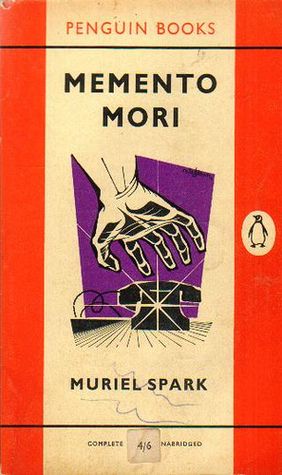
Book Beginnings on Friday: Memento Mori by Muriel Spark


I can't believe its Friday already. This week has gone by exceptionally fast but that means it is time for another Book Beginnings on Friday held by Rose City Reader. To participate, share the first line or two of the book you are currently reading and, if you feel so moved, let us know what your first impressions were based on that first line. 


"Dame Lettie Colston refilled her fountain-pen and continued the letter: One of these days I hope you will write as brilliantly on a happier theme. In these days of cold war I do feel we should soar above the murk & smog & get into the clear crystal."

I seem to have a love/hate relationship with Muriel Spark. I have enjoyed several of her works and there are others that I find to be downright deplorable. I happen to have bunch of books scattered on the floor of my room and just randomly picked this one out of the pile last night around 1 am. I wasn't even planning on reading it but after the first couple of pages, I was hooked. It's difficult to pinpoint exactly what grabbed my attention at first since the opening sentence isn't particularly striking in any way. A woman with a literary background is composing a letter to an undisclosed author. So what? Well, after reading a bit more, I instantly recognized Spark's penchant for acerbic wit, humor and satire. Even in my sleep deprived state, she managed to make me laugh. I soon got that wonderful feeling in the pit of my stomach that this novel might just prove to be one of her better works. Then again, I have been wrong in the past on my first impression, especially pertaining to The Ballad of Peckham Rye, which started off promising only to turn out as a complete abomination. Guess we'll just have to see how this one goes.

Mini Reviews #2: Mistborn - The Final Empire, Valis, The Brief Wondrous Life of Oscar Wao.

Having been away for a prolonged period of time, it's time to play catch-up again with some more mini-reviews. Round two.


Mistborn: The Final Empire (Mistborn #1) by Brandon Sanderson


Here I am embarking on another epic fantasy series after swearing to myself that I would avoid them after several disappointing encounters with other works in the genre. However, the first novel of the Mistborn series proved to be surprisingly entertaining with a well-conceived world and characters that don't fall into typical fantasy cliches. They are flawed and contain a lot more depth in contrast to the usual fanfare. Sanderson proves to be a very capable writer and he can certainly spin a good story full of intrigue, suspense and action but with this novel he seems to be setting the stage for the rest of the series so it feels underwhelming as a whole. I wanted more. I suppose that means the author should be complimented for writing a compelling enough story to keep me interested.
 

I also want to note that the magical system he creates here is probably one of the best I have ever come across in a fantasy novel albeit, slightly confusing at first. Even though Sanderson doesn't bring anything new to the genre in terms of story (a ragtag group of rebels plan to overthrow a Dark Lord, sound familiar?) I am still curious to see where he goes from here with the next two novels in the series. The best part of the novel for me is the final few chapters which builds up nicely to an explosive finale revealing a lot of key components that opens up the story to countless possibilities. This gives me hope that Sanderson knows what he is doing and actually has a clear idea of where the story is heading instead of other authors who tend to have no clear resolution in sight and just drag the series along. That's right, I'm looking at you Robert Jordan and George R.R. Martin. 


Valis by Philip K. Dick


This novel is insane and only the brilliant mind of Philip K. Dick could have written it. Semi-autobiographical, hallucinogenic and overflowing with ideas, the story follows Dick's alter-go named Horselover Fat (Philip in Greek translates to "fond of horses" and Dick in German is "Fat") who believes that he has been touched by the hand of God or some kind of supreme being through a beam of a light that enters his brain. He embarks on a theological quest to seek the "truth" but of course, he is seen by others as a crazy person. Or maybe he is the one who is sane and everyone else is crazy. For those out there who think that science-fiction is cheesy or has nothing significant to offer, look no further than Philip K. Dick to shatter those preconceived notions. Like several of his other novels, this one is far from perfect, containing various flaws in terms of plot development and a lackluster ending but Philip K. Dick has never been renowned for his story-telling abilities. First and foremost he is a philosopher, a man of ideas. Philip K. Dick is one of those special writers dear to my heart. He possesses such a wild and creative imagination and always leaves the reader contemplating the BIG questions of existence, reality and the universe: Valis is unlike anything I have ever read before and there has been nothing ever written like it since.


 The Brief Wondrous Life of Oscar Wao by Junot Diaz


I seem to be in the minority here but I absolutely adored this novel. Winner of the Pulitzer prize in 2008, Junot Diaz came out of the nowhere to snatch the coveted prize much to the disbelief and outrage of the literary world. I'm not one to follow these prestigious book awards but I think the committee might have made the correct choice for once. Granted, Diaz's novel isn't groundbreaking by any stretch of the imagination but he has a unique voice, writes beautifully even when using excessive profanity (no small accomplishment) but above all, he packs such raw emotion into the story and characters. You can tell that he really loves his characters, which makes it easy to sympathize with them even though they aren't exactly the most honorable or likable individuals. The title is meant to be facetious because the protagonist's life really isn't all that wondrous--in fact, its actually quite ordinary without a happy ending, full of  sadness and heartbreak. Oscar Wao is a character that I can personally relate to, which helps to explain why this novel resonated with me on a such deep level: he's a book nerd who loves Star Wars and fantasy, shy, introverted,  an outsider, socially awkward, hopeless when it comes to women. Hey, Mr. Diaz, are you sure you didn't happen to base Oscar on me? 

Anyways, the story also doesn't just focus on Oscar himself but contains several flashbacks of his different family members living in the Dominican Republic (his mother, grandfather) and the narrative moves towards the present day when the Wao's eventually immigrate to America. At one point, Oscar's cousin even becomes a narrative voice. This now brings us to the footnotes. You see, not only is the author interested in telling his story, he also wants to provide a history lesson at the same time. Many people are bound to be annoyed by the long, detailed notes that provide a historical background concerning the tumultuous social and political landscape of the Dominican Republic as it transitioned from corrupt fascism to democracy but I actually found it quite informative. Diaz also uses playful rhetoric and humor as well within these footnotes so it's not as if one is being forced to endure a dry and tedious lecture. Furthermore, Diaz manages to touch upon some very important issues such as social displacement, the diaspora, racism, religion, cultural barriers, even the conflicts that arise with generation gaps. Funny, intelligently written, poignant. Diaz has a bright future ahead of him and I can't wait to see what he comes up with next. Don't let the hype get to you, this is a great novel that stands tall on its own merits.

Thursday, 19 February 2015

Storm Front (The Dresden Files #1) by Jim Butcher


“I'd made the vampire cry. Great. I felt like a real superhero. Harry Dresden, breaker of monsters' hearts.” 

I'd like to make a shout out to Priya over at Tabula Rasa (check out her blog, it's really quite excellent) for recommending this book because let's face it, this really isn't the type of stuff I usually read. If this were a few years back and I happened to be browsing a bookstore where this novel was out on display, it's unlikely that I would give it a second glance before moving on, let alone stop in my tracks to pick it up out of sheer curiosity. Come on, just look at the ridiculous cover! It's laaaaaaaaame. A dude wearing a cowboy hat, dressed in black trench-coat holding a staff. Really? Yes, I admit to being a literary snob sometimes, focusing more of my attention on the "classics" as opposed to more contemporary works in general or anything from the urban fantasy genre for that matter. However, I have managed to put aside the elitist attitude and open myself up to a wider range of literature. I've been a lot happier in my reading ever since then and have discovered plenty of new favorites along the way. Not everything has to be Shakespeare.

Jim Butcher's Storm Front is a fast-paced and entertaining novel, a pure joy to read. The premise is pretty darn cool and I wish that had come up with it. Harry Dresden is a hard-boiled Wizard Private Investigator (what's up with famous wizards with the name Harry? Heh.) working out of Chicago who deals in paranormal cases. Think Van Helsing meets Raymond Chandler with a little dose of Elmore Leonard thrown in for good measure. Butcher creates a pastiche of the horror genre, detective film-noir and fantasy, which under different circumstances might have turned out to be a complete mess but Butcher successfully manages to pull it off with style. 

There are many aspects that make the novel appealing and it starts off with a wonderfully drawn lead protagonist: Harry Dresden. He is such a likeable hero and the only way that I can properly describe him is badassssss. He's also got a wicked sense of humor, he's clever, smart (of course he's smart, he's a wizard. Duh.) but above all, he's resourceful and despite being thrown into crazy situations with his life in constant danger, he still tries to act with a sense of morality. This brings me to another positive characteristic of novel that might get overlooked. Not everything is so black and white--yes, there is good vs. evil but it's remains a gray area. Butcher presents an ethical conundrum. Harry Dresden might be playing for the good side but is he in fact a moral individual? Are the villains truly evil or are they motivated to taking specific actions because of circumstances or other reasons? Worth considering.

So, you have your demons, vampires, faeries and evil sorcerers that are common in horror stories. Then you have the femme fatale, gangsters, prostitutes and of course, the rugged, wisecracking, never-play-by-the-rules detective who finds himself in tangled web of double-crossings and murder. I have heard that many people have accused Butcher of being misogynistic in his portrayal of women but one must remember that he is working within the detective genre. If you have ever watched film-noir movies or read Raymond Chandler, then it should be apparent that women are often presented in a demeaning manner. While the novel does play around with genre conventions in a clever way, it does have that pulpy B-movie quality, which some folks might consider silly but it worked for me. Butcher also uses a great deal of humor and comedy that had me laughing while still pinned to the edge of my seat, turning the pages at a rapid pace, anxious to know what happens next. Give me a well-told story and I'm one happy camper. Storm Front would obviously not be considered "serious" literature and is far from perfect but it sure is one hell of a ride. The ending is a bit hokey feels a little rushed but I can overlook such flaws since the positive attributes leading up to the denouement far outweigh the negative. I won't bother going into plot details because it is would ruin all the fun. Take a chance, it's a quick read and you might just be pleasantly surprised. I for one am looking forward to reading the rest of the series. Oh, and I absolutely love this quote:

“I don't want to live in a world where the strong rule and the weak cower. I'd rather make a place where things are a little quieter. Where trolls stay the hell under their bridges and where elves don't come swooping out to snatch children from their cradles. Where vampires respect the limits, and where the faeries mind their p's and q's. My name is Harry Blackstone Copperfield Dresden. Conjure by it at your own risk. When things get strange, when what goes bump in the night flicks on the lights, when no one else can help you, give me a call. I'm in the book.”  

Yep, like I said earlier: Badassssssssssss.

Tuesday, 17 February 2015

Theft of Swords by Michael J. Sullivan


“I like any plan where I don’t die a horrible death.”

Never judge a book by its cover right? Well, guilty as charged. I don't really read a lot of fantasy novels and Michael J. Sullivan's Theft of Swords -- the first volume of the Riyria Revelations -- reminds me why this tends to be the case. Sloppy writing, overflowing with cliches, plot holes galore and a knack for excessive info dumping. What happened to a little subtlety? Split into two novels, the story revolves around two expert thieves and their adventures as they are hired to steal back two different swords. They get dragged into the political turmoil of the land, meet a bunch of different characters along the way who help them on their journey, find themselves in sticky situations where they have to rely on their skills and wit to escape, encounter treacherous villains, get into lots of swords fights, hook up with some Wizard and at one point even do battle with an ancient flying basilisk. Sounds exciting right? Well, not really. It's all sorta dull. The premise is decent enough and the story actually starts off great but it goes quickly downhill from there. There were so many parts that left me scratching my head in confusion or disbelief. If you are working within the fantasy genre, it is imperative for the author to make sure that the world and story they create is believable. Unfortunately for Sullivan, none of it makes a whole lot of sense.

Sorry if it sounds harsh, but this novel comes across as amateur fan-fiction. I'm probably being overly generous in giving it two stars when it probably deserves much less. I don't give out half-stars but if I did, 1.5 sounds about right. See, the first section isn't completely terrible and captured my interest just enough to keep me reading but the second part is where the novel really suffers. During my recovery in hospital, I was looking for something light and entertaining at the time. With such a cool-looking cover and after reading a brief synopsis, Theft of Swords seemed most promising. Unfortunately, my instincts were wrong again and despite the novel's numerous flaws, I still somehow managed to finish it. Don't ask me how, it must have been the meds I was on that messed up the synapses in my brain. Anyways, the story has potential and I was hoping that it would develop into something worthwhile but instead it left me thoroughly frustrated with its inconsistencies--the slapdash narrative, uneven pacing and shoddy world-building being the most glaring negative aspects. I couldn't help but feel that the author was making up the story as he went along without any clear sense of where the actual narrative was heading and unsure of how to reach a proper conclusion.
Leaving out key plot details either through incompetence or as a narrative strategy to create suspense or intrigue  is ineffective here because Sullivan is not a skilled enough writer so the story ends up floundering in no-man's land. Not once did I ever get a clear picture of this particular world, its inhabitants, various regions or places (The wizard's prison comes to mind. What the hell was that?) It's all a jumbled mess that is barely comprehensible. The two main characters are interesting enough and share good chemistry but it's a shame that every other aspect of the story falls flat. They are supposed to be expert thieves, capable of coming up with expert plans but the solution to every problem seemed so predictable. In fact, most of the story is silly and predictable.

Then again, there are still several more novels in the series so hopefully I am wrong in my current assessment. Perhaps the author manages to do a complete 360: fleshing out the story and characters and then somehow tying everything together with coherent narrative. Suffice it to say, I have my doubts. Had I read this novel under different circumstances, I would have abandoned it sooner instead of forcing myself to wad through 600+ pages of mediocrity. It is highly unlikely that I will continue with the series but if I'm ever scrambling to find something to read while on the toilet, The Riyria Revelations might prove to be most convenient.

Monday, 16 February 2015

Literary Movement Reading Challenge


Once again, I'm late to the party but I hope to make up for it within the next few months. This will be an intense year-long event hosted by Fanda over at Fanda Classiclit so a shout out to her for organizing it all. Participants will be required to read works from particular literary movements designated for each month, starting with the middle ages all the way to post-modernism. Yikes. It's like English 101 all over again. I already missed January but I plan to go back and finish it up at some point in time. Here is my tentative list so far:

January: Medieval - The Canterbury Tales by Geoffrey Chaucer  

February: Renaissance - Astrophil and Stella by Philip Sydney

March: Enlightenment - Poetic works by Dryden, Pope, Marvell, Katherine Phillips...  

April: Romanticism - Various works by the big six: Wordsworth, Coleridge, Shelley, Byron, Keats, Blake. Plus over-looked female writers: Charlotte Smith, Hannah More.  

May: Transcendentalism - Walden by Henry David Thoreau

June: Victorian - North and South by Elizabeth Gaskell, Jane Eyre by Charlotte Bronte, 

July: Realism - Huckleberry Finn by Mark Twain  

August: Naturalism - The Call of the Wild, White Fang and other stories by Jack London  

September: Existentialism - The Stranger by Albert Camus  

October: Modernism - Women in Love by D.H. Lawrence; various short stories

November: The Beat Generation - Howl by Alan Ginsberg, Naked Lunch by William Burroughs, On the Road by Jack Kerouac  

December: Post-Modernism - Breakfast of Champions by Kurt Vonnegut, Song of Solomon by Toni Morrison, The Man in the High Castle by PKD, Snow Crash by Neal Stephenson, The Crying of Lot 49 by Thomas Pynchon...

 Well, I really got my work cut out for me now.

Friday, 13 February 2015

Book Beginnings on Friday: The Martian by Andy Weir


I figured it might be best to ease back into blogging again by participating in a weekly meme. Jumping right back into writing reviews and engaging in critical analysis seems a little daunting to me right now. One step at a time...

Thank you Rose City Reader for hosting the event where people share the first line or two from the current book(s) they happen to be reading and then write a few words about their first impressions or any other related thoughts they might have concerning said book.


LOG ENTRY: SOL 6

I’m pretty much fucked.
 
Ok, Mr. Weir, you certainly grabbed my attention. Considering that the main character is stranded on Mars all alone and will likely die from any number of possible reasons (starvation, harsh weather conditions, lack of O2, etc) the use of profanity is completely warranted. I've been on a sci-fi kick lately and this novel is delivering the goods in spades. It also got the green-light from Hollywood and is currently being made into a film with Matt Damon in the title role, directed by Ridley Scott. As much as I like Matt Damon, I just don't see him in the role, nor do I feel that Scott is the right director for this project. Hopefully I am proven wrong.

Even though the novel is mostly a suspenseful thriller, Weir manages to infuse plenty of humor to balance out the serious subject matter which works surprisingly well. Considering that this is the author's debut novel, I am fairly impressed so far with his ability to tell an exciting and absorbing story that has me turning the pages at a ravenous pace. The amount of mathematics, physics and scientific research that went into this novel is quite astounding and I am looking forward to see how Mr. Weir wraps it all up. I don't usually put much faith in my gut, but I have the feeling that this novel might just become a new favorite. 

Has anyone else read this?  If you have, please no spoilers!